Battle of Galveston Sesquicentennial, January 11-13, 2013


Galveston Historical Foundation will mark the 150th anniversary of the Civil War Battle of Galveston on January 11-13, 2013. The Battle of Galveston, which took place during the early morning hours of January 1, 1863, is widely acknowledged as the most important military event in Galveston’s history. Commemorative events will be held for all ages focusing on Galveston’s part in the 1863 battle.
“The Battle of Galveston offers a first-hand view of an important historic event for Galveston. This year’s events bookend the reenactments and help to educate visitors on the strategy employed by each side.” says Dwayne Jones, Executive Director of GHF. “Also, thanks to the generous support of American National Insurance Company and Humanities Texas, all lectures will be offered free of charge.”
Played out on both land and sea over the course of several months, the Battle of Galveston ended with Confederate forces driving out the Union ships that had held Galveston Harbor since October, 1862. As part of the Union blockade of the Texas coast, Commander William B. Renshaw and his squadron of eight Union ships demanded surrender by Confederate Forces of Galveston Harbor, the most important Texas port, on October 4, 1862.
But Confederate Major General John Bankhead Magruder led a successful campaign to retake Galveston early on New Year’s morning, January 1, 1863. Confederate “cottonclads” struck from the rear of the Union squadron. A naval battle ensued with Magruder’s forces retaking Galveston. Confederate losses numbered 26 killed and 117 wounded. Union losses included the captured infantry and the Harriet Lane, about 150 casualties on the naval ships, and destruction of the Westfield. The port remained under Confederate control for the rest of the war.
For more information about Battle of Galveston or for lecture and tour reservations, go to www.galvestonhistory.org or call Galveston Historical Foundation at 409-765-3409.
A general overview of events follows:
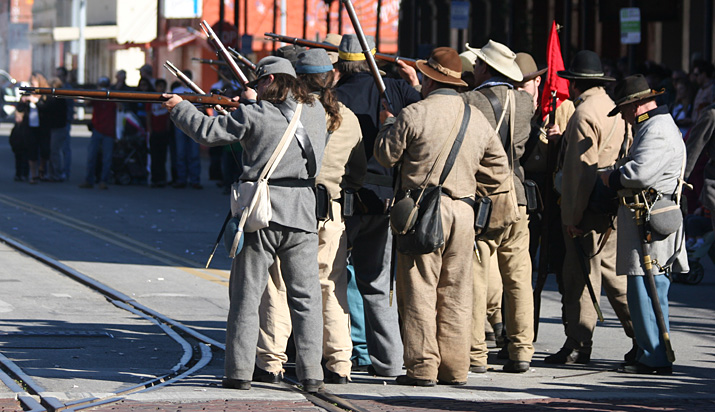
LIVING HISTORY ENCAMPMENTS AND REENACTMENTS

- Living history encampments will be established by the 19th-Century Living History Association, Inc. and the 1st Texas Brigade. The public is to visit the encampments from 10 a.m. to 6 p.m. Saturday, January 12 and 10 a.m. to 4 p.m. Sunday, January 13. The Union encampment will be located on Postoffice Street at 19th Street. The Confederate encampment will be located on Market Street and 25th Street.
- A reenactment of the execution of Nicaragua Smith will be held on Saturday at 1 p.m. and Sunday at 12 p.m. at 21st and Strand. Smith, who was found guilty of desertion from his confederate unit, was executed after being spotted by confederate troops after on his return to Galveston.
- The union troops will also march from the 1877 Tall Ship ELISSA, located at the Texas Seaport Museum, to the 1861 U.S. Custom House for a flag ceremony at 10 a.m. both days.
- The reenactment of the battle itself will occur on 21st and Strand Street at 2 p.m. on Saturday and 1 p.m. Sunday and a reenactment of the funeral of Lt. Commander Edward Lea and Commander Jonathon Wainwright from the USS Harriet Lane will be held at 10 a.m. Saturday at Trinity Episcopal Cemetery on 40th and Broadway.
All living history events are free to the public.

LECTURES
Lectures are offered free of charge except for the Saturday evening dinner lecture. Reservations are required though as seating is limited. Complete details, locations and time are available at www.galvestonhistory.org or by calling 409-765-3409.
-
150th Anniversary of the Sinking of the USS Hatteras by CSS Alabama
Friday, January 11 – 6 pm
Guest Speakers: Dr. Norman Delaney, Civil War historian and author, Dr. James Delgado, Director Maritime Heritage, National Oceanic and Atmospheric Administration (NOAA). Introduction by Andrew Hall, Marine Archeological Steward with the Texas Historical Commission. -
 The Monstrous Regiment of Women- Female Soldiers in the Civil War
Saturday, January 12 – 10:30 am
Guest Speaker: Dr. William C. Davis, Professor of History/Virginia Tech and Director of Programs/ Virginia Center for Civil War Studies. Introduction by Edward Cotham, prize-winning author of many books and articles on Civil War history, emphasizing the battles and skirmishes in Texas -
Warrior Women, Lady Spies in the Civil War
Sunday, January 13 – 10:30 am
Guest Speaker: Rosalind Miles, co author, Warrior Women 3000 years of Courage and Heroism. Introduction by Pat Smothers, Smothers Foundation. -
The British Opinion of the American Civil War
Sunday, January 13 – 2:30 pm
Guest Speaker: Robin Cross, co author, Warrior Women 3000 years of Courage and Heroism. Introduction by Pat Smothers, Smothers Foundation. -
The Culinary History of The Blue and The Gray: Dinner Lecture
Saturday, January 12 – 7 pm – $50 per person or $750 for table of 10
Dinner Lecture featuring Dr. William C. Davis. Introduction by Dwayne Jones, Executive Director, Galveston Historical Foundation.

EXHIBITS
-
Texas Seaport Museum Pier 21 and Harborside
January 12-13 – 10 a.m. to 5 p.m. Admission $8 per adult, $5 per student (6-18). Children 5 and under admitted free.
Experience the story of the USS Hatteras, the only United States warship sunk in combat in the Gulf of Mexico during the Civil War, as Galveston Historical Foundation hosts a variety of engaging displays and hands-on activities, courtesy of the NOAA Flower Garden Banks National Marine Sanctuary, Texas Historical Commission, ExploreOcean and Texas A&M University – Galveston and other partners. -
150 Years of Quilts Inspired by the Civil War
January 11 – April 5, 2013 – Free To The Public
In honor of the 150th anniversary of the Battle of Galveston, Galveston Historical Foundation is proudly displaying quilts made primarily from Civil War reproduction fabrics, patterns, or otherwise influenced by the Civil War. -
Galveston: Treasure Island of the Gulf
Monday through Saturday from 9 am to 6 pm. Rosenberg Library – Free To The Public
Objects on view include cannon balls and shell fragments, weapons, and personal effects of soldiers engaged in the conflict.Of special note is an enlarged illustration created by James E. Bourke, an observer of the Battle of Galveston who captured the event as it unfolded before him. Information on each vessel involved in the event is included.

GUIDED TOURS
Reservations recommended. Tickets sold day of event subject to availability.
-
Battle of Galveston Bird’s Eye Tours from 20th Floor of ANICO Tower.
Saturday, January 12: 9 a.m. & 12:00 p.m. and Sunday, January 13 at 10:30 a.m. $25 per person/ GHF members $20. -
Civil War Cemetery Tours
Saturday, January 12 at 10 a.m. & 11:15 a.m. $15 per person/ GHF members $12. -
Driving Tour- Discovering Galveston’s Antebellum Architecture (begins at 1838 Michel Menard House)
Saturday, January 12 at 1 p.m. & 3 p.m. and Sunday, January 13 at1 p.m. & 3 p.m. $20 per person. -
Battle of Galveston Walking Tours (begins at Peanut Butter Warehouse)
Saturday, January 12 at 3 p.m. & 3:30 p.m. and Sunday, January 11 at 2 p.m. & 2:30 p.m. $15 per person / GHF members $12. -
Battle of Galveston Historic Harbor Tours – Texas Seaport Museum
Friday, January 11 at 2:30 p.m. & 4 p.m.; Saturday, January 12 at 11:30 a.m., 1 p.m., 2:30 p.m. & 4 p.m. and Sunday, January 13 at 11:30 a.m., 1 p.m., 2:30 p.m. & 4 p.m. Adults: $12/ Students ages 4- 17: $10/ Under 3 free. -
Tours of the Historic 1861 Custom House, with author Edward Cotham
Saturday, January 12: 5 p.m. and Sunday, January 13 at 4 p.m. $10 per person/ GHF Members $8. -
Tours of the 1838 Michel Menard House, Galveston’s Oldest Existing Residence (Used as a hospital during the Civil War)
Saturday, January 12 from 12 p.m. – 4 p.m. and Sunday, January 13 from 12 p.m. to 4 p.m. $10 per person/ GHF members $8 -
Tours of the 1859 Ashton Villa, the only remaining Antebellum mansion on Broadway
Saturday, January 12 at 10 a.m. and Sunday, January 13 at 11 a.m. $10 per person/ GHF members $8.
MAP
Here is a file showing the primary event locations, that can be downloaded and opened in Google Earth or ArcGIS. Easiest, though, is to copy the URL and paste it into the search window at maps.google.com. No warranty, explicit or implied, is offered:
http://www.maritimetexas.net/BattleofGalveston150thEvents.kmz
____________

Dog Whistle? What Dog Whistle? I Don’t Hear Any Dog Whistle!
Lots of folks have made the observation that the Confederate heritage movement is, at its core, far more about modern politics and culture wars than it is about events of 1861-65; the “War of Northern Aggression” often serves as a convenient proxy for beliefs and positions and resentments that are firmly rooted in the late 20th/early21st century, and past events are refigured explicitly in those terms. I came across a good example of that recently, in Facebook posting from Searaven Press, a publishing outfit that cranks out a prodigious number of works by Lochlainn Seabrook, titles like Honest Jeff & Dishonest Abe: A Southern Children’s Guide to The Civil War, and The Great Impersonator! 99 Reasons to Dislike Abraham Lincoln. (To be fair, Seabrook’s not entirely Lincoln-centric; he also wrote UFOs and Aliens: The Complete Guidebook.)
Here is Seabrook’s promo for The Constitution of the Confederate States of America Explained: A Clause-by-Clause Study of the South’s Magna Carta:
It was 152 years ago today that conservative South Carolina sought to preserve the Constitution against the big government policies of Illinois liberal Abraham Lincoln, and bravely seceded from the Union. God bless South Carolina, and God bless the South!
Seabrook may or may not be much of a scholar, but give him this: he knows his market.
_____________
The Defenders of Southron Honour, Ctd.
On Sunday I put up a post on Louis Napoleon Nelson, which included a link to a complete and unedited copy of his Tennessee Confederate pension application. On Tuesday, Corey Meyer linked to it, which prompted this response from Josephine Lindsay Bass, aka “JosephineSouthern”:
You all done it again! Such courage in the face of die hard Confederates deserves something. Just What, well, nothing comes to mind. Bless Your Heart, I do think you are lucky that no one has shot you in the face or gone to your kids school and shot up the place. I wonder when the haters and dividers get their due in this country. Ah well there is always next year.
This comes four days after a school shooting in Connecticut left twenty 6- and 7-year-olds dead, all from multiple gunshot wounds.
More of Ms. Bass’ greatest hits here.
_________

Pension Records for Louis Napoleon Nelson
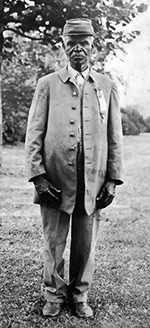 One of the best-known “black Confederate soldiers” is Louis Napoleon Nelson (right, c. 1846 – 1934), due in large part to the advocacy of his grandson, Nelson Winbush. There are any number of claims made for the nature of Nelson’s service, such as these:
[Winbush’s] grandfather, Louis Napolean Nelson, was a private in Co. M, 7th Tennessee Cavalry of the Confederate Army during the American Civil War. Private Nelson was a slave at the start of the war. He began his military service as a cook, then a rifleman, and finally a chaplain.
Virtually nothing, however, has been offered in the way of documentation of such claims. So in the interest of injecting something tangible into future discussions of Nelson’s activities during the war, here is his 1921 Tennessee Confederate pension file (PDF).
___________
Jeff Davis
Ulysses S. Grant’s horse, Jeff Davis, at City Point, Virginia, March 1865. Library of Congress image.
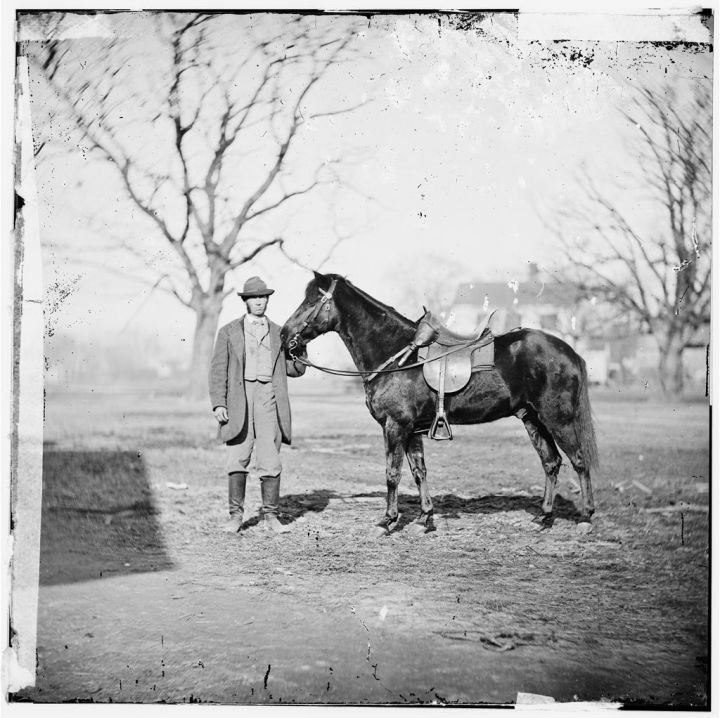
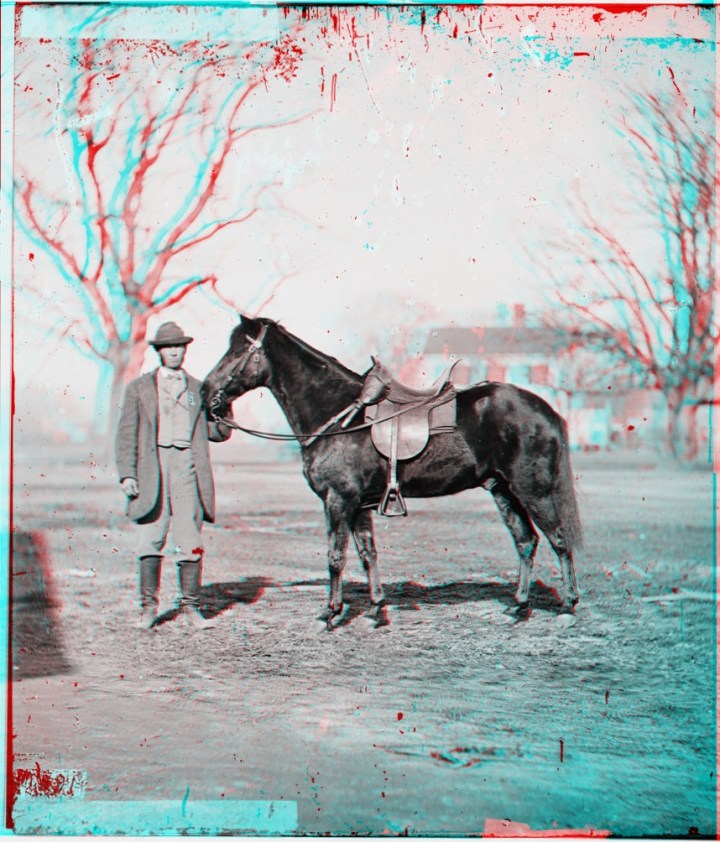
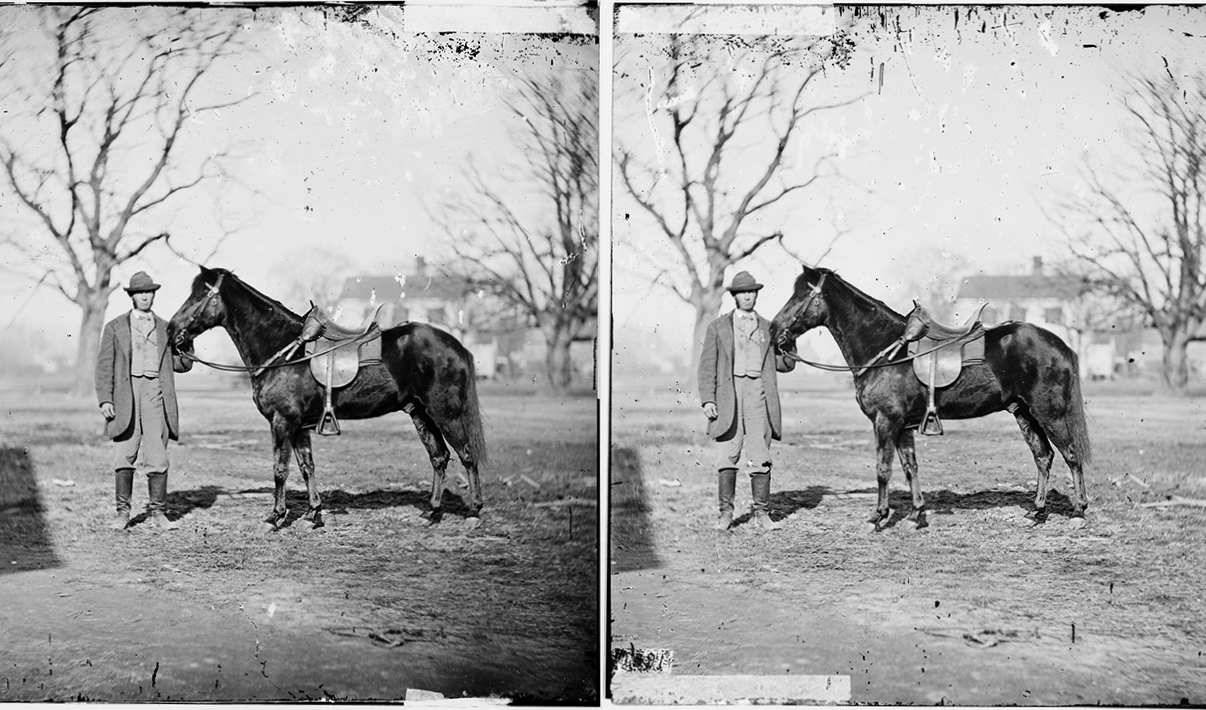
Grant was known from his West Point days as a superb horseman, even though he didn’t cut a very heroic-looking figure when mounted; he was famously described as sitting in the saddle “like a sack of meal.”
Grant’s son Fred described how his father came to value this animal:
In [the Vicksburg] campaign, General Grant had two other horses, both of them very handsome, one of which he gave away and the other he used until. late in the war. During the campaign and siege of Vicksburg, a cavalry raid or scouting party arrived at Joe Davis’ plantation (the brother of Jefferson Davis, President of the Confederacy) and there captured a black pony which was brought to the rear of the city and presented to me. The animal was worn out when it reached headquarters but was a very easy riding horse and I used him once or twice. With care he began to pick up and soon carried himself in fine shape. At that time my father was suffering with a carbuncle and his horse being restless caused him a great deal of pain. It was necessary for General Grant to visit the lines frequently and one day he took this pony for that purpose. The gait of the pony was so delightful that he directed that he be turned over to the quartermaster as a captured horse and a board of officers be convened to appraise the animal. This was done and my father purchased the animal and kept him until he died, which was long after the Civil War. This pony was known as “Jeff Davis.”
___________
Talkin’ Steamboats

I’ve got three book events scheduled before the end of the year, and I’d really excited about them.
On Thursday, December 13 at 7 p.m., I’ll be speaking at the Houston Maritime Museum, as part of their lecture series sponsored by the UTC Project, Inc. The museum is centrally located in Houston, just west of the Texas Medical Center, off Holcombe. The museum has a fantastic model collection, and is well worth a visit — whether you can make it on Thursday or not.
On Saturday, December 15 from Noon to 5 p.m. I’ll be participating in the G. Lee Gallery Book Bash, in downtown Galveston on Postoffice Street. My longtime friend Jan Johnson will be there with her new book, Beyond the Beaten Paths: Driving Historic Galveston, along with other authors. Please come on down, and have lunch just around the corner at the historic Star Drug Store while you’re at it.
Finally, on Thursday, December 20 at 6:30 p.m., I’ll be speaking at the Brazoria County Historical Museum in Angleton, in Brazoria County. I got to speak there a year or so ago on blockade runners, and it will be great to go back.
All the specifics:
Buffalo Bayou Steamboats Book Lecture and Signing, Houston Maritime Museum Thursday, December 13, 7 p.m. 2204 Dorrington StreetHouston, Texas Buffalo Bayou Steamboats
Book Signing, G. Lee Gallery (with other great authors)
Saturday, December 15, 2012, Noon to 5 p.m.
2215 Postoffice Street
Galveston, Texas Buffalo Bayou Steamboats Book Lecture and Signing, Brazoria County Historical Museum Thursday, December 20, 6:30 p.m. 100 E. Cedar Street
Angleton, Texas
Hope to see you there!
____________
Image: George Catlin’s painting of the steamboat Yellow Stone at St. Louis, Missouri, in the early 1830s. Yellow Stone had already made a name for herself on the Missouri before being brought to Texas, where she ran on the Brazos River and Buffalo Bayou.
Spectators at the Capitol for the Grand Review
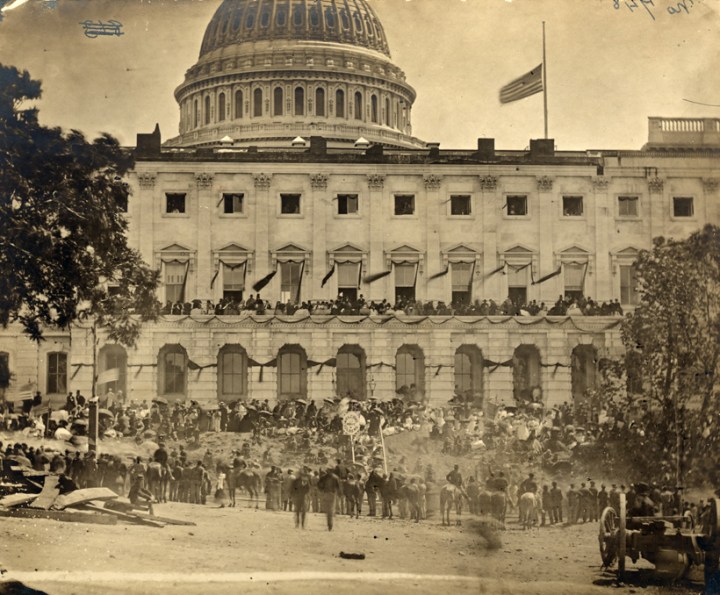
Spectators at side of the Capitol, which is hung with crepe and has flag at half-mast during the Grand Review of the Union Army, May 23-24, 1865. The signboard at lower center reads, “WELCOME BRAVE SOLDIERS.” Viewers of the film Lincoln may have noted that the Capitol’s iron dome was shown in the movie as a dark gray, instead of painted white as it is now; this can be seen at the top of the image. Based on the shadows, I’d say this is the north end of the Capitol, looking south. Library of Congress. Larger version here.
____________
Mariners’ Museum Panel on U.S.S.Monitor Crew Identification
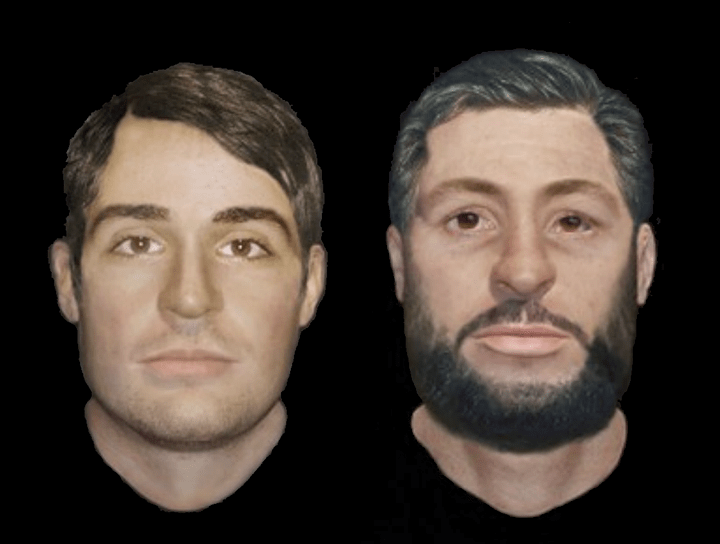
From the museum:
Tuesday, Dec. 11 at 7 PM, The Mariners’ invites you to join us for a special panel discussion entitled Giving Back Their Names: The Effort to Identify the Lost Monitor Boys. The discussion will feature USS Monitor experts from the National Oceanic and Atmospheric Administration and The Mariners’ Museum, who will talk about the ongoing effort to identify two Monitor sailors whose remains were recovered 10 years ago. Panelists will also discuss the night 150 years ago that the Monitor sank, in a gale off the coast of Cape Hatteras, N.C., claiming 16 lives. The discussion will broach facial reconstructions by Louisiana State University forensics experts, and historical and archaeological information about the Monitor‘s final moments. The experts will also discuss the upcoming dedication of a memorial for the sailors, and ongoing efforts to inter the sailors at Arlington National Cemetery. The panelists will also reveal and discuss recently conserved personal possessions from Monitor‘s crew that were recovered by archaeologists from the revolving gun turret. These special artifacts have never before been displayed in the Monitor Center. Panelists at the Dec. 11 event will include David Alberg, Superintendent of NOAA’s Monitor National Marine Sanctuary, John Broadwater, former Chief Archaeologist at the Office of National Marine Sanctuaries, and David Krop, Director of the USS Monitor Center. The session will be moderated by Anna Holloway, Curator of the USS Monitor Center. This event is free and open to the public. Members are encouraged to reserve a seat by calling (757) 591-7751. For information on the fall 2012 lecture series, click here.
The Fiery End of the Buffalo Bayou Steamboat Grapeshot
 A friend of mine e-mailed me the other day, having come across a steamboat name in the Buffalo Bayou book he’d always liked, Grapeshot. I agree — it’s a great name for a steamboat. Or a dog. Or a dog on a steamboat.
Grapeshot was a small, 179-ton sidewheeler built at Louisville in 1855.[1] According to Pam Puryear and Nath Winfield in Sandbars and Sternwheelers, she was built expressly for the Brazos River trade, running between landings on that river and Galveston, Texas’ primary seaport at the time.
The new boat’s arrival was widely anticipated on the Brazos; in late October 1855 the Columbia Democrat and Planter notified its readership that “the Grapeshot passed Vicksburg on the 17th Oct. en route for the Brazos river.” Unfortunately, the boat ran into trouble almost immediately, when in late November she attempted her first trip on the Galveston and Brazos Canal, a route that provided a sheltered passage between Galveston and the river, without boats having to risk the fifteen-mile stretch of the Gulf of Mexico between San Luis Pass, on the west end of Galveston Island, and the mouth of the river. A “norther,” a hard, cold northerly wind blew the boat hard against the edge of the cut channel, and stranded her so firmly that she couldn’t get off again until the wind died down. [2]
This was a common problem on the canal, which at the time was not yet two years old. The canal itself, the part cut through dry land, was short, less than five miles, but dredging and other improvements extended another thirty miles through an existing series of bays and lagoons to Galveston. The canal was only a very modest commercial success – it was found to be too narrow in some places, too shallow in others, and altogether too crooked – and it was found additionally that the steamboats’ sidewheels chewed away at the soft banks of the dredged channel, making repairs and upkeep an ongoing struggle. In time, sidewheelers like Grapeshot were barred from using the channel altogether, which greatly reduced its commercial viability.
Puryear and Winfield say that, having been proved unsuitable for the canal before even having completed a single passage of it, Grapeshot was soon relegated to the safer confines of the river itself, carrying passengers and cargo between river landings and the Buffalo, Bayou, Brazos& Colorado Railroad line at Richmond. But that seems not to be the case, because the very next month Grapeshot was running cotton down to Galveston from Buffalo Bayou, and announcing plans to run up the Trinity, all taking advantage of trade to be had during the fall and winter cotton shipping season. In one trip in January 1856, for example, she brought 564 bales of cotton down to Galveston, consigned to local merchants including J. C. Kuhn and William Hendley. The following week she brought down 548 bales, consigned to various Galveston factors.[3]
But it would be the Trinity where Grapeshot would find a permanent home. After a single trip up that river, the boat’s owners, Captain S. P. McGuire and his clerk, were convinced to sell their boat to Captain H. R. Dawson.[4] By the spring of 1856, Grapeshot seems to have settled into a regular routine of running between Galveston and landings on the Trinity River. In late March, for example, the boat was reported to have a arrived at the mouth of the river, downbound to Galveston, carrying 900 bales of cotton, a cargo almost certainly split between the boat itself and a towed barge, as was becoming common practice at the time. Nonetheless, if true, it was a remarkable haul for a boat that size. By May, with the river rising on from the springtime rains, Grapeshot was reported heading into the upper stretches of the river, well beyond Liberty.[5] Business was good on the Trinity, and Grapeshot’s master, Dawson, took a leading role that spring in organizing the Trinity and Liberty Steamboat Co., an enterprise founded to construct and operate a steamboat between Liberty and Galveston, “and up the Trinity river when the water will admit of it, providing this shall not interfere with her regular trips, between Liberty and Galveston.” The company was capitalized at $10,000, with 200 shares valued at $50 each. Dawson personally went in for one-third of the value of the company, 66 1/3 shares. Dawson, who press accounts described as having “had experience boat building on the Ohio River,” announced he was ready to begin construction of the boat at Green & Branch’s Mill, few miles above Liberty, assisted by Mr. W. Wicks, a “practical engineer,” and Mr. P. Burke, a ship’s carpenter.[6]
Grapeshot continued to run primarily, if perhaps not exclusively, on the Trinity for the next two years. There are several contemporary references to her reaching Parker’s Bluff, a river landing in Anderson County near present-day Palestine, over 500 statute miles from Galveston, following the serpentine bends and twists of the river. (It’s about 170 miles straight-line distance.)
The end for Grapeshot came on May 9, 1858, soon after the boat left the wharf at Galveston for the mouth of the Trinity River. The boat was caught in rough weather, and her master sought shelter in the lee of Pelican Island, just north of Galveston harbor. In the pitching waves her chimneys toppled, crushing the boiler deck down onto the boilers themselves and setting fire to the timbers. All aboard escaped with their lives by clambering onto the barge they had been towing, and then cutting the barge adrift, but the boat and much of her cargo were lost. Grapeshot’s passengers and crew were picked up and returned to Galveston aboard the Houston Navigation Co.’s steamer Island City, while the cargo barge Grapeshot had been towing was taken in charge by the steamer Water Witch. Grapeshot herself burned to the waterline, a total loss.
The Union Insurance Co. of Galveston ultimately paid its full liability of $2,614.86, and other insurers were reported to have settled claims for around $14,000. The total financial loss represented by the boat and her cargo had been estimated at the time to be between fifty and sixty thousand dollars.[7]
Sadly, contemporary accounts do not record whether Grapeshot had a dog for a mascot. But I’d like to think she did.
[1] Frederick Way, Jr., Way’s Packet Directory, 1848-1983 (Athens, Ohio: Ohio University Press, 1983), 197.
[2] Columbia Democrat and Planter, October 25, 1855, 2; Pamela Ashworth Puryear and Nath Winfield, Jr., Sandbars and Sternwheelers: Steam Navigation on the Brazos (College Station: Texas A&M Press, 1976), 88; Texas Ranger, November 29, 1855, 2.
[3] Galveston Commercial, December 27, 1855, 2; ibid., January 10, 1856, 2; ibid., January 17, 1856, 2.
[4] W. T. Block, Cotton Bales, Keel Boats and Sternwheelers: A History of the Sabine River and Trinity River Cotton Trades, 1837-1900 (Woodville, Texas: Dogwood Press, 1995), 204.
[5] Galveston Weekly News, May 27, 1856, 1
[6] Galveston Weekly News, March 25, 1856, 3; ibid., June 17, 1856, 3.
[7] Puryear and Winfield, 88; Palestine, Texas Trinity Advocate, May 19, 1858, 2; San Antonio Ledger and Texan, May 15, 1858, 3; San Augustine Eastern Texian, May 29, 1858, 2; Galveston Civilian and Gazette, June 15, 1858, 2.
____________
Steamer Robert Morris at Yorktown, 1862
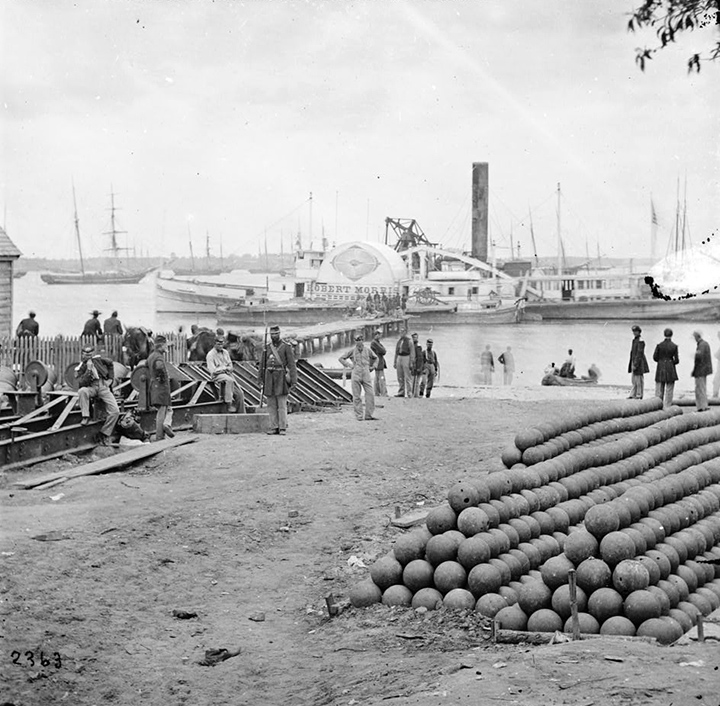
Original caption: Stereograph showing Union soldiers and supplies including stacks of cannon balls at the dock in Yorktown, Virginia. Steamships in the distance will transport the supplies to White House Landing Virgina. Library of Congress photo.
The sidewheel steamer Robert Morris was chartered by the Federal army three times: December 28, 1861 to January 26, 1862; April 1, 1862 to July 3, 1863; and December 19, 1864 to September 21, 1865. This image, published in May 1862, shows her during the Pensinsular Campaign of that spring, when she was primarily employed as a troop transport.


____________




5 comments