Celebrating Independence Day in Vicksburg, 1877
[This post originally appeared here on July 4, 2011.]


It’s an old saw that the citizenry of Vicksburg, Mississippi, did not celebrate the Fourth of July until well into the 20th century. While it’s certainly true that the anniversary of the fall of that city to Grant in 1863 continued to resonate with Vicksburg residents down through the years, in fact the date was observed by plenty of local residents, white and black, even if the celebration was unofficial and somewhat more muted there than elsewhere. And they were celebrating it even when the war itself was a recent memory. From the Vicksburg Daily Commercial, July 3, 1877:
To-morrow being the anniversary of our Nations independence, all patriotic citizens of this great Republic are expected to observe it as a holiday. We desire to be reckoned among this class of patriotic citizens, consequently no paper will be issued from this office to-morrow. The glorious Fourth happens to come in hot weather this year, and we are glad to be able to observe it ‘neath the shade of country forests.
And a follow-up, on July 5:
The people of Vicksburg came nearer celebrating the glorious Fourth yesterday than they have done for several years. True, there was no general suspension of business, as indicated by closed doors, but so far as the profits of trade were concerned doors might as well have been closed, for the salesrooms were deserted almost entirely. Everybody was out of town, apparently, enjoying the holiday in some way. Several hundred people attended the Hibernian picnic at Newman’s Grove, and not withstanding the extreme heat, all seemed to enjoy the festivities of the day. The colored population turned out in large force, fully one thousand men of them going down the river on excursion boats to picnic-grounds, yet there were enough of them left in the city to form a very respectable procession of colored Masons, and a very large audience to listen to the oration of Judge J. S. Morris, and to assist in laying the corner-stone of King Solomon’s Church. There was no prolific display of fire-works on the streets, but occasional reports from fire-crackers and large torpedoes could be heard, accompanied now and then by a patriotic cry, “rah for the Fourth of July!” We do not wonder at the lack of patriotic enthusiasm displayed on our streets. No amount of patriotism could have induced any sane man to exert himself very considerably on such a day when the thermometer registered very nearly 100° Farenheit [sic.] in the shade. However, the observance of Independence Day yesterday, slight as some may have thought it, was yet sufficient to indicate the prevalence of a broader National sentiment and a determination to at least partially forget the past which renders the Fourth of July especially distasteful to Vicksburgers, and make it in future “The Day We Celebrate” as much as any other National holiday.
To be sure, the Fourth of July remained a bitter date for many Vicksburg citizens, for a long time. Undoubtedly there are some who still reject the date as one for celebration. But in this, as in so much else about the legacy of the war, the reality is more complex than some would have us believe.
_____________

Happy Fourth!
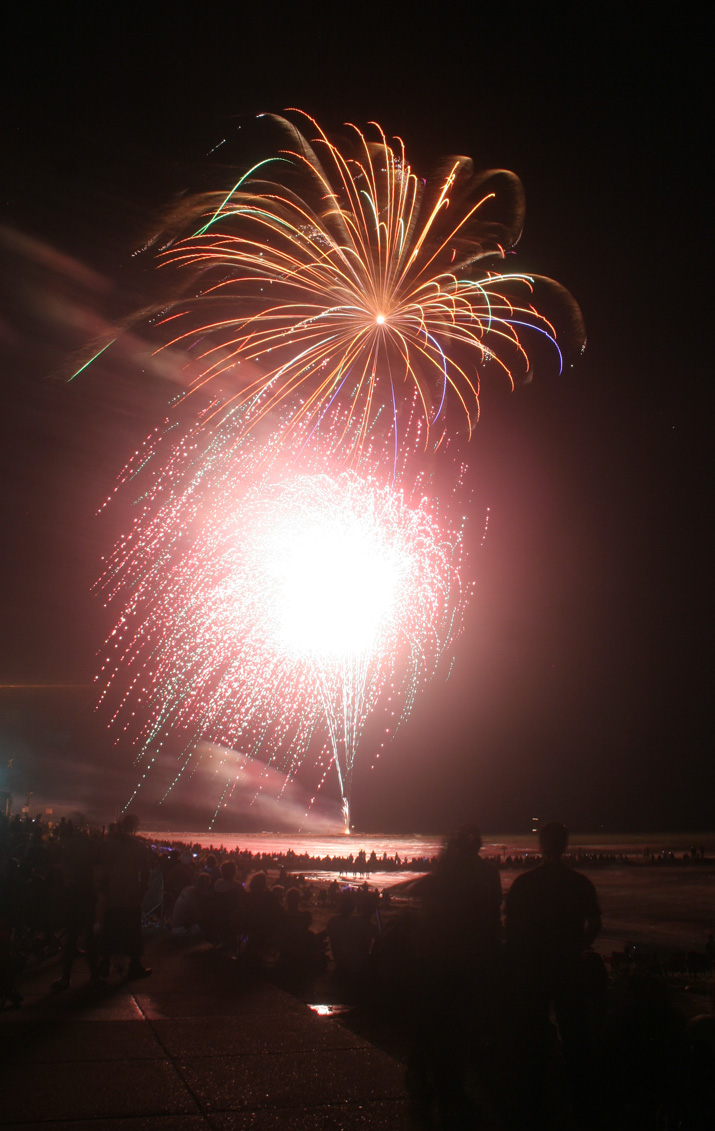
Happy Fourth of July, everybody!
This week, of course, marks the sesquicentennial of the great turning point in the American Civil War, after which the Union held the strategic initiative, and the South increasingly found itself fighting a purely defensive war.
And Gettysburg was pretty important, too.
More seriously, which event — Gettysburg or the fall of Vicksburg in the West — do you think was more significant in the overall course of the war, and why?
Be safe, y’all.
____________

Ted Alexander’s “A Regular Slave Hunt”

One of the important secondary works on the abuse and and seizure of African Americans by the Confederate Army during the Gettysburg campaign is Ted Alexander’s 2001 North & South article, “A Regular Slave Hunt: The Army of Northern Virginia and Black Civilians in the Gettysburg Campaign.” It’s a little difficult to find, but if you haven’t read it, you really should.
_________

How Val Giles Made Second Sergeant
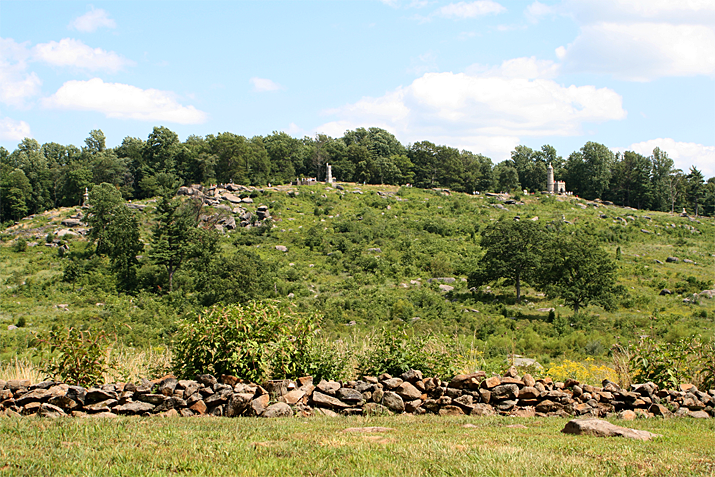
West slope of the Little Round Top, Gettysburg, as seen from the plain along Plum Run. This is the view that presented itself to the Fourth and Fifth Texas Regiments late on the afternoon of July 2, 1863. Photo by jwolf312, used under Creative Commons License.

Valerius Cincinnatus Giles — inevitably known simply as “Val” — was a twenty-one-year-old soldier in Company B of the Fourth Texas Infantry when that unit made its famous, unsuccessful assault on the Federal positions on Little Round Top, late on the second day during the Battle of Gettysburg. In his later years, Giles spent much of his free time compiling a memoir, but did not live to see its completion. Giles died in 1915; his writings, edited by Mary Lasswell, were finally published in 1961. That volume, Rags and Hope, has since become a classic first-person account of Texas soldiers during the war.
It was nearly five o’clock when we began the assault against the enemy that was strongly fortified behind logs and stones on the crest of a steep mountain. It was more than half a mile from our starting point to the edge of the timber at the base of the ridge, comparatively open ground all the way. We started off at quick time, the officers keeping the column in pretty good line until we passed through a blossoming peach orchard and reached the level ground beyond. We were now about 400 yards from the timber. The fire from the enemy, both artillery and musketry, was fearful. In making that long charge, our brigade got jammed. Regiments lapped over each other, and when we reached the woods and climbed the mountains as far as we could go, we were a badly mixed crowd. Confusion reigned everywhere. Nearly all our field officers were gone. Hood, our Major General, had been shot from his horse. He lost an arm from the wound [sic.]. Robertson, our Brigadier, had been carried from the field. Colonel Powell of the Fifth Texas was riddled with bullets. Colonel Van Manning of the Third Arkansas was disabled. and Colonel B. F. Carter of my Regiment lay dying at the foot of the mountain. The side of the mountain was heavily timbered and covered with great boulders that had tumbled from the cliffs above years before. These afforded great protection to the men. Every tree, rock and stump that gave any protection from the rain of Minié balls that were poured down upon us from the crest above us, was soon appropriated. John Griffith and myself pre-empted a moss-covered old boulder about the size of a 500-pound cotton bale. By this time order and discipline were gone. Every fellow was his own general. Private soldiers gave commands as loud as the officers. Nobody paid any attention to either. To add to this confusion, our artillery on the hill to our rear was cutting its fuse too short. Their shells were bursting behind us, in the treetops, over our heads, and all around us. Nothing demoralizes troops quicker than to be fired into by their friends. I saw it occur twice during the war. The first time we ran, but at Gettysburg we couldn’t. This mistake was soon corrected and the shells burst high on the mountain or went over it. Major Rogers, then in command of the Fifth Texas Regiment, mounted an old log near my boulder and began a Fourth of July speech. He was a little ahead of time, for that was about six thirty on the evening of July 2d. Of course nobody was paying any attention to the oration as he appealed to the men to “stand fast.” He and Captain Cousins of the Fourth Alabama were the only two men I saw standing. The balance of us had settled down behind rocks, logs, and trees. While the speech was going on, John Haggerty, one of Hood’s couriers, then acting for General Law, dashed up the side of the mountain, saluted the Major and said: “General Law presents his compliments, and says hold this place at all hazards.” The Major checked up, glared down at Haggerty from his’ perch, and shouted: “Compliments, hell! Who wants any compliments in such a damned place as this? Go back and ask General Law if he expects me to hold the world in check with the Fifth Texas Regiment!” The Major evidently thought he had his own regiment with him, but in fact there were men from every regiment in the Texas Brigade all around him. From behind my boulder I saw a ragged line of battle strung out along the side of Cemetery Ridge and in front of Little Round Top. Night began settling around us, but the carnage went on. There seemed to be a viciousness in the very air we breathed. Things had gone wrong all the day, and now pandemonium came with the darkness. Alexander Dumas says the devil gets in a man seven times a day, and if the average is not over seven times, he is almost a saint. At Gettysburg that night, it was about seven devils to each man. Officers were cross to the men, and the men were equally cross to the officers. It was the same way with our enemies. We could hear the Yankee officer on the crest of the ridge in front of us cursing the men by platoons, and the men telling him to go to a country not very far away from us just at that time. If that old Satanic dragon has ever been on earth since he offered our Saviour the world if He would serve him, he was certainly at Gettysburg that night. Every characteristic of the human race was presented there, the cruelty of the Turk, the courage of the Greek, the endurance of the Arab, the dash of the Cossack, the fearlessness of the Bashibazouk, the ignorance of the Zulu, the cunning of the Comanche, the recklessness of the American volunteer, and the wickedness of the devil thrown in to make the thing complete. The advance lines of the two armies in many places were not more than fifty yards apart. Everything was on the shoot. No favors asked, and none offered. My gun was so dirty that the ramrod hung in the barrel, and 1 could neither get it down nor out. 1 slammed the rod against a rock a few times, and drove home ramrod, cartridge and all, laid the gun on a boulder, elevated the muzzle, ducked my head, hollered “Look out!” and pulled the trigger. She roared like a young cannon and flew over my boulder, the barrel striking John Griffith a smart whack on the left ear. John roared too, and abused me like a pickpocket for my carelessness. It was no trouble to get another gun there. The mountain side was covered with them. Just to our left was a little fellow from the Third Arkansas Regiment. He was comfortably located behind a big stump, loading and firing as fast as he could. Between biting cartridges and taking aim, he was singing at the top of his voice: “Now let the wide world wag as it will, I’ll be gay and happy still” The world was wagging all right-no mistake about that, but 1 failed to see where the “gay and happy” came in. That was a fearful night. There was no sweet music. The “tooters” had left the shooters to fight it out, and taken “Home, Sweet Home” and “The Girl I Left Behind Me” with them. Our spiritual advisers, chaplains of regiments, were in the rear, caring for the wounded and dying soldiers. With seven devils to each man, it was no place for a preacher, anyhow. A little red paint and a few eagle feathers were all that was necessary to make that crowd on both sides into the most veritable savages on earth. White-winged peace didn’t roost at Little Round Top that nightl There was not a man there that cared a snap for the golden rule, or that could have remembered one line of the Lord’s Prayer. Both sides were whipped, and all were furious about it. We lay along the side of Cemetery Ridge, and on the crest of the mountain lay 10,000 Yankee infantry, not 100 yards above us. That was on the morning of July 3, 1863, the day that General Pickett made his gallant, but fatal charge on our left. Our Corps, Longstreet’s, had made the assault on Cemetery Ridge and Little Round Top the evening before. The Texas Brigade had butted up against a perpendicular wall of gray limestone. There we lay on the night of the 2d with the devil in command of both armies. About daylight on the morning of the 3rd old Uncle John Price (colored) brought in the rations for Company B. There were only fourteen of us present that morning under the command of Lieutenant James T. McLaurin. I felt pretty safe behind my big rock; every member of the regiment had sought protection from the storm of Minié balls behind rocks or trees. The side of the mountain was covered with both. When Uncle John brought in the grub, he deposited it by a big Hat rock, lay down behind another boulder, and went to sleep. Sergeant Mose Norris and Sergeant Perry Grumbles had been killed in our charge the evening before, and Sergeant Garland Colvin was wounded and missing. Somebody had to issue the grub to the men, and as an incentive to induce me to take the job, the Lieutenant raised me three points. He too was located in a bombproof position behind another big boulder just in front of me. “Giles,” he said, “Sergeant Norris always issued the rations to the men, but poor Mose is dead now and you must take his place. I appoint you Second Sergeant of Company B. Divide the rations into fourteen equal parts and have the men crawl up and get them.” Every time a fellow showed himself, some smart aleck of a Yankee on top of the ridge took a shot at him. I didn’t even thank the Lieutenant for the honor (or better, the lemon) that he handed me, and must admit that I undertook the job with a great deal of reluctance. A steady artillery fire was going on all along the line and a sulphuric kind of odor filled the air, caused by the great amount of black powder burned in the battle. Maybe it was the fumes of old Satan as he pulled out that morning leaving the row to be settled by Lee and Meade. We were comparatively safe from the big guns, but it was the infantry just above us that made things unpleasant. I crawled up to the camp kettle of boiled roasting ears and meal-sack full of ironclad biscuits that Uncle John had brought in, and began dividing the grub and laying it on top of a big flat rock. The Yanks on the hill became somewhat quiet, so I got a little bolder and popped my head above the rock. They saw my old black wool hat and before you could say “scat,” two Minié balls flattened out on top of the rock, making lead prints half as big as a saucer, and smashing two rations of grub. One roasting ear was cut in two, but the old cold-water ironclad biscuits went rolling down the hill, solid as the rock from which they flew. Cuss words don’t look well in print, but I don’t see how a fellow can tell his personal experience in the army without letting one slip in now and then. In this case I’ll let it pass! When those bullets struck the lunch counter, the newly-made Second Sergeant disappeared from view. The remark he made caused that grim old Lieutenant to laugh and say, “Let the boys crawl up and help themselves.” The range was so close that when those bullets struck the solid rock, it flew all to pieces, a small fragment striking me on the upper lip, drawing a few drops of blood and mussing up my baby mustache. Second Sergeant was my limit in the Fourth Texas Regiment._____________
This post originally appeared on July 18, 2010.
“We have received provocation enough. . . .”
 On the first day of July 1863, Confederate Lieutenant General James Longstreet (left), writing through his adjutant, ordered General George Pickett to bring up his corps from the rear to reinforce the main body of the Army of Northern Virginia. The lead elements of the armies of Robert E. Lee and George Meade had come together outside a small Pennsylvania market town called Gettysburg. The clash there would become the most famous battle of the American Civil War, and would be popularly regarded as a critical turning point not just of that conflict, but in American history. More about Longstreet’s order shortly.
I was thinking about the central role of the Battle of Gettysburg in our memory of the war when I recently read an essay by David G. Smith, “Race and Retaliation: The Capture of African Americans During the Gettysburg Campaign,” part of Virginia’s Civil War, edited by Peter Wallenstein and Bertram Wyatt-Brown. All but the last page and a few citations is available online through Google Books.
It’s not a pleasant read.
Texas (and Japanese) Reenactors at Gettysburg
There’s a great series of press images of the 150th anniversary reenactment of Gettysburg, here. Here are two of my favorites:

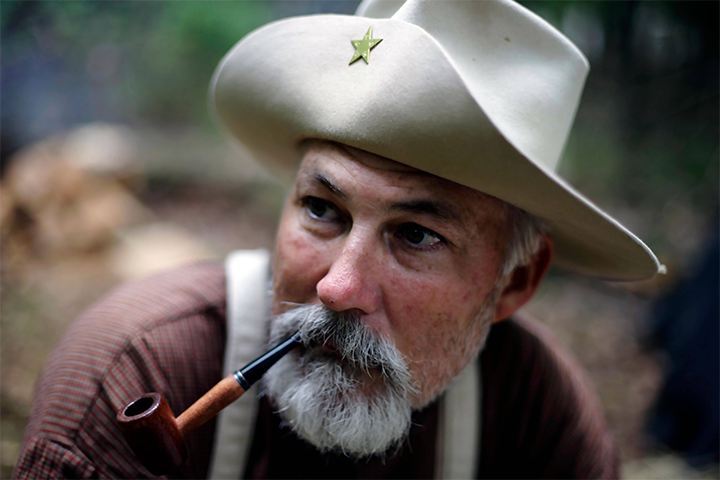
Mike Wilkinson, of San Antonio, portraying a soldier with the 4th Texas Infantry, smokes a pipe during ongoing activities commemorating the 150th anniversary of the Battle of Gettysburg, Thursday, June 27, 2013, in Gettysburg, Pa. Photo: Matt Rourke, Associated Press / AP
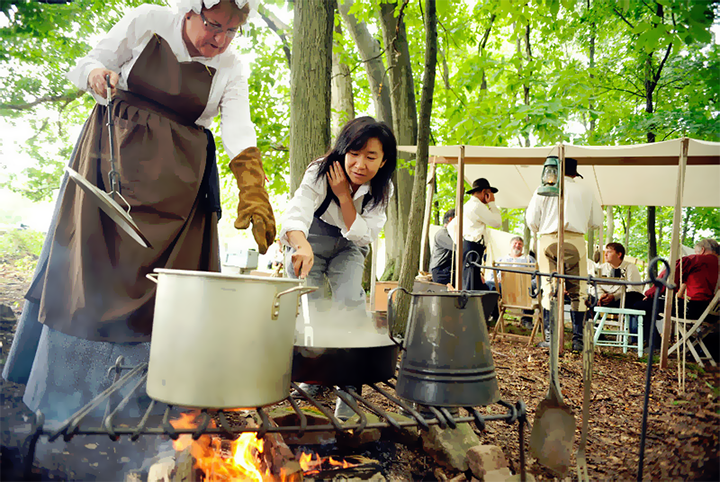
Satomi Okada, 52, pulls her hair back as she transfers chicken thighs from a cast iron skillet to a soup pot under the guidance of re-enactor Candy Girard, 62 of Omaha, Neb., at the Blue Gray Alliance’s re-enactment camp outside Gettysburg, Pa., on Friday, June 28, 2013. Okada, who is from Kobe, Japan, has a three-month tourist visa and is trying to learn what she can about the Civil War, which in Japan is called “the North-South War.” A Minnesota friend of hers is re-enacting, and brought her along for the ride. Okada will be a “powder monkey” — assisting with the cannons — with Terry’s Texas Rangers Company H during the re-enactments. Some women did go to war — incognito — with their brothers, fathers or husbands during the Civil War, and more than a few female re-enactors today are portraying that by abandoning the hoop skirts and petticoats in favor of men’s wear and artillery. Daily Record/Sunday News — Chris Dunn.

I wonder if that second caption is garbled, since Terry’s Rangers weren’t anywhere near Gettysburg, and had no artillery. Regardless, looks like great fun. When do we eat?
____________
More on Sam Cullom
As a follow-up to my recent post on Sam Cullom, a reader passes along this 2004 news item on a ceremony held at the cemetery in Livingston. From the Cookeville, Tennessee Herald-Citizen, July 17, 2004:
 Black Confederate soldier honored in ceremony Sam Cullom’s army service memoralized at Livingston
A memorial service was held last Sunday at Livingston for a former slave who served as a soldier in the Confederate Army.
Descendants of Sam Cullom attended the ceremony, sponsored by the Highland Brigade of the Sons of Confederate Veterans and the Sally Tompkins chapter of the United Daughters of the Confederacy, at the Bethlehem Methodist Church, near the Overton County Fairgrounds. Keynote speaker was Ed Butler of Cookeville, commander of the Tennessee Division of the SCV.
At the outbreak of the War Between the States, Sam Cullom was a slave belonging to Alvin Cullom who lived in Overton County.
Sam and Alvin’s son, Jim, joined the 25th Tennessee Infantry and served with the Army of Tennessee at battles in Kentucky, Tennessee and Georgia.
At the battle of Atlanta, Jim was killed in action, and Sam buried him. Sam then was granted leave and brought home to Overton County the personal effects of the young soldier. Sam then joined the 8th Tennessee Cavalry and served through the rest of the war.
The exact spot where Sam Cullom is buried in the Bethlemen cemetery is lost to history.
Cullom’s early story sketchy because of poor records keeping of the day, but he stated in his Confederate pension application that he had been born in Maryland.
Overton County Historian Ronald Dishman said he suspects that Alvin Cullom, a judge and member of Congress, bought Sam from George and William Cullom, tobacco farmers who came from Maryland.
Congressman Cullom’s family lived near Monroe, north of Livingston, but in later years moved to the Bethlehem area, off what is now Hwy. 84, between Monterey and Livingston.
Sam Cullom’s Confederate pension application indicates that he came to Tennessee when he was about 9-years old.
There had been a Bethlehem Methodist congregation since around 1801, Oprha Hassell, church historian, said, but Alvin Cullom gave land to build the church and lay out a cemetery were it now stands. The large cemetery adjacent to the church is where the Cullom family, both white and black, including the congressman and his slave, Sam, are buried.
Congressman Cullom was a part of a peace delegation that tried to avert the tragic War Between the States but to no avail. When war did break out, Sam was sent away to the Confederate army with Alvin Cullom’s sons, Jim and Ras.
Sam, long with Jim and Ras, served in the 8th Infantry Regiment of the Confederate States of America. They were assigned to Capt. Calvin E. Myer’s Co. D, which later became Co. F. James Cullom eventually became captain of that company.
Mustered into Confederate service on July 31, 1861, at Big Springs, Va., the 8th Infantry subsequently took part in the Cheat Mountain Campaign; fought at Corinth, Miss.; at Munfordville and Perryville, Ky.; and at Murfreesboro, Chickamauga and Missionary Ridge in Tennessee.
After the war, Sam returned home and described for the Alvin Cullom family how their son, Capt. Jim Cullom, was killed in the Atlanta fighting, telling them how it was he who had buried their son.
It wasn’t until 1921, when Sam was around 80-years old, that he applied for a Confederate pension after the Tennessee General Assembly passed the “Negro Pension Law.” By then, he had seven children and several grandchildren, and he and wife were living in the home of their son, Mack, a noted blacksmith of the Livingston area.
It is not known how many African American served as Confederate soldiers but it is clear that the Confederate Army did include blacks, even those listed as “free men of color,” within their ranks.
“Because the North won the war,” Ed Butler said in his address, “they got to write the history books. They would have you believe that all the blacks in the Confederate Army were cooks or valets.”
Butler gave an example of a White County Confederate soldier, Churchwell Randals, who was black and who attained the rank of corporal. “You wouldn’t attain that rank by being a cook or a valet,” he said.
“Slavery was an abomination which should have been done away with many years before it was,” Butler said. He pointed out a fact, omitted from some history books, that even Union Gen. Ulysses S. Grant had slaves — and he didn’t free them until Dec. 1865, after the 13th Amendment to the Constitution was passed, several months after the war had ended.
One of Sam Cullom’s descendants, Dr. Althea Armstrong, Sam Cullom’s great-granddaughter from Detroit, Mich., also spoke at the memorial service.
“This is an historical moment in America,” she said. “Where I come from, the population is 90-percent black. Here, it is 98-percent white. But here we are. It is not a black thing or a white thing. Today it is about freedom.”

What should we make of this? What parts of Sam Cullom’s story changed between this news item in 2004, and the one four years later? Are different claims made, and how does either square against the contemporary historical record? Are there themes or arguments in this story we’ve heard before?
___________
“Southern people have not gotten over the vicious habit of not believing what they don’t wish to believe”
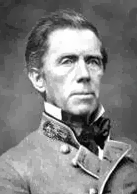 We recently looked at an editorial from the Atlanta Southern Confederacy, arguing loudly against the arming of slaves during the winter of 1864-65. But that view was not universal. The governor of Virginia, William “Extra Billy” Smith (right, 1797-1887), was one of the first prominent Confederate office-holders to urge the Confederate congress to seriously consider the idea, calling upon them to “give this subject early consideration, and enact such measures as their wisdom may approve.” Smith’s call was taken up by an editorial in the Charlottesville Chronicle, that was reprinted in the Richmond Sentinel just before Christmas 1864:
________
[1] Richmond Sentinel, December 21, 1864. Quoted in Robert F. Durden, The Gray and the Black: The Confederate Debate on Emancipation (Baton Rouge: Louisiana State University, 1972), 146-47.
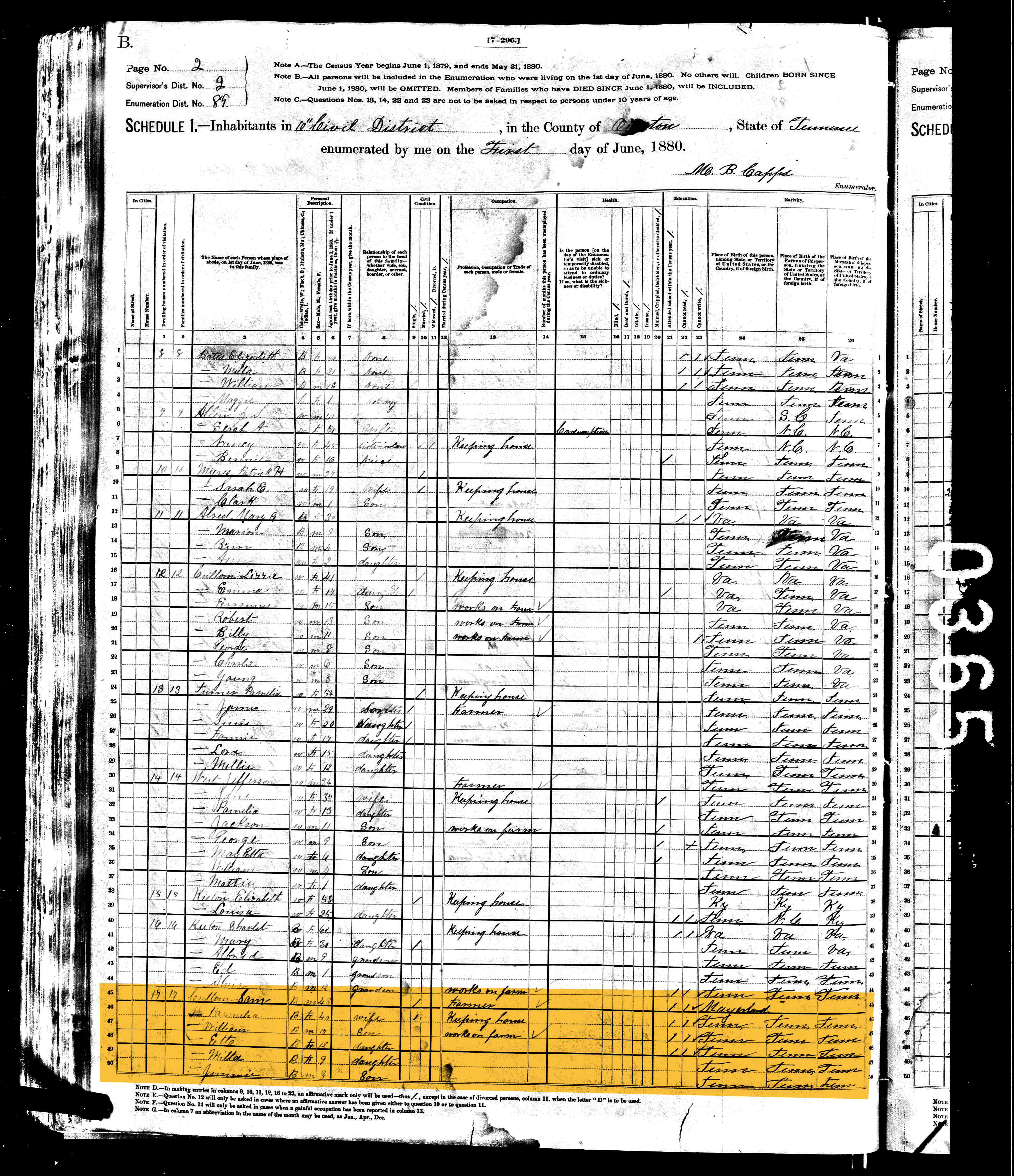
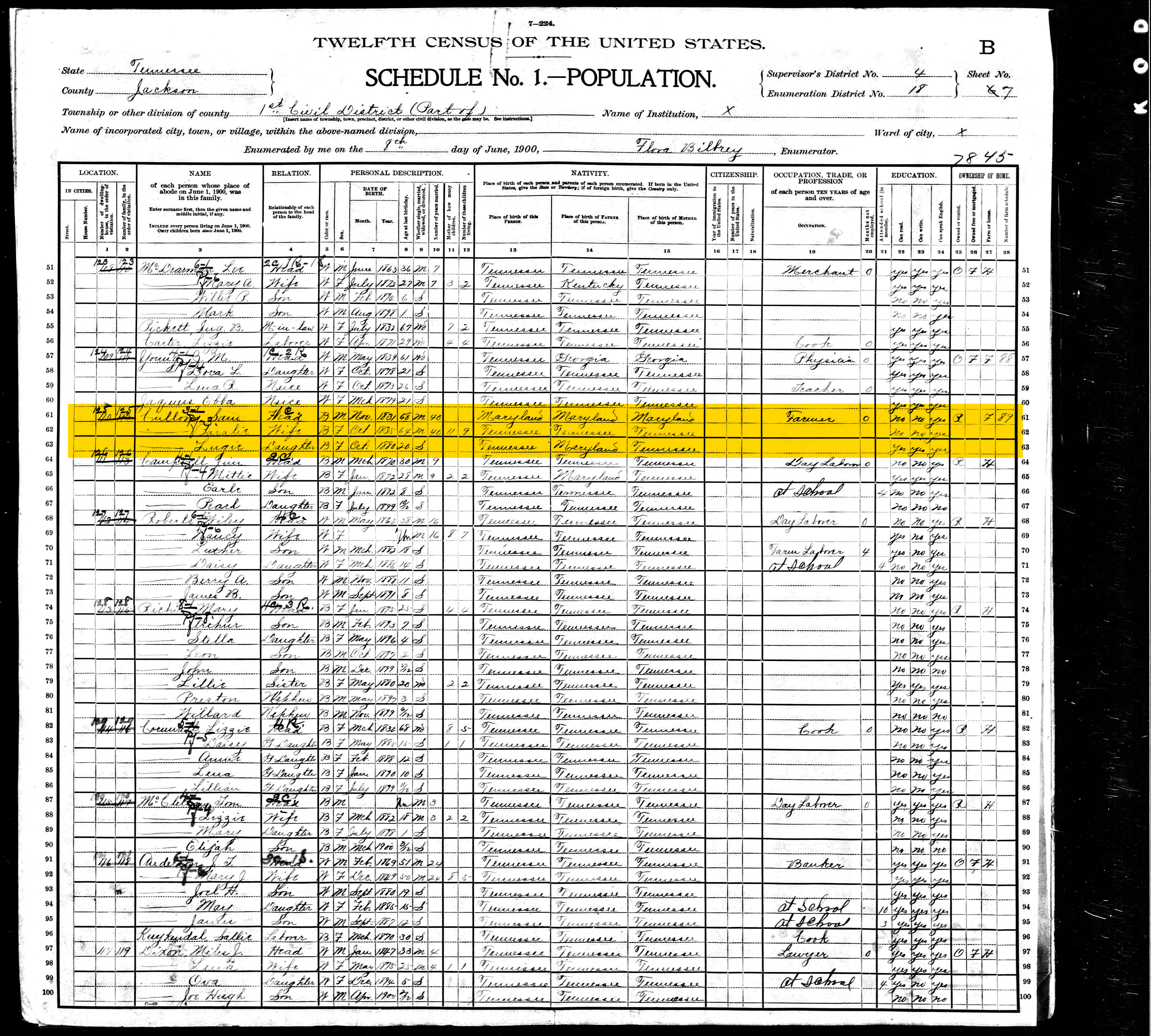
Research Exercise: “Sam Cullom, Black Confederate”
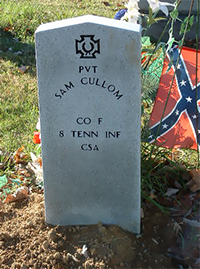
The name Sam Cullom is a new one to me, but it seems he’s been celebrated in and around Livingston, Tennessee as a local Black Confederate for a while. A military-style headstone was placed over his grave about ten years ago (right), with the legend, “Pvt. Sam Cullom.” His story is told a number of places, like this 2008 piece in the Crossville, Tennessee Chronicle:
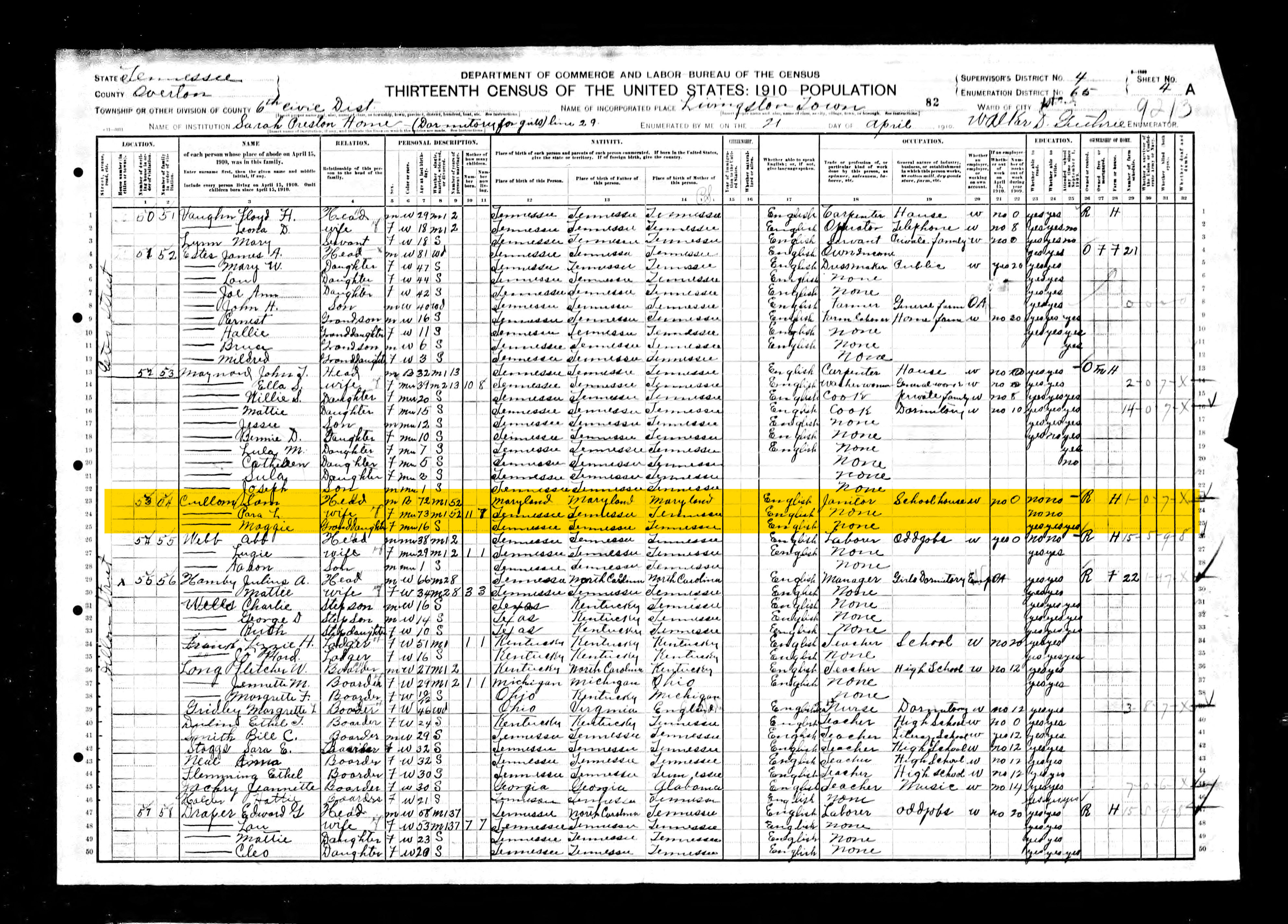
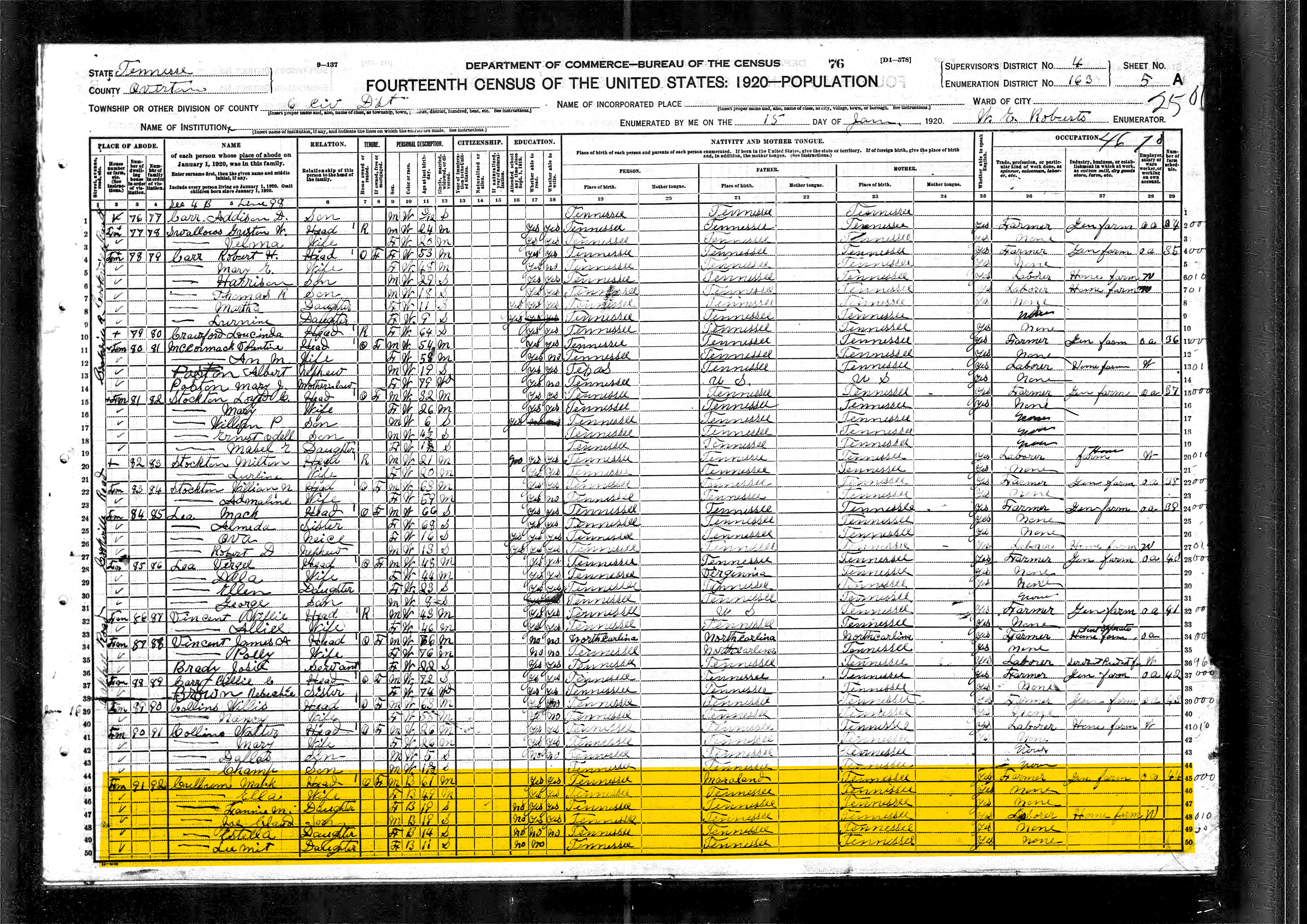
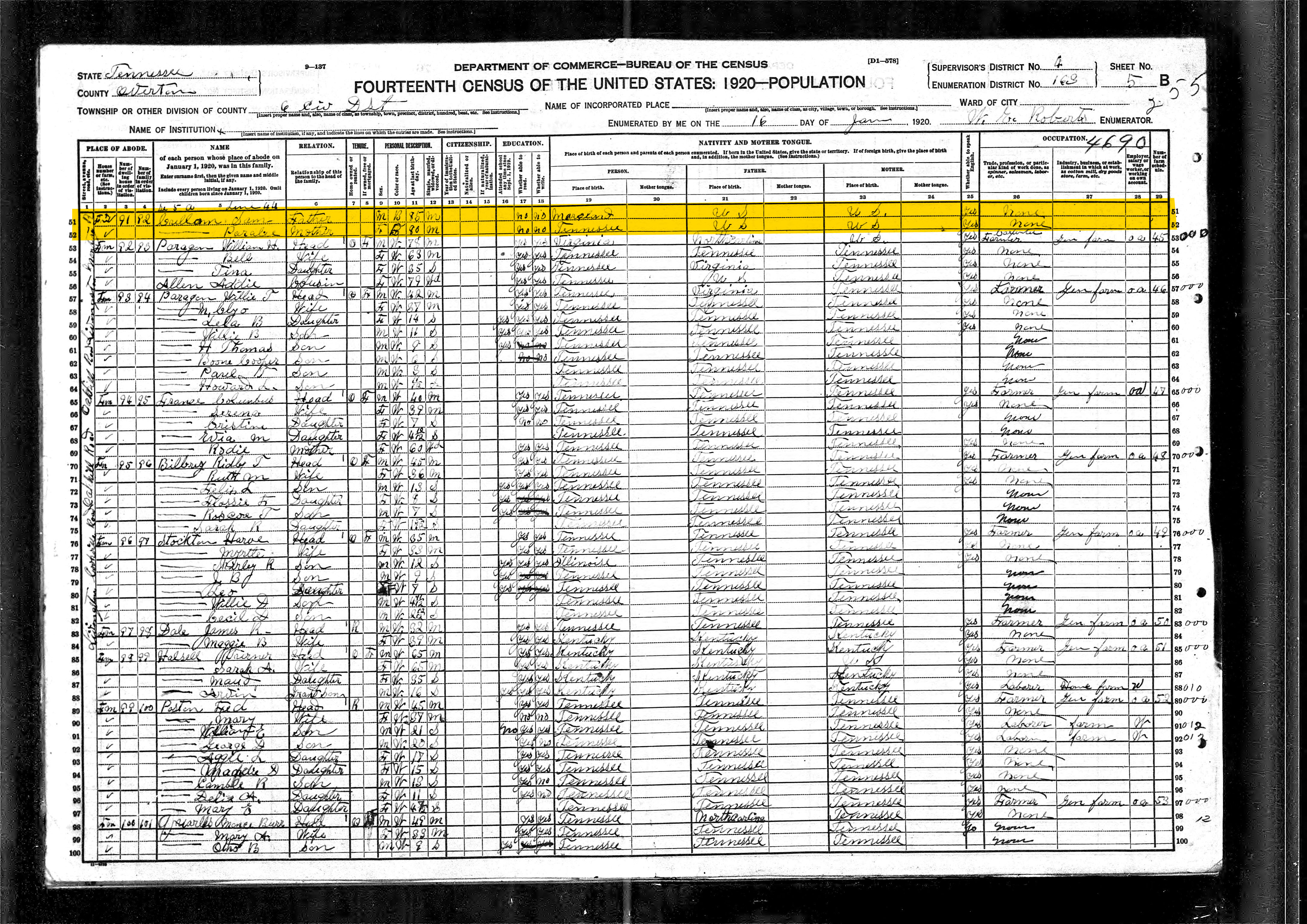
So here’s an assignment for those who may be so inclined. See what you can find in the way of historical documentation that supports or refutes this profile of Cullom. To get you started, here’s his 1921 pension application from the State of Tennessee, and his listing in the decennial U.S. Census for 1880, 1900, 1910 and 1920 (two pages).
Please feel to post links to other, primary sources that are useful in documenting Cullom’s life. Have fun.
“They constitute a privileged class in the community”
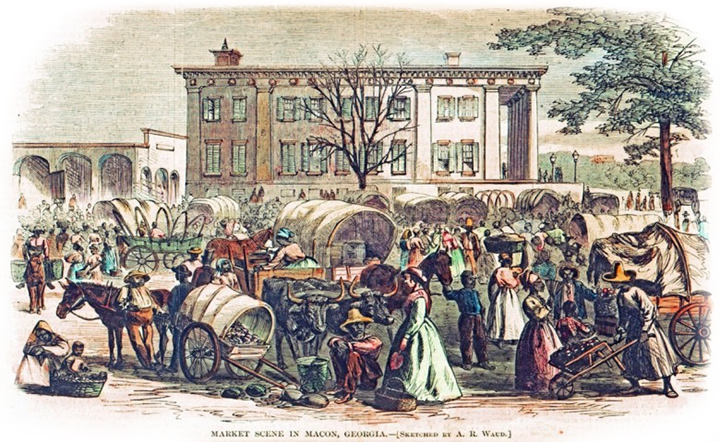
In January 1865 the debate over whether to arm slaves in a last-ditch defense against the Union army was coming to a head in Richmond. The measure would eventually pass a few weeks later, in mid-March. Nonetheless, the Atlanta Southern Confederacy, publishing in Macon, continued to reject the notion that African American should, or even could, be put under arms.
Keep in mind that on the date this was published, January 20, 1865, Uncle Billy’s troops were marching north from Savannah into South Carolina, Fort Fisher had just been captured, closing the last Confederate port on the Atlantic, and U.S. Speaker of the House Schuyler Colfax was lobbying hard for votes to pass the 13th Amendment in Congress. Yet down in Macon, the local editor was devoting column inches to explaining how slaves were a “privileged class,” happy and contented folks, unburdened by anxiety or want: “how happy we should be were we the slave of some good and provident owner.”
You may bang your head on the desk now.
____________
[1] Atlanta Southern Confederacy, January 20, 1865. Quoted in Robert F. Durden, The Gray and the Black: The Confederate Debate on Emancipation (Baton Rouge: Louisiana State University, 1972), 156-58. Image: “Market Scene in Macon, Georgia,” by A. R. Waud. From here.




 Dead Confederates, A Civil War Era Blog
2 comments