Be Safe

For all of you in the path of Hurricane Irene, or dealing with its aftermath, those of us on the Gulf Coast are keeping you in our thoughts and prayers. Hang in there.
___________
Image: “A lone Tomb Sentinel, 3d U.S. Infantry Regiment (The Old Guard), walks his tour in humble reverence during Hurricane Irene in Arlington National Cemetery, Va., Aug 27. Members of The Old Guard have guarded the Tomb every second, of every day regardless of weather or holidays since April 6, 1948.” From here.

“I made some wicked and foolish remarks”
Charles C. Cone was the son of a wealthy attorney in Wellsboro, Pennsylvania. He was sixteen years old when the war began in 1861, reading law with another attorney in town. He enlisted in the 5th Pennsylvania Reserves, eventually rising to the rank of sergeant. In late 1863, he was appointed first lieutenant, Company I, in the 8th U.S. Colored Troops. He was wounded in action with the 8th USCT at the Battle of Olustee in Florida, in February 1864. After a long convalescence, he rejoined his regiment, now with Ben Butler’s Army of the James, advancing on Richmond.
In the Field, September 20, 1864
I am happy to know that the wicked prosper not, and that the traitorous schemes of our political antagonists, the enemies of our country and our cause, are in a fair way to come to naught.
How sublimely ridiculous has been the performance of the whole farce — the terrific splutter and fizzle at Chicago — the high horse which they rode after “little Mac” was announced as the nominee of the party, and their subsequent great trepidation and disgust upon the receipt of the letter of acceptance of the little saint! I have always thought that the true and loyal men of the North would prove sufficient in the contests between parties, where the questions at issue are of so great and vital importance, involving, as they do, the principles upon which our government is based, and we exist as a free people, independent and united; besides the consideration of the great problem of humanity and morality which is now being solved, and which is to affect the whole human race, and influence the destiny of coming generations.
When I read the proceedings of the Chicago Convention, during its organization and continuance, crouching as I was behind a friendly heap of dirt, which only protected me from the balls of the sharp-shooters — amid the roar of cannon, the bursting of bombs, the screeching of shell, and hurtling balls and hissing of bullets — tons of iron and lead being pitched about in a most promiscuous and careless manner — my heart almost failed me. I was fain to give up in despair and disgust. Then, in a day or two we got more particular accounts — the speeches, platform, and nominations — and my blood boiled in my fierce wrath and impotent rage!
I have no doubt but I made some wicked and foolish remarks and resolves, but I finally cooled off a little, and took a more extensive and reasonable view of the matter. I thought of the character of the men engaged, compared them with many others enlisted in the good cause and true party; compared platforms & c., and came to the conclusion that the thing wouldn’t work. The people wouldn’t swallow it, and although the party might cause us much trouble and sorrow, yet the mass of the people would, all in good time, show the true mettle and come to time.
“Eternal vigilance is the price of liberty.” We must use every means of an honorable character to controvert and overthrow the designs of our enemies. Grant and Sherman are great generals; Farragut is king of his craft or art — yet, would they make good presidents? It demands different qualities to constitute a soldier and a statesman and ruler of a nation; much besides scientific knowledge, or the great qualities even of patriotism, determination, and strong will.
Please excuse this hastily written letter; it is after tattoo, and I am sleepy.
I remain your affectionate cousin,
C. C. Cone
Lieutenant Cone would not live to see the election in November. Nine days after writing this letter, he was hit and severely wounded at the Battle of Chaffin’s Farm, where his regiment, along with other USCT units, successfully stormed and held Confederate lines on the approach to Richmond. Evacuated to the military hospital at Fortress Monroe, Lieutenant Cone died on October 23, 1864 of “exhaustion from Amputation of left Thigh.” Among Cone’s personal effects inventoried after his death were one box of buttons, two novels, two tooth brushes, three New Testaments, five photographs, twenty-two 3-cent stamps, a broken watch and $20.90 in cash.
___________
Letter from Soldier’s Letters from Camp, Battlefield and Prison, ed. by Lydia Minturn Post (New York: Bunce & Huntington, 1865). This post originally appeared at The Atlantic on August 11, 2010.

Mustering Black Confederates

A new page added to the blog, indexing by category my previous postings on black Confederate soldiers.
____________
Image: Ransom Gwynn (seated) with white Confederate veterans at what was billed as the “Last Confederate Reunion” at Montgomery, Alabama in September 1944. Rev. Gwynn attended at least two Confederate reunions (1937 and 1944) on the claim that he had been a “body guard” to his former master, but historical records indicate Gwynn was likely not more than 11 years old, and perhaps as young as 8 or 9, when the war ended. Alabama Department of Archives and History.

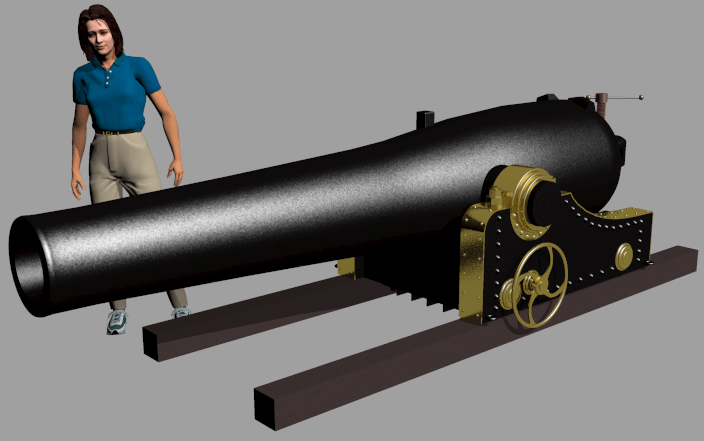
Is That An 11-inch Dahlgren in Your Pocket. . ?
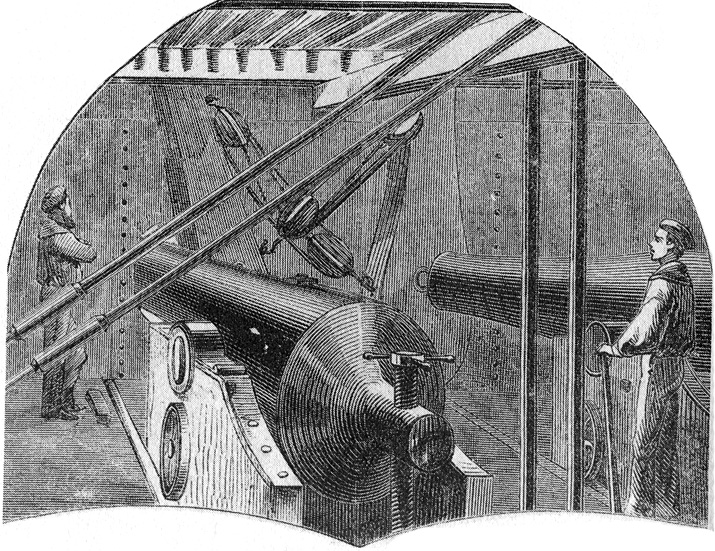
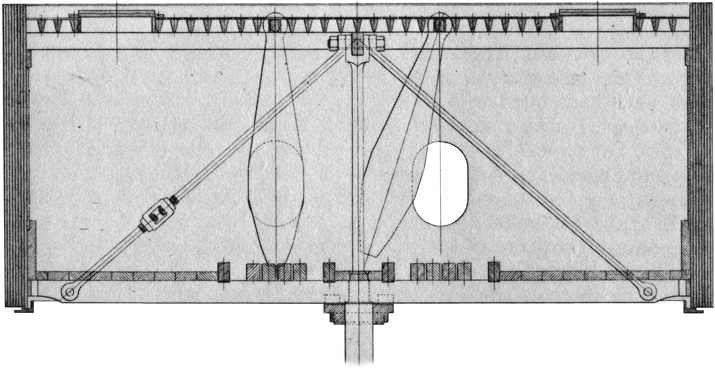
I’ll write up more about these later, but my recent post on Monitor‘s turret sent me off on an effort to sort out more of the structural detail of that unique feature. That, in turn, got me interested in the 11-inch (or XI-inch, as they were designated at the time) Dahlgren guns that served as Monitor‘s main armament. (Craig Swain has a great article on Dahlgrens here.) For now, eye aye candy:
Who Remembers Private Barron?
Not all war casualties are the result of enemy action. From the New York Times, March 20, 1864:
GALVESTON, Wednesday, Feb. 17.
A terrible accident occurred yesterday morning, near Fort Point. A torpedo, about to be deposited in the bay, exploded in the hands of JOHN T. BARRON, from Falls County, belonging to Co. A., COOK’s regiment. Mr. BARRON’s left leg was shot off below the knee; his right hand shattered, requiring amputation; his clothes took fire and severely burnt his face and legs. The unfortunate man was sent to the hospital. He was still alive when last heard from.
Private J. W. Barron of Company I, of the 1st Texas Heavy Artillery (Cook’s Regiment), was a 42-year-old conscript from Falls County in central Texas, near present-day Waco. His brief compiled service record suggests he was enlisted on January 28, 1864, less than three weeks before the accident; perhaps his inexperience in handling mines contributed to the incident. We’ll never know.
Barron died in the General Hospital at Galveston on either February 23, as noted in his CSR, or February 25, according to the city’s interment record. He was buried on that latter date in potter’s field, which was standard practice for soldiers who died here during the war. Although the interment record lists Barron’s cause of death as “leg blown off,” the week or more between the date of the incident and his death suggests that he died not from circulatory shock, but from the complications of infection that typically accompanied traumatic amputation and burns in the 19th century.

Oleander Cemetery, Galveston, 2011. This cemetery, located on Broadway between 41st and 42nd Streets, was established in the early 1900s, and all the markers here date from that time to the present. In the 1860s, however, this was the site of Galveston’s potters field, where transients and the poor were buried. During the Civil War, it was also the burial place of Confederate garrison troops who died in service here, including Private Barron.
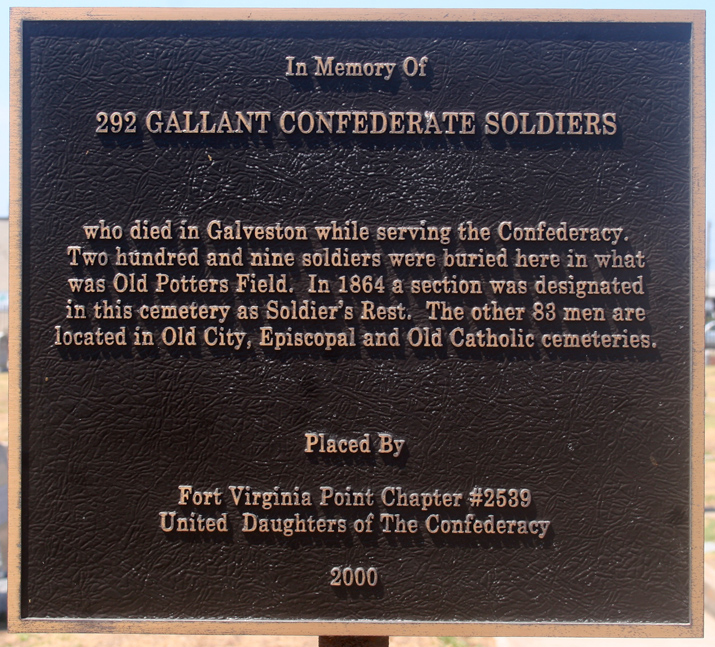
Marker placed by the local UDC chapter at Oleander Cemetery, noting the unmarked graves of soldiers buried at what was then a potters field.
I haven’t found a record of this event in the local newspapers, although the New York Times story was picked up by several other Northern papers. I also haven’t found out much definitive about him outside of his military service, alth0ugh at the time of the 1860 U.S. Census there was a John Barron in Falls County, whose listed age of 60 would make him significantly older than Private Barron. Perhaps he was a relative, or the census rolls gave his age incorrectly. In that census there was also a younger man, one J. W. Barron living near Tyler in east Texas, a 28-year-old farmer with a wife, Elizabeth (32), and three young daughters — Mary (8), Ann (6) and Theodosia (2). (See Vicki Betts’ update in the comments.)
Private Barron came to the ranks as a conscript, late in the war; it seems safe to say that one reason or another kept him from volunteering up to that date. In his early 40s, it seems likely that he had — or had had — a family, and perhaps those commitments kept him home. It’s entirely possible he has living descendants today; I wonder if they remember.
______________
Thanks to the staff at the Galveston and Texas History Center, Rosenberg Library, for assisting with this research.

Only Cartophiles Need Apply
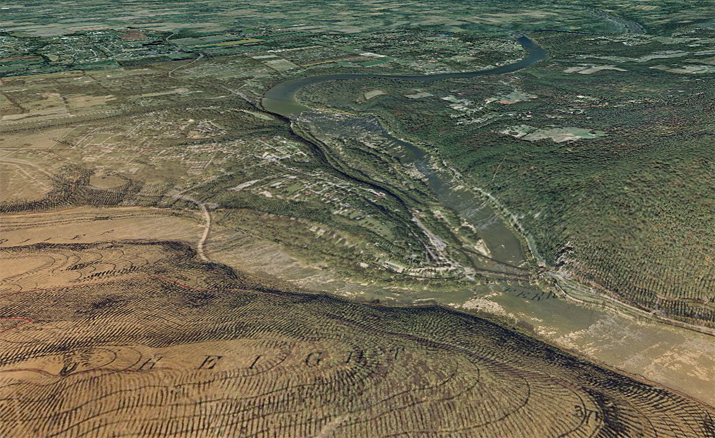
One of the traits often ascribed to Robert E. Lee was his uncanny ability to read terrain. He had, according to some, an almost preternatural ability to see on the other side of the hill, to know intuitively how best to position his forces for maximum effect on ground he’d never traversed before. His engineer’s eye for terrain didn’t always serve him well, but it did more reliably than most officers’.
I thought about that when I discovered this index of (mostly) Civil War era maps from the U.S. War Department, Office of the Chief of Engineers records at the National Archives. It’s a very large collection, and most files can be either previewed in small scale (“access image”) size or downloaded, in TIFF format, at full resolution. To make use of the latter, you’ll need some good graphics software and a fast Internet connection; this chart, which seems to be the basis for the plan of Galveston in the OR Atlas, is a whopping 106MB at full resolution.
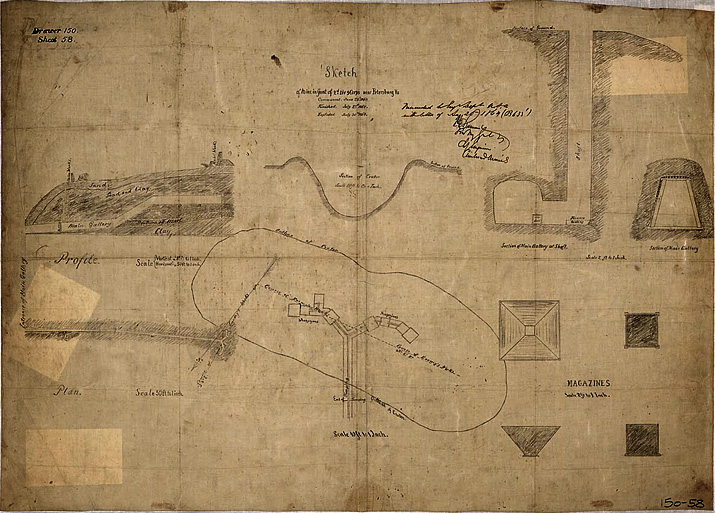
There’s also an index to plans of (mostly) Civil War era fortifications and military installations from the same records group. This set, interestingly, includes a detailed diagram of the tunneling done for the famous mine during the siege of Petersburg:
On a somewhat related note, I’ve begun working with ArcGIS Explorer, a freeware version of the professional ArcGIS mapping software. I never bothered much with ArcGIS because the desktop version simply wasn’t within my budget, but ArcGIS Explorer is free, with either online (Mac and PC) or desktop (PC only) versions. Furthermore, the full version, with all the bells and whistles, is now available for home use at an annual subscription rate of $100 per year, which puts it well within the range of all sorts of folks who had been priced out of the market before.
Folks who’ve followed this blog know how useful I’ve found Google Earth to be, particularly when it comes to overlaying historic maps and diagrams on their modern locations. It’s a bit of a headache to do, though, requiring lots of trial-and-error to scale, rotate and place the map overlay correctly. ArcGIS makes that process quite a bit simpler, provided you’re working with an historic map that shows precise points that can be identified on a modern map or aerial image. (It’s also essential that the historic map be an actual, surveyed map; there’s no point in trying to overlay a quick sketch map over a modern chart and expect things to line up.) ArcGIS Explorer allows only the minimum of three points to allign and scale an overlay, but (as I understand) the full version allows the user to plot additional reference points, which should make the alignment that much more precise.
But enough blathering on. If anyone out there knows of any ArcGIS tips or tricks, pass ’em along. In the meantime, here’s some cartographic eye candy, comparing an 1863 U.S. Coastal Survey chart of Charleston Harbor with modern, aerial images. First, Charleston itself:
“The work of soldiers amounts to very little.”

 Just two days before Arthur Fremantle toured the batteries defending the eastern end of Galveston Island, the Confederate military engineer in charge of designing and building the defenses wrote out his report for the month of April 1863, outlining the work accomplished to date, and some of the challenges still to be overcome. Colonel Valery Sulakowski (1827-1873, right) was a Pole by birth, and a former officer in the Austrian army. After emigrating to the United States in the late 1840s, he worked as a civil engineer in New Orleans. He’d met General Magruder early in the war, in Virginia, and after the island was recaptured from Federal forces on New Years Day 1863, set about expanding the island’s defenses. Sulakowski had the reputation of a strict disciplinarian but, along with another immigrant engineering officer, Julius Kellersberger, is credited with quickly expanding the fortifications at Galveston and making the island a much more defensible post than it had been during the first eighteen months of the war.
Sulakowski’s report, being essentially simultaneous with Fremantle’s observations, also give a better sense of what the British officer saw but declined to record in detail due to the sensitive military nature of the information. From the Official Records, 21:1063-64:
ENGINEER’S OFFICE, Galveston, April 30, 1863.
Capt. EDMUND P. TURNER,
Assistant Adjutant-General, BrownsvilleCAPTAIN:
I have the honor to make the following report for the month of April, 1863:
Fort Point–casemated battery.–The wood, iron, and earth work was completed during this month; five iron casemate carriages constructed; the guns mounted; cisterns placed, and hot-shot furnace constructed. It has to be sodded all over, the bank being high and composed of sand. Two 10-inch mortars will be placed on the top behind breastworks.
Fort Magruder–heavy open battery.–The front embankment, traverses, platforms, and magazines were completed during this month; two 10-inch columbiads mounted. The Harriet Lane guns are not mounted, for want of suitable carriages, which are under construction. Bomb-proofs and embankment in the rear commenced and the front embankment sodded inside, top and slope. With the present force it will require nearly the whole of this month to complete it.
Fort Bankhead.–Guns were mounted and the railroad constructed during this month.
South Battery.–For want of labor the reconstruction of this battery was commenced within the last few days of the month; also the construction of the railroad leading to it.
Intrenchment of the town is barely commenced, for want of labor.
Obstructions in the main channel.–Since the destruction of the rafts by storm, before they could be fastened to the abutments, this plan of obstruction had to be abandoned for the want of material to repair the damage done. The present system of obstructing consists of groups of piles braced and bolted and three cable chains fastened to them, the groups of piles in the deepest part of the channel to be anchored besides. This was the first plan of obstructing the channel on my arrival here; but being informed by old sailors and residents that piles could not be driven on account of the quicksand, and not having the necessary machinery then to examine the bottom, it was rejected. Having constructed a machine for this purpose, it is certain that piles can be driven and are actually already driven half across. This obstruction will be completed and the chains stretched from abutment to abutment by the 10th of May. Sketch, letter A, represents the work.
Obstructions at the head of Pelican Island.–Two-thirds done. It will require the whole of May to complete this obstruction and erect the casemated sunken battery of two guns, as proposed in my last report. These works are greatly retarded by the difficulty of procuring the material.
Pelican Spit ought to be fortified, as submitted in my last report, with a casemated work. For its defense two 32-pounders and one 24-pounder can be spared. This work is of great importance, but it had to be postponed until the intrenchments around the town shall be fairly advanced.
The force of negroes [sic.] on the island consists of 481 effective men. Of these 40 are at the saw-mills, 100 cutting and carrying sod (as all the works are of sand, consequently the sodding must be done all over the works), 40 carrying timber and iron, which leaves 301 on the works, including [harbor] obstructions. The whole force of negroes consists, as above, of 481 effective, 42 cooks, 78 sick; total, 601.
In order to complete the defenses of Galveston it will require the labor of 1,000 negroes during three weeks, or eight weeks with the present force. The work of soldiers amounts to very little, as the officers seem to have no control whatever over their men. The number of soldiers at work is about 100 men, whose work amount to 10 negroes’ work.
Brazos River.–After having examined the locality I have laid out the necessary works, and Lieutenant Cross, of the Engineers, is ordered to take charge of the construction. Inclosed letter B is a copy of instructions given to Lieutenant Cross. Sketch, letter C, shows the location of the proposed works at the mouth of Brazos River.
Western Sub-District.–Major Lea, in charge of the Western Sub-District, sent in his first communication, copy of which, marked D, is inclosed. I respectfully recommend Major Lea’s suggestions with regard to procuring labor to the attention of the major-general commanding. I have ordered a close examination of the wreck of the Westfield, which resulted in finding one 8-inch gun already, and I hope that more will be found. Cash account inclosed is marked letter E; liabilities incurred and not paid is marked letter F.(*)
I have the honor to remain, respectfully, your obedient servant,
V. SULAKOWSKI.
My emphasis. “Major Lea,” mentioned in the last paragraph, is Albert Miller Lea, a Confederate engineer and staff officer who, after the Battle of Galveston four months before, had famously found his son, a U.S. naval officer aboard the Harriet Lane, mortally wounded aboard that ship.

Sulakowski’s report also mentions the importance of sodding the built-up earthworks, as the sand of which they were constructed would otherwise blow down in drifts. That technique was also used in the fortifications around Charleston, as in this detail (above) of a painting of Fort Moultrie by Conrad Wise Chapman. At the center of the image, African American laborers gather sand to be used in repairing the fort.
_____________
Image: Detail of “Fort Moultrie” by Conrad Wise Chapman. Museum of the Confederacy.

Slave Labor in the Defense of Galveston
Last week I had a post concerning (somewhat tangentially) the use of impressed African Americans as laborers on the defensive works at Galveston. It’s a subject that deserves much more close attention than I’ve had time to get into here, but I thought I’d pass along a few contemporary citations that address the prevalence of such laborers here, and the ongoing friction between the military, which needed every able-bodied hand it could get by any means, and slaveholders who were reluctant to turn their property over to the Confederacy for military labor.

Impressed slaves building fortifications at James Island, South Carolina. Schomburg Center for Research in Black Culture, New York Public Library.
U.S.S. Monitor Turret Revealed

Via Michael Lynch at Past in the Present, there are about three weeks left to see the 120-ton turret of the Union ironclad Monitor, currently undergoing restoration at the Mariner’s Museum in Newport News.The turret, recovered from the sea floor off Cape Hatteras in 2002, has been kept in a flooded tank of fresh water almost the entire time since then, allowing the salts that have penetrated the iron to gradually leach out. After a thorough cleaning, the turret will be flooded again, to to continue desalinization, a lengthy process that may take up to 15 more years. Even with the tank drained, it’s slow, painstaking work:
[Gary] Paden is an objects handler working in the USS Monitor Center at The Mariners’ Museum. He was gently nudging, hour after painstaking hour, a wrought-iron stanchion from the 9-foot-tall revolving gun turret that once sat atop the Civil War ironclad.
The stanchions rimmed the roof of the Monitor and held up a canvas awning to shelter the crew from the broiling sun. The stanchions needed to be removed so they could be separately treated for conservation.
Last week Paden strived to remove one of those stanchions from its bracket using a hydraulic jack. “I spent seven hours on it yesterday,” Paden said. “So far it’s been the most difficult one.”
Several other workers came in closer to watch, including Dave Krop, manager of the Monitor conservation project.
Paden said most of the tools used in restoring the various components of the Monitor brought up from the ocean’s floor were improvised. The hydraulic jack is an auto body tool used to fix dents.
He pressed the jack into the point where the stanchion met the bracket. A moment later, the stanchion fell from its 149-year-old position.
“Wow,” Krop said. “You got it off. Pretty awesome! That’s pretty awesome!”
Several handlers nearby paused from their snail’s-pace labors to savor the moment, beaming in Paden’s direction.
A few years ago I visited Mariners while doing research on another vessel and, after talking to one of the conservators there about my own project, was offered the chance to take a brief tour of the lab where they were working on Monitor artifacts. (That says less about me than it does about how much they wanted to show off the work they were doing there, and rightly so.) I wasn’t allowed to take pictures, but they showed me a first a life-sized color photograph of an encrusted dial from the engine room — a steam gauge, I think — and then, with a well-practiced flourish, pulled back a cloth covering the same artifact, now almost pristine, looking as new as the day the ship sailed over 140 years before. Folks like Gary Paden and Dave Krop don’t get a lot of attention, because their work is all behind-the-scenes, but it’s important to recognize what they do, that benefits every history buff and museum-goer.
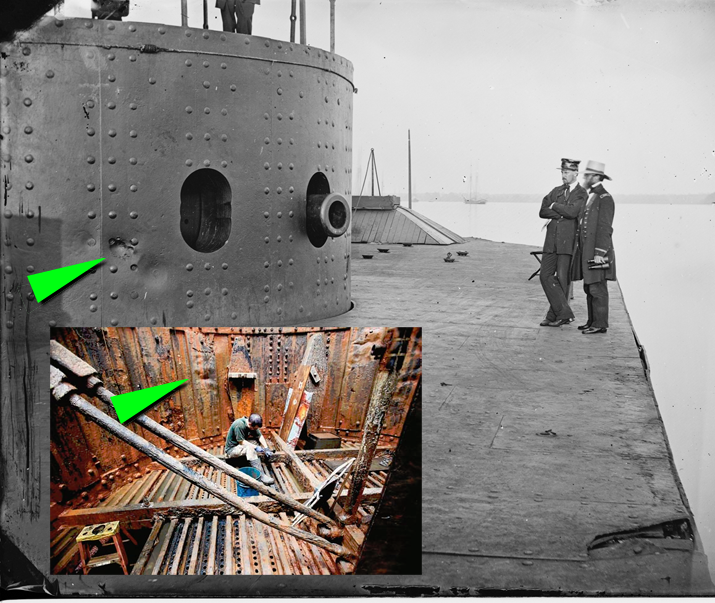
Moment of nerd: the dents made to the exterior of Monitor‘s turret by the guns of C.S.S. Virginia are still visible, 149 years later, on the interior of the upside-down turret. Additional damage to the deck edge is visible at lower right.
More video via the New York Times here. The tank containing Monitor‘s turret will be drained during the week during the rest of August. I hope some of y’all can make the trip. I’m certain you won’t be disappointed. For the rest of us, there’s always the webcam.


Added: Three additional images showing the interior of the turret, all from Miller’s book (top to bottom): Contemporary illustration from Harper’s Weekly; original drawing from Ericsson’s plan; and a modern cutaway illustration by the great Alan B. Chesley.

_________
Top color photo: “Dave Krop, who manages the Monitor conservation project, works inside the inverted turret at the Mariner’s Museum. Visitors can watch the work from viewing platforms or online.” Credit: Steve Earley, the Virginian-Pilot. Archival photo: Library of Congress. Bottom photo: Diorama of interior of Monitor‘s turret in action by Sheperd Paine, from U.S.S. Monitor: The Ship that Launched a Modern Navy by Lt. Edward M. Miller, USN.

Maybe I Am Enabling Some Odious Folks, After All. . . .
Simpson unloads on the self-appointed defenders of Southern heritage — and the bloggers like me who’ve inadvertently given them more credibility than they warrant:
Those findings [that expose shoddy research on black Confederates] displease a small but sometimes visible minority of people who claim that they are defenders of southern [sic.] heritage, although their defense of southern heritage amounts to a defense of the Confederacy, whitewashing the story of slavery, and the usual array of “you, too” attacks upon their critics. Over time these attacks have grown more juvenile and pathetic.
It’s natural at first to want to highlight these responses, because, like cockroaches, these folks can’t stand the light of day as they scurry off to feed on more garbage. Nor do I see anything wrong in challenging specific claims of research, and calling it research is being very kind. But I question the wisdom of going beyond that, because I don’t see what good is to be achieved by exchanging potshots with these people. Not everyone agrees with me: they may have their own reasons for responding, and it’s understandable given some of the abuse they have withstood. But I wonder about giving these fringe elements too much attention, and, after having reviewed some of their blogs and a Facebook page over the past few weeks (and I’ve been astonished at what I’ve come across), I have come to the conclusion that to feature these groups and blogs is in fact to grant them a sort of recognition and legitimacy that they do not deserve. They simply aren’t responsible participants: indeed, they are rather childish. . . .
As someone who lived for some ten years in the South and who counts southerners, white and black, as good friends, I think that to give these fringe ranters undue attention is a disservice to the South and all southerners. Other bloggers may continue to draw attention to these folks, but, aside from highlighting specific examples of research claims, I will let them languish and stew in their own scalding juices of hate and resentment.
I need to cogitate on this a while. Food for thought, as it were.
__________






 Dead Confederates, A Civil War Era Blog

4 comments