“We don’t need to be opening old wounds.”

There’s been speculation brewing for a while now whether Governor Perry would take a position on the proposed Texas license plate promoting the SCV (right). On Wednesday, he gave his answer:
The Republican presidential hopeful was in Florida for a fundraiser and told Bay News 9’s “Political Connections” and the St. Petersburg Times that, “we don’t need to be opening old wounds.”
The plates have been requested by the Sons of Confederate Veterans, a nonprofit Perry has supported over the years. They show the group’s logo, which is derived from the Confederate battle flag. . . .
But [rejecting the proposed license plate] was a departure from Perry’s past opposition to NAACP-led efforts to remove two plaques with Confederate symbols from the Texas Supreme Court building in Austin 11 years ago.
Then lieutenant governor Perry wrote to the Sons of Confederate Veterans in a March 2000 letter obtained by The Associated Press that, “although this is an emotional issue, I want you to know that I oppose efforts to remove Confederate monuments, plaques, and memorials from public property.”
“I believe that Texans should remember the past and learn from it,” Perry wrote in the letter, obtained through an open records request.
One of the 11-inch by 20-inch bronze plaques featured the seal of the Confederacy, and the other the image of the battle flag and quotations from Confederate Gen. Robert E. Lee. They were eventually removed in coordination with the office of then Texas Gov. George W. Bush.
Perry had waffled on the license plate question previously, simply saying its was a matter for the board to decide. That body will meet next month and may vote on the issue then. Last time it came up, a few months ago, the vote was 4 to 4, with one member absent. My thoughts on the license plate here.
I don’t think this helps Perry much, politically; it really is a no-win deal. His rhetoric in the past has pretty well established him (fairly or not) as a states-rights, secession-leanin’ sort of guy in his opponents’ eyes. To them, he’s already a caricature, and rejecting a license plate with the Confederate flag on it isn’t going to change that. On the other hand, certain folks have gone to great lengths to denounce Southern pols who, once deemed friendly to Confederate heritage issues, are seen to have become apostates in their pursuit of higher office.
Will Rick Perry be the next target of Brag Bowling’s ire?
__________
Update: Thursday’s print editions of the Houston Chronicle put this story on the front page, above the fold, all the way across. You know, the headline you see looking through the window of a newspaper vending box. This seems like a pretty small story in the larger scheme of things, but I guess it sells papers.
__________

Embellishment of Memory: Humans as “Consummate Bullshitters”
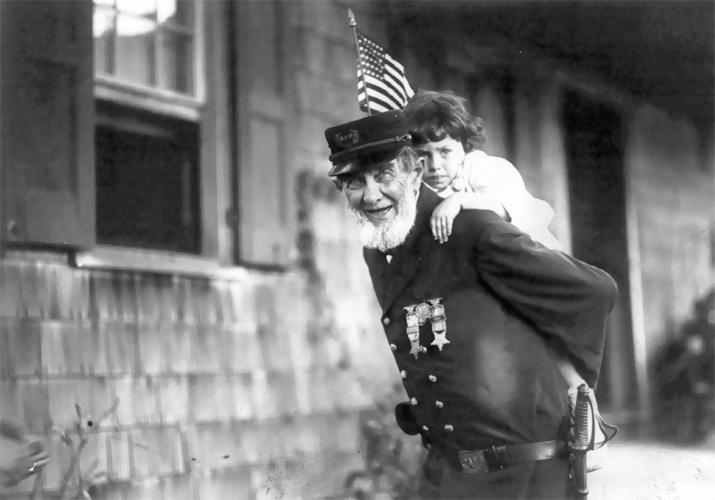

This isn’t specifically about the Civil War, but it’s highly relevant to the study of the war, because we all rely so heavily on memoirs and years-later reminiscences to understand the events of 1861-65. Via Sullivan, Jonah Lehrer looks at studies of how peoples’ accounts of past events changes over time:
Humans are storytelling machines. We don’t passively perceive the world – we tell stories about it, translating the helter-skelter of events into tidy narratives. This is often a helpful habit, helping us make sense of mistakes, consider counterfactuals and extract a sense of meaning from the randomness of life.
But our love of stories comes with a serious side-effect: like all good narrators, we tend to forsake the facts when they interfere with the plot. We’re so addicted to the anecdote that we let the truth slip away until, eventually, those stories we tell again and again become exercises in pure fiction. Just the other day I learned that one of my cherished childhood tales – the time my older brother put hot peppers in my Chinese food while I was in the bathroom, thus scorching my young tongue – actually happened to my little sister. I’d stolen her trauma.
The reason we’re such consummate bullshitters is simple: we bullshit for each other. We tweak our stories so that they become better stories. We bend the facts so that the facts appeal to the group. Because we are social animals, our memory of the past is constantly being revised to fit social pressures.
My emphasis. So much for the concept. How does it play out in practice? The effect is profound:
Consider an investigation of flashbulb memories from September 11, 2001. A few days after the tragic attacks, a team of psychologists led by William Hirst and Elizabeth Phelps began interviewing people about their personal experiences. In the years since, the researchers have tracked the steady decay of these personal stories. They’ve shown, for instance, that subjects have dramatically changed their recollection of how they first learned about the attacks. After one year, 37 percent of the details in their original story had changed. By 2004, that number was approaching 50 percent. The scientists have just begun analyzing their ten year follow-up data, but it will almost certainly show that the majority of details from that day are now inventions. Our 9/11 tales are almost certainly better – more entertaining, more dramatic, more reflective of that awful day – but those improvements have come at the expense of the truth. Stories make sense. Life usually doesn’t.
This last part is really important, and bears as well on the limitations of eyewitness testimony. Whenever people witness an event — a fender-bender in the parking lot, an argument between co-workers, the assault on Little Round Top — their perspective is necessarily different from that of other witnesses, and usually incomplete. Human memory is not a simple video recorder that inscribes a fixed and unchanging record of what we see and do; it’s fluid and dynamic process that changes over time. Our brains are wired by evolution and experience to makes sense of all those sensory inputs, to help us understand and react to what we’ve seen. In the process, we fill in gaps and make assumptions that establish a more coherent narrative to ourselves. This is involuntary and mostly unconscious. Such embellishment is not lying or deception, but neither does it reflect actual reality. When you combine that phenomenon with the multi-generational game of “telephone” which is the way most family histories are passed down, it’s a wonder that anything true comes down to us through memory. As I said a while back, referring to a relative of mine,
None of this diminishes the value of the memoirs of old veterans like Daffan, but it does remind us that, even as important as they are as the record of the men who were there, they nonetheless have real limitations. Their tales of battle, hardship, humor and adventure are only as complete as they themselves recalled them.
Or were willing to.
__________
Image: Union veteran and child, via here.

Friday Night Concert: “Roll, Alabama, Roll”
There are numerous variants of this song out there, but I like this one, as it includes verses one doesn’t often hear. It also includes a reference to a hoary old tale about the ship:
At first she was called the Two-Ninety-Two,
Roll, Alabama, roll!
For the merchants of the city of Liverpool,
Roll, Alabama, roll!
Put up the money to build the ship,
Roll, Alabama, roll!
In hopes of driving commerce from the sea,
Roll, Alabama, roll!
The mysterious number was actually 290; the “Two-Ninety-Two” of the lyric was probably chosen to rhyme (sort of) with “Liverpool.” Nonetheless, the number 290 was indeed the original designation given the to the ship before she was officially named, and it was the subject of much speculation and whispered discussion even at the time, when it was an open secret in Liverpool that John Laird & Sons, across the river, was building a warship that would ultimately find its was into Confederate hands. The rumor that “290” was a reference to the number of secret investors in the project was swirling around the Mersey, even as the ship’s frames were being set up in Birkenhead.
Alas, there was no great mystery or significance to it; Laird numbered its vessels sequentially, and Alabama happened to the 290th building project undertaken by the shipyard.
Oh, well. Still a pretty great shanty. Not half bad in Polish, either.
_________

Looking In From the Outside, Black Confederates Edition
 Leslie Madsen-Brooks, an assistant professor of history at Boise State University, has put up an essay on the online discussion over BCS. It’s interesting to see an outsider’s view of this business. For those who’ve followed the discussion for a while, it covers a lot of familiar territory, and a lot of familiar names. For folks who are new to the subject, it gives a pretty good lay of the land, and a useful introduction to the characters involved.
And boy howdy, are there some characters. 😉
h/t Kevin Levin and Brooks “Perfesser” Simpson
_______________
Image: Unidentified young soldier in Confederate uniform and Hardee hat with holstered revolver and artillery saber, Library of Congress.

Canister

Odds and ends:
- A quick reminder that I’ll be giving a talk on Civil War blockade runners on the Texas coast at the Brazoria County Historical Museum, 100 E Cedar Street in Angleton, on Thursday evening at 6:30.
- Lynna Kay Shuffield provided some additional information on the death of Samuella Holland, wife of James Kemp Holland, that helps fill out his biography.
- The Houston Museum of Natural Science just opened a major new exhibit, Discovering The Civil War. I’ll blog more about it soon, but for now, please just go. You won’t be sorry.
Any more news items that folks should know? Put ’em in the comments.
___________

Someone Is Wrong in the Newspaper!
 A friend recently pointed me to a guest column in the local paper that I’d missed, challenging the idea of a sesquicentennial celebration of Juneteenth here in 2015. The writer, Robert Hart, peppers his column with “facts” that “Juneteenth proponents should know,” which are mostly wrong. You can read it here. While Hart suggests time would be better spent interviewing African Americans about segregation, which pretty much everyone agrees was a Bad Thing, I suspect he’s mainly interested in deflecting attention off onto something other than the central role of slavery in the Confederacy. His column has almost nothing to do with Juneteenth, offering instead a list of standard Southron Heritage™ talking points about various bad acts perpetrated by the Yankees.
Anyway, the Galveston County Daily News was kind enough to run a guest column of mine today, countering Hart. It’s not great writing on my part, as I found it harder that in oughter be to keep it under 500 words:
Robert Hart recently published a guest column in the GCDN (“Juneteenth proponents should know facts,” Oct. 5), on celebrating the sesquicentennial of Juneteenth in 2015. Mr. Hart’s column, unfortunately, includes a great deal of information that serves only to deflect attention from the subject. Whether or not Ulysses Grant personally owned slaves has nothing to do with the legitimacy of Juneteenth as a day of celebration.
Worse, many of the “facts” Hart includes in his column are demonstrably false. Hart says that Grant “owned slaves in Missouri and freed them only when he had to.” In fact, Grant is known to have owned a single slave during his lifetime, a man named William Jones, possibly received from his father-in-law, probably in 1858. Grant formally manumitted (freed) Jones in March 1859.[1]
Hart claims that Robert E. Lee “freed his slaves 10 years before the war.” Not true. As biographer Elizabeth Brown Pryor discovered in going through the general’s papers, Lee personally owned slaves at least as late as 1852, considered buying more shortly before the war began, and used slaves as personal servants throughout the war itself. More important, from late 1857 onward he was acting as executor of his father-in-law’s estate at Arlington House, where he ruled with a far stricter hand than the Custises ever had. There’s credible evidence that he personally supervised the whipping of runaway Arlington slaves in 1859.[2] Lee did not formally manumit these slaves until the end of 1862.[3]
Hart continues, saying that “the Emancipation Proclamation didn’t free a single slave when it was issued.” Again, not true. As Eric Foner points out in his recent, Pulitzer Prize-winning book on Lincoln and emancipation, the order freed tens of thousands of slaves immediately in Union-occupied areas, and firmly established permanent emancipation as official war policy.[4] The Emancipation Proclamation made the Union Army a rolling, blue tide of emancipation. More than any battlefield victory, the Emancipation Proclamation doomed the Confederacy.
Hart argues that slavery in the United States ended with the passage of the 13thAmendment, but meaningful emancipation occurred over decades, and slaves themselves often made it happen. Some “stole themselves” from their masters. Tens of thousands of former slaves took up arms to free their kindred as part of the Union Army’s famed U.S. Colored Troops. Many more were emancipated (like those in Texas) when the Federal army arrived to enforce the Emancipation Proclamation.
Emancipation and the end of slavery are worth celebrating – not just for African Americans, but for all Americans who value liberty and freedom. Every date on the calendar is the anniversary of some small piece of that story, but some dates carry more significance than others. For both practical and symbolic reasons, June 19 is the best choice for Galveston, for Texas, and for the nation.
[1] Brooks D. Simpson, Ulysses S. Grant: Triumph Over Adversity, 1822‐1865 (Boston: Houghton Mifflin, 2000), 71-72.
[2] Elizabeth Brown Pryor, Reading the Man: A Portrait of Robert E. Lee Through His Private Letters (London: Penguin, 2007), 270-73.
[3] Emory M. Thomas, Robert E. Lee: A Biography (New York: W. W. Norton & Co., 1995), 273.
[4] Eric Foner, The Fiery Trial: Abraham Lincoln and American Slavery (New York: W. W. Norton & Co., 2010), 243.
Of course, h/t to Bob Pollock, who continues to do the bloggy knowledge on Grant.
___________

Friday Night Concert: “American Land”

What is this land of America, so many travel there
I’m going now while I’m still young, my darling meet me there
Wish me luck my lovely, I’ll send for you when I can
And we’ll make our home in the American land
Over there all the woman wear silk and satin to their knees
And children dear, the sweets, I hear, are growing on the trees
Gold comes rushing out the river straight into your hands
If you make your home in the American land
There’s diamonds in the sidewalks, there’s gutters lined in song
Dear I hear that beer flows through the faucets all night long
There’s treasure for the taking, for any hard working man
Who will make his home in the American land
I docked at Ellis Island in a city of light and spire
I wandered to the valley of red-hot steel and fire
We made the steel that built the cities with the sweat of our two hands
And I made my home in the American land
There’s diamonds in the sidewalk, there’s gutters lined in song
Dear I hear that beer flows through the faucets all night long
There’s treasure for the taking, for any hard working man
Who will make his home in the American land
The McNicholas, the Posalski’s, the Smiths, Zirillis too*
The Blacks, the Irish, the Italians, the Germans and the Jews
The Puerto Ricans, illegals, the Asians, Arabs miles from home
Come across the water with a fire down below
They died building the railroads, worked to bones and skin
They died in the fields and factories, names scattered in the wind
They died to get here a hundred years ago, they’re dyin’ now
The hands that built the country we’re all trying to keep down
There’s diamonds in the sidewalk, there’s gutters lined in song
Dear I hear that beer flows through the faucets all night long
There’s treasure for the taking, for any hard working man
Who will make his home in the American land
Who will make his home in the American land
Who will make his home in the American land
* Zirilli is the Springsteen’s mother’s surname.
________________

“Durante vita”

A number of bloggers put up posts in anticipation of tonight’s History Detectives episode on the famous tintype image of Andrew Chandler and Silas Chandler. I was struck by two things watching the episode. First, this quote from Chandler Battaile, great-great-grandson of Andrew Chandler, on discovering that much of what he’d always understood to be true is contradicted by contemporary evidence:
I think it’s interesting to understand the place of stories in family histories. Obviously, the story that we’ve shared is one that is very comfortable, and comforting to believe. But without documentary evidence, it is a story. Our families’ histories have been, and will always be, deeply intertwined and evolving with the times.
That strikes me as a remarkably self-aware statement. I’ve found in my own family’s history cases where cherished family stories don’t stand up well to close examination in bright sunlight. But I think in the end, one is better for going through that process.
The second thing is the mention by Mary Francis Berry, that Mississippi law did not allow the manumission of slaves at the time of the Civil War. This is significant, because part of the Chandler oral tradition is that Silas had been freed at (or soon before) the beginning of the war, and went off with Andrew into the 44th Mississippi Infantry as a free man. While I wasn’t familiar with the Mississippi law, it’s not in the least surprising that this provision would be so. In my own state, it wasn’t just a law, it was actually written into the 1861 Texas Constitution, adopted immediately after the state’s secession. Under Article VIII, Slaves:
Sec. 1. The Legislature shall have no power to pass laws for the emancipation of slaves.
Sec. 2. No citizen, or other person residing in this State shall have power by deed, or will, to take effect in this State, or out of it, in any manner whatsoever, directly or indirectly, to emancipate his slave or slaves.
Or as Professor Berry put it, referring to Mississippi, the “law made slaves, slaves for life: durante vita.”
Antebellum Texas was not a welcoming or easy place for free African Americans; it’s not surprising that in the decade 1850-1860, while the slave population of Texas more than tripled (58,161 to 182,566), the number of free blacks in the state actually declined, from 397 to 355 — not even enough to fill a typical middle school auditorium.
_______________
Image: Andrew Chandler (l.) and Silas Chandler, c. 1861, via the Toledo Blade.

Friday Night Concert — “No, The Civil War Really Was About Slavery”

Kevin linked to this a few days ago, by I didn’t click through until my fellow Coatesian commenter, Sergi Avteniev (a.k.a. HappySurge), reminded me today.
_____________________

“Facial hair and longish hair are a big plus.”

Casting is open in Richmond for extras in Spielberg’s adaptation of Doris Kearns Goodwin’s Team of Rivals.
Filming for the project – with a working title of “Office Seekers” – is expected to begin within the next couple of weeks and last until December, but the exact dates and locations remain a secret. “With the casting wrapping up, you can tell that they will start filming soon,” said Mary Nelson, communications director with the Virginia Film Office. . . .
Just days before the beginning of filming, the casting crew is still looking for Caucasian and African-American men. All must be 18 years of age or older, between 6’1″ or under, 200 pounds or less. Facial hair and longish hair are a big plus. Men with shaved heads, dreads, braids or piercings need not apply.
“We are especially looking for men to portray African-American Union soldiers,” Dowd said. Other extra roles for African-Americans include slaves. “We’re still looking for servants for White House scenes, so restaurant experience is a plus,” Dowd said.
Other openings still available include African-American women. Long hair is not necessary, but no dreads, braids, modern cuts or wigs. Dress size should be between 6 and 12. The casting crew is also looking for Caucasian women with longish hair of natural color, dress size between 6 and 12.
Dowd said that the job pays $79.75 per day for up to 10 hours or less. But extras are sometimes required to stay on set for up to 12 hours or longer. “We’ll need many extras for more than one day, which makes this a great opportunity for people who are currently without a job,” Dowd said.
Applicants may send a recent photo to osextrascasting@gmail.com along with height, weight and contact information or mail to Office Seekers, Attn: Extras Casting, 8080 AMF Drive, Mechanicsville, VA 23111.
The high-profile project has not gone unnoticed by heritage groups, which have a tendency to react to anything that depicts the Lincoln administration in a sympathetic or positive light. A few days ago there was a reception for Spielberg at the Governor’s Mansion in Richmond (above), which was duly protested by the “Virginia Flaggers,” who work to promote the display of the Confederate flag and, in this case, to remind the director “of the truth about Lincoln and the ultimate sacrifice made by over 32,000 Virginians in defense of the Commonwealth.”
Governor McDonnell, of course, has been declared an enemy by these same folks for the last eighteen months, since he retracted his original 2010 Confederate History Month proclamation, one reportedly written by the Virginia SCV. McDonnell subsequently announced that Confederate History Month would be replaced by a more inclusive Civil War in Virgina Month. In response, senior SCV officials went so far as to hold a press conference “to outline the ‘ongoing failures’ ” of the governor “to deal with a variety of history and heritage issues in Virginia.” They threw in a denouncement of former Governor George Allen (of “macaca” infamy) who had publicly distanced himself from the organization while in office.
Should we expect even more carping in the wake of Tuesday’s announcement that the Virginia State Capitol, which served as the Confederate Capitol during the war, will be used as a filming location? You can bet on it. Today, in 2011, Virginia is shaping up to be central battleground of memory of the conflict of 1861-65.
_________
Image: Gov. Bob McDonnell welcomed filmmaker Steven Spielberg to the governor’s mansion for a reception on Monday. Via Roanoke.com. Thanks to Jimmy D at Coates’ place for suggesting this story.





5 comments