“Under Divine blessing we must rely upon the bayonet”
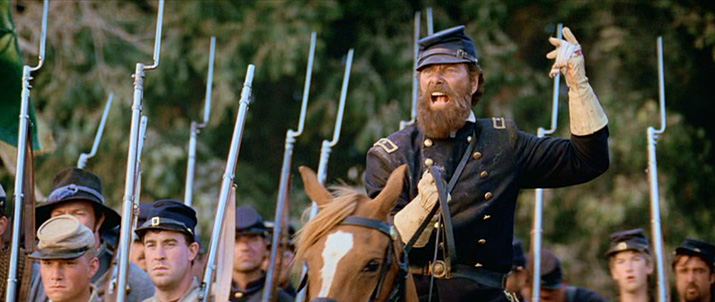
Despite its fearsome reputation, the wounds inflicted by the bayonet were sometimes less horrific, and more quickly healed, than one might suppose. Dick Stanley has a fine new post over at 13th Mississippi Infantry on Dr. Simon Baruch, and his wartime-published case study on bayonet wounds. Previous posts on Baruch here and here.

“They lay as thick as autumn leaves”
Friday, September 19, 1862, near Sharpsburg, Maryland:
I took the delay to ride over the field of battle. The Rebel dead, even in the woods last occupied by them, was very great. In one place, in front of the position of my corps, apparently a whole regiment had been cut down in line. They lay in two ranks, as straightly aligned as on a dress parade. There must have been a brigade, as part of the line on the left had been buried. I counted what appeared to be a single regiment and found 149 dead in the line and about 70 in front and rear, making over 200 dead in one Rebel regiment. In riding over the field I think I must have seen at least 3,000. In one place for nearly a mile they lay as thick as autumn leaves along a narrow lane cut below the natural surface, into which they seem to have tumbled. Eighty had been buried in one pit, and yet no impression had apparently been made on the unburied host. The cornfield beyond was dotted all over with those killed in retreat.
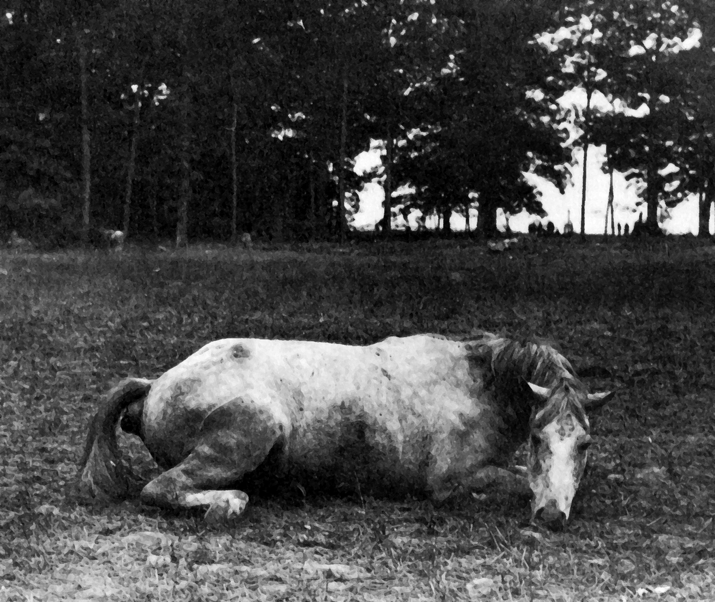
The wounded Rebels had been carried away in great numbers and yet every farmyard and haystack seemed a large hospital. The number of dead horses was high. They lay, like the men, in all attitudes. One beautiful milk-white animal had died in so graceful a position that I wished for its photograph. Its legs were doubled under and its arched neck gracefully turned to one side, as if looking back to the ball-hole in its side. Until you got to it, it was hard to believe the horse was dead.
Brigadier General Alpheus S. Williams,
Division Commander, Army of the Potomac
Alpheus S. Williams, Milo Milton Quaife (eds.), From the Cannon’s Mouth: The Civil War Letters of General Alpheus S. Williams (Detroit: Wayne State, 1959). Image: Library of Congress.
________________________

A “Gaffe” Is When. . . .
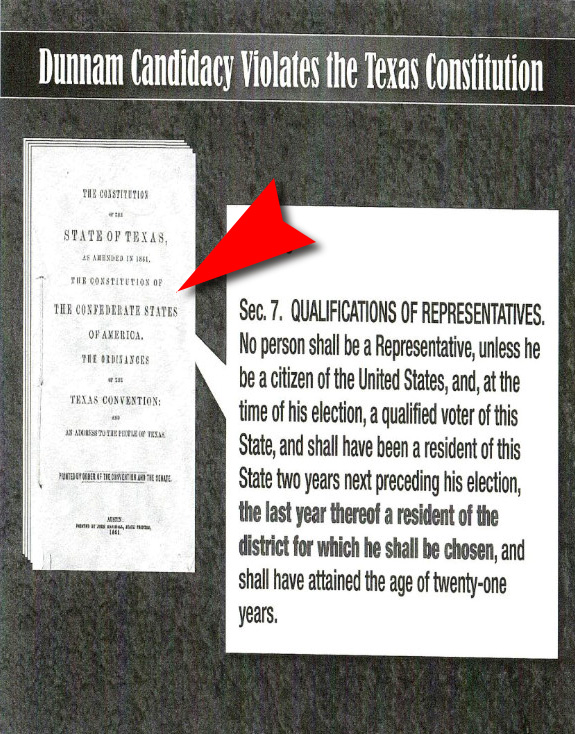
It’s the silly season, and up in Dallas, the Texas GOP recently called a press conference to accuse an incumbent Dem state representative of not actually living in the district he represents. Pretty run-of-the-mill politicking, right up to the point where they handed out press fliers citing the relevant portion of the Texas Constitution — with am image of the Texas Constitution from its time as one of the Confederate States.
“No, categorically no,” state GOP spokesman Bryan Preston said today, when asked if a heady atmosphere of secessionist feeling permeates a party headquarters dominated by Gov. Rick Perry. Last year, after appearing at an Austin tea party rally, Perry told reporters that he understood how frustrated Texans were with the federal government and how they might want to secede from the Union.
Heh.
“Sympathies and antipathies are disabilities in an historian.”
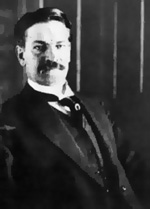 Archibald Gracie IV (1859-1912, left) is today remembered primarily as a survivor of the Titanic disaster, who wrote one of the better first-person accounts of the sinking. Gracie, who had attended (but not graduated from) West Point, was an energetic amateur historian, and was particularly obsessed with the Battle of Chickamauga, in which his father, Archibald Gracie III (1832-1864), had served as a Confederate brigade commander. The younger Gracie spent years researching the battle, work which culminated in his December 1911 publication, The Truth About Chickamauga. Gracie took an extended trip to Europe after completing the volume, booking return passage on the soon-to-be-infamous White Star liner. He apparently hadn’t quite gotten Chickamauga out of his system for, as the late Walter Lord wrote in The Night Lives On, “he cornered Isidor Straus, on whom he had foisted a copy of The Truth About Chickamauga. The book strikes one reader as 462 pages of labored minutiae, but Mr. Straus was famous for his tact; he assured the colonel that he had read it with ‘intense interest.'”
Also not a fan of The Truth About Chickamauga: Ambrose Bierce. The famous writer had served at Chickamauga on the staff of Brigadier General William Babcock Hazen (1830-1887), personally witnessed several key events in the battle, had published several pieces on the action, and apparently gave Gracie at least one face-to-face interview. But Bierce found Gracie’s efforts at telling the truth about Chickamauga to be badly and willfully biased. Here is the opening paragraph of a letter Bierce wrote to Gracie in March 1911, several months before the latter’s book went to press:
March 9, 1911
From the trouble that you took to consult me regarding certain phases of the battle of Chickamauga I infer that you are really desirous of the truth, and that your book is not to belong to that unhappily too large class of books written by “bad losers” for disparagement of antagonists. Sympathies and antipathies are disabilities in an historian that are hard to overcome. That you believe yourself devoid of this disability I do not doubt; yet your strange views of Thomas, Granger and Brannan, and some of the events in which they figured, are (to me) so obviously erroneous that I find myself unable to account for them on the hypothesis of an entirely open mind. All defeated peoples are “bad losers” – history supplies no examples to the contrary, though there are always individual exceptions. (General D. H. Hill is an example of the “good loser,” and, with reference to the battle of Chickamauga, the good winner. I assume your familiarity with his account of that action, and his fine tribute of admiration to some of the men whom he fought — Thomas and others.) The historians who have found, and will indubitably continue to find, general acceptance are those who have most generously affirmed the good faith and valor of their enemies. All this, however, you have of course considered. But consider it again.
Ouch.
______________________
Letter from Phantoms of a Blood-Stained Period: The Complete Civil War Writings of Ambrose Bierce (Russell Duncan and David J. Klooster, eds.)

Spoons Butler, Yellow Jack and the Crescent City
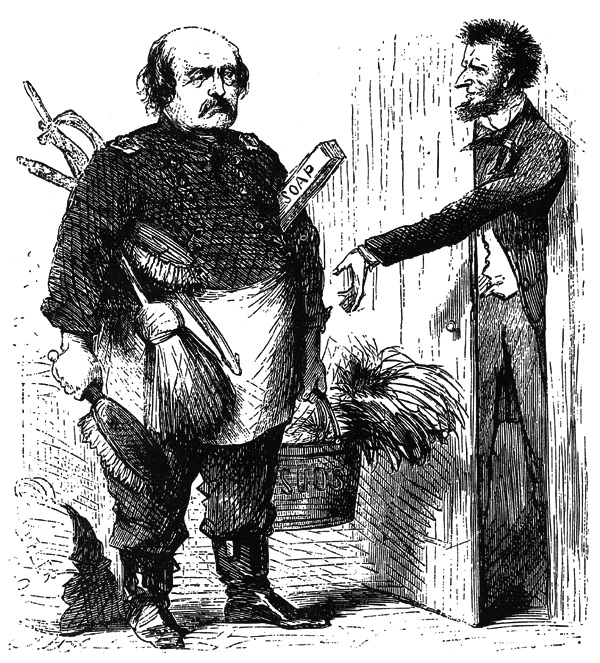
Uncle Abe: “Hell! Ben, is that you? Glad to see you!’
Butler: “Yes, Uncle Abe. Got through with that New Orleans Job. Cleaned them out and scrubbed them up! Any more scrubbing to give out?
_____________
Ron Coddington, blogger and author of the Faces of the Civil War series, has a new post up on Union General Benjamin Franklin Butler. Coddington rightly notes that the general “is not remembered especially well by history.” That’s certainly true. Between his ineptitude as a field commander and the vilification of him resulting from the sharp hand he used in the occupation of New Orleans, Butler gets pretty short shrift in most popular accounts. But as Ron points out, Butler — a former Democrat who at that party’s national convention in 1860 supported Jefferson Davis for president of the United States — was transformed by his war experience into a radical Republican and an ardent champion of civil rights for African Americans. He drafted the Ku Klux Klan Act, signed into law by President Grant in 1871, and (with Charles Sumner) wrote the Civil Rights Act of 1875. The latter legislation was subsequently struck down by the Supreme Court, and many of its key provisions were never enacted until the Civil Rights Act of 1964 — nearly eighty years after they were first set out. As Ron observes, “Butler was a man ahead of his time.”
Butler is often cited as the most infamous example of the Union’s “political” generals, men with little or no military experience who were appointed to senior commands based on their political influence in civilian life. His reputation, at least in the South, is defined by his tenure in New Orleans, where he attained the sobriquet “Beast” Butler for his intolerance of any show of disrespect for his occupying soldiers, and his vigorous enforcement of the rules of occupation. (He infamously hanged a Confederate sympathizer for tearing down the Federal flag from the U.S. Mint.) What’s less known, unfortunately, is the remarkable success Butler’s administration of the city had in reducing its infamously-high toll from that scourge of the South, yellow fever. As Andrew McIlwaine Bell explains in Mosquito Soldiers: Malaria, Yellow Fever and the Course of the American Civil War, New Orleans had a long and horrific history with the disease in the decades before the war, particularly in the 1850s, resulting in the deaths of over eighteen thousand people. The vomito negro was particularly hard on immigrants and visitors to the cities from Northern states; the illness was often referred to as the “strangers’ disease.” Butler was well aware of New Orleans’ reputation as a sickly city, and immediately set out to do something about it.
After consulting with his medical staff and a few local doctors (some of whom were openly hostile), Butler decided that yellow fever was an imported malady that required local unsanitary conditions to survive. As a result, he chose to implement simultaneously the two strategies best known at the time for preventing the spread of the disease-a strict quarantine and fastidious sanitation measures. A quarantine station was set up seventy miles below the city and its officers given firm orders to detain any potentially infected vessels for forty days. In addition, a local physician was appointed to inspect incoming ships at the station and was threatened with execution if any vessels known to be carrying yellow fever were allowed to proceed upriver. These new rules caused a minor diplomatic row with the Spanish; who believed that their ships arriving from Cuba (where yellow fever was endemic) were being unfairly targeted for lengthy detentions. Butler assured Senor Juan Callejon, Her Catholic Majesty’s consul in New Orleans, that he was not imposing “any different quarantine upon Spanish vessels sailing from Havana.” To the relief of the State Department, Spain eventually dropped the matter but not before firing off a few strongly worded communiques.
In town Butler put an army of laborers to work round the clock flushing gutters, sweeping debris, and inspecting sites thought to be unclean such as stables, “butcheries;’ and New Orleans’s many “haunts of vice and debauchery.” Steam-powered pumps siphoned stagnant water from basins and canals into nearby bayous. The northern press picked up the story and ran articles praising Butler’s methods. “He will probably demonstrate before the year is out that yellow fever, which has been the scourge of New Orleans, has been merely the fruit of native dirt, and that a little Northern cleanliness is an effectual guarantee against it,” predicted the editors at Harper’s Weekly. The magazine published a cartoon five months later which featured the general holding a soap bucket and scrub brushes in front of an approving Abraham Lincoln.
In addition to cleaning up the place, Butler also imposed a strict quarantine. How effective were Butler’s efforts? According to Bell, during the fever season of 1862 — the hottest months of late summer and early fall, ending with the first cold front — the number of fatalities to yellow fever in the Crescent City were two.
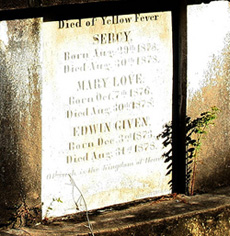 Such a small number is hard to credit, but it appears to be true. Furthermore, deaths remained astonishingly low during the next three years of Federal military occupation. A total of eleven New Orleanians died of yellow fever between 1862 and 1865. The year following the war, when the city was reopened to trade and immigration and local control was returned to civilian authorities under Reconstruction, 185 died. The following year, 3,107. New Orleans quickly slipped back into its old, antebellum pattern of mild years punctuated by terrible epidemics; over four thousand died in 1878, and the following year the disease famously claimed the life of former General John Bell Hood, his wife and one of his eleven children.
Today, Ben Butler is too often viewed as a curious admixture of ogre and buffoon, something of a cross between William Tecumseh Sherman and Oliver Hardy. But the reality is, as always, more complex. Whatever else one may say about his hard-handed rule in New Orleans, there’s little doubt that his efforts in both enforcing a quarantine and cleaning up the city made a tremendous difference, and saved many lives that would have a been lost otherwise even in a “mild” year.
____________________
Image: Harper’s Weekly, 1863, via Abraham Lincoln’s classroom; tomb of Sercy (newborn), Mary Love (22 months) and Edwin Given Ferguson (4 years), who died of yellow fever in New Orleans on August 30 and 31, 1878, via NOLA Graveyard Rabbit.

The Gettysburg Casino
This is a great video, and hits exactly the right chord. For what it’s worth, Matthew Broderick’s g-g-grandfather fought on Culp’s Hill with the 20th Connecticut Infantry. Not sure why this wasn’t mentioned in the video; it’s one of those small details that mean a lot when it comes to making the case for the preservation of Gettysburg.
___________
h/t Kevin Levin.





 Dead Confederates, A Civil War Era Blog
1 comment