Lights! Camera! Secession!
 It looks like things are falling into place for Steven Spielberg’s long-awaited project Lincoln, with the announcement that two-time Oscar-winner Daniel Day-Lewis will take the title role. The film is based on the book Team of Rivals by Doris Kearns Goodwin, with a screenplay by Tony Kushner. Both writers are Pulitzer Prize winners, Goodwin for No Ordinary Time: Franklin and Eleanor Roosevelt: The Home Front in World War II, and Kushner for the play, Angels in America. Spielberg will co-produce with Kathleen Kennedy, who’s taken that role with Spielberg on films including E.T. – The Extra-Terrestrial, Jurassic Park, Schindler’s List and Munich. Filming is planned to start in the fall of 2011, with a projected release in late 2012.
I don’t know if this film will be a hit or not, but if it flops, it won’t be for lack of talent — on either side of the camera.

The Grand Review in Harrisburg
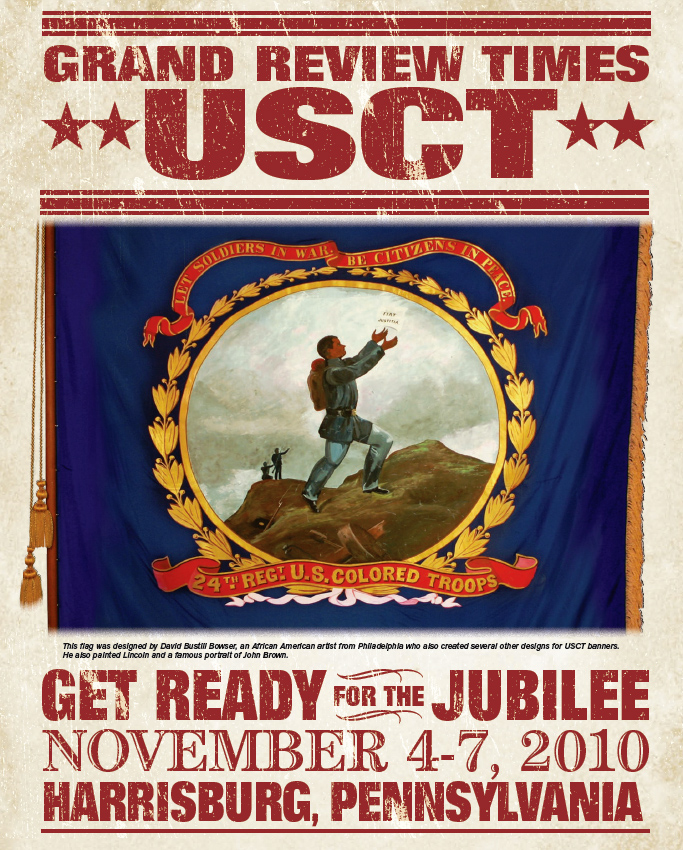
Commenter David Cassatt points out that this coming weekend in Harrisburg, Pennsylvania is the Grand Review, a celebration of the service of USCT during the Civil War. The program of scheduled activities is lengthy (PDF), with something for everyone. The Grand Review commemorates the November 1865 event of the same name organized by the women of Harrisburg to honor the United States Colored Troops from 25 states who were not permitted to participate in the Grand Review of the Armies, a military procession and celebration held May 23-24, 1865 in Washington, D.C., following the end of the Civil War.
This looks like a great event. Sorry for the short notice. Additional information here.
Real Confederates Didn’t Know About Black Confederates
Lots of folks are familiar with Howell Cobb’s famous line, offered in response to the Confederacy’s efforts to enlist African American slaves as soldiers in the closing days of the war: “if slaves make good soldiers our whole theory of slavery is wrong.” It was part of a letter sent to Confederate Secretary of War James A. Seddon, in January 1865:
The proposition to make soldiers of our slaves is the most pernicious idea that has been suggested since the war began. It is to me a source of deep mortification and regret to see the name of that good and great man and soldier, General R. E. Lee, given as authority for such a policy. My first hour of despondency will be the one in which that policy shall be adopted. You cannot make soldiers of slaves, nor slaves of soldiers. The moment you resort to negro [sic.] soldiers your white soldiers will be lost to you; and one secret of the favor With which the proposition is received in portions of the Army is the hope that when negroes go into the Army they will be permitted to retire. It is simply a proposition to fight the balance of the war with negro troops. You can’t keep white and black troops together, and you can’t trust negroes by themselves. It is difficult to get negroes enough for the purpose indicated in the President’s message, much less enough for an Army. Use all the negroes you can get, for all the purposes for which you need them, but don’t arm them. The day you make soldiers of them is the beginning of the end of the revolution. If slaves make good soldiers our whole theory of slavery is wrong — but they won’t make soldiers. As a class they are wanting in every qualification of a soldier. Better by far to yield to the demands of England and France and abolish slavery and thereby purchase their aid, than resort to this policy, which leads as certainly to ruin and subjugation as it is adopted; you want more soldiers, and hence the proposition to take negroes into the Army. Before resorting to it, at least try every reasonable mode of getting white soldiers. I do not entertain a doubt that you can, by the volunteering policy, get more men into the service than you can arm. I have more fears about arms than about men, For Heaven’s sake, try it before you fill with gloom and despondency the hearts of many of our truest and most devoted men, by resort to the suicidal policy of arming our slaves.
No great surprise here; earnest and vituperative opposition to the enlistment of slaves in Confederate service was widespread, even as the concussion of Federal artillery rattled the panes in the windows of the capitol in Richmond.
What’s passing strange, as Molly Ivins used to say, is that Howell Cobb is a central figure in one of the canonical sources in Black Confederate “scholarship,” the description of the capture of Frederick, Maryland in 1862, published by Dr. Lewis H. Steiner of the U.S. Sanitary Commission. In his account of the capture and occupation of the town, Steiner makes mention of
Over 3,000 Negroes must be included in this number [of Confederate troops]. These were clad in all kinds of uniforms, not only in cast-off or captured United States uniforms, but in coats with Southern buttons, State buttons, etc. These were shabby, but not shabbier or seedier than those worn by white men in the rebel ranks. Most of the Negroes had arms, rifles, muskets, sabers, bowie-knives, dirks, etc. . . and were manifestly an integral portion of the Southern Confederate Army.
This passage is often repeated without critique or analysis, and offered as eyewitness evidence of the widespread use of African American soldiers by the Confederate Army. Indeed, Steiner’s figure is sometimes extrapolation to derrive an estimate of black soldiers in the whole of the Confederate Army, to number in the tens of thousands.
But, as history blogger Aporetic points out, Steiner’s observation is included in a larger work that mocks the Confederates generally, is full of obvious exaggerations and caricatures, and is clearly written — like Frederick Douglass’ well-known evocation of Black Confederates “with bullets in their pockets” — to rally support in the North to the Union cause. It is propaganda. Most important, Steiner’s account of Black Confederates under arms is entirely unsupported by other eyewitnesses to this event, North or South. Aporetic goes on to point out the apparent incongruity of Steiner’s description of this horde being led by none other than Howell Cobb:
A drunken, bloated blackguard on horseback, for instance, with the badge of a Major General on his collar, understood to be one Howell Cobb, formerly Secretary of the United States Treasury, on passing the house of a prominent sympathizer with the rebellion, removed his hat in answer to the waving of handkerchiefs, and reining his horse up, called on “his boys” to give three cheers. “Three more, my boys!” and “three more!” Then, looking at the silent crowd of Union men on the pavement, he shook his fist at them, saying, “Oh, you d—d long-faced Yankees! Ladies, take down their names and I will attend to them personally when I return.” In view of the fact that this was addressed to a crowd of unarmed citizens, in the presence of a large body of armed soldiery flushed with success, the prudence — to say nothing of the bravery — of these remarks, may be judged of by any man of common sense.
The Black Confederate crowd doesn’t usually include this second passage describing the same event, or explain Cobb’s apparent profound amnesia when it comes to the employment of African Americans in Confederate ranks. How is it, one wonders, that the same Howell Cobb who supposedly led thousands of black Confederate soldiers into Frederick in 1862 found the very notion of enlisting African Americans into the Confederate military a “most pernicious idea” just twenty-seven months later? How is it that the general who called on his black troops to give three cheers, then “three more, my boys!” came to believe that “the day you make soldiers of them is the beginning of the end of the revolution?” How is it that the commander of successful black soldiers felt that “as a class they are wanting in every qualification of a soldier?”
But set aside Dr. Steiner’s propogandist account for the moment; it’s unreliable and unsupported by other sources. Events at Frederick aside, how is that Howell Cobb, in January 1865, was unaware of the thousands, or tens of thousands, of African Americans soldiers supposedly serving in Confederate ranks across the South?
 Howell Cobb’s Confederate bona fides are unimpeachable, and throughout the war he was irrevocably tied in to both political and military affairs. In his career he was, in turn, a five-term U.S. Representative from Gerogia, Speaker of the U.S. House Representatives, Governor of Georgia, U.S. Secretary of the Treasury, Speaker of the Provisional Confederate Congress, and Major General in the Confederate Army. He was a leader of the secession movement, and was elected president of the Montgomery convention that drafted a constitution for the new Confederacy. For a brief period in 1861, between the establishment of the Confederate States and the election of Jefferson Davis as its president, Speaker Cobb served as the new nation’s effective head of state. In his military career, Cobb held commands in the Army of Northern Virginia and the District of Georgia and Florida. He scouted and recommended a site for a prisoner-of-war camp that eventually became known as Andersonville; his Georgia Reserve Corps fought against Sherman in his infamous “March to the Sea.” Cobb commanded Confederate forces in a doomed defense of Columbus, Georgia in the last major land battle of the war, on Easter Sunday, April 16, 1865, the day after Abraham Lincoln died in Washington, D.C. Perhaps more than any other man, Howell Cobb’s career followed the fortunes of Confederacy — civil, political and military — from beginning to end.
And yet, after almost four years of war and almost three years of commanding large formations of Confederate troops in the field, in January 1865 Howell Cobb seemingly remained unaware of the thousands, or tens of thousands, of African Americans now claimed to have been serving in Southern ranks throughout the war.
It is passing strange, is it not?

A Hot Mess of Historiography
I haven’t written much here about the new book by Ann DeWitt and Kevin M. Weeks, Entangled in Freedom, a novel for young people. The book’s protagonist, Isaac Green, is a young black slave in Civil War Georgia who follows his master into the Confederate Army and, by virtue of having memorized the Bible, quickly finds himself voted by the white soldiers to be the regimental chaplain. I’ve tried to avoid the subject in part because Levin has been all over it since the book was announced, and partly because I had intended to publish here an e-mail interview with Ms. DeWitt, trying to get at some of her background and thinking in writing and publishing the work. I contacted her a couple of weeks ago asking if she’d be willing, and she promptly responded positively. But I got lazy and didn’t send her my questions and, in the meantime, the debate over the book has intensified considerably. Last month Mr. Weeks sent a copy of the book and an angry letter to Levin’s employer — very bad form, that — accusing Levin of “slander” and trying to have the book “silenced.” In the back-and-forth that’s followed, both on Levin’s site and Ms. DeWitt’s, both sides have laid out their cases (and likely will continue to do so), and I’m not sure that there’s any point now in doing the e-mail interview. I don’t think it will illuminate much, since neither “side” in the debate is even speaking the other’s language.
Here is what I mean about not speaking each other’s language: Levin’s (and others’) criticisms of the book — what’s known of it — revolved entirely around the historicity of it, how well the fictional story fits within the known historical framework of that time and place. In response, Ms. DeWitt counters with a response outlining her values and motivations in writing the book:
Imagine writing a novel for young adults which (1) espouses the sanctity of marriage, (2) does not contain profanity, (3) promotes earning ones way in America, (4) advocates true friendship, (5) demonstrates the positive progression of America over the last 150 years, and (6) highlights the strength of the family unit; yet, the novel is dubbed “nonsense” by a recognized Virginia Civil War journalist and historian.
The above six principles are the family narratives of Ann DeWitt. I have no 19th century written documentation of these six family values because they were passed down to me verbally by my ancestors. I do not secretly hide them but proudly share them with the world.
It’s clear that, far from defending the research and historical background presented in the novel, she doesn’t understand the criticism of it. None of those “principles” have anything to do with the historical accuracy of the setting or the plot. One could write such a work in any of a thousand settings, and and frame it in a way that is, if not historically documented, at least plausible. Laura Ingalls Wilder is the obvious example of doing this, although she had the advantage of having actually lived the life she described in her writing.
DeWitt asserts that “these six family values because they were passed down to me verbally by my ancestors.” Okay, fine, but no one’s asking for documentation of her family values. This statement reveals something much more essential here, specifically that, in Ms. DeWitt’s view, criticizing the historical accuracy of the book is criticizing her family, and her values. She sees it not as criticism of her work, but as a personal attack on her. It’s not the same thing at all. I don’t doubt that Ms. DeWitt is a very well-intentioned and sincere person, but having good intentions and a strong moral compass is not enough when it comes to presenting a believable and realistic picture of the past.
Ms. DeWitt and Mr. Weeks haven’t written an historical novel; they’ve written a moral allegory nominally set in the Civil War. But it’s not the South that existed in 1860s or, for that matter, the 1960s. Ms. DeWitt and Mr. Weeks have constructed a Confederacy where wise people “in the Deep South knew all the time that black people are cut from the same board of cloth as whites,” and “knew that slavery wasn’t going to last always.” Alexander Stephens and George Wallace never existed in this version of the American South. Ms. DeWitt and Mr. Weeks have the notion of historical fiction exactly backwards; the goal is to tell a story that fits within the larger, factual context of its setting, not to create a fictional history that supports the particular story one wants to tell for other reasons.
The passage Levin posted recently shows that the historical framework for the novel is based largely on Black Confederate factoids and memes culled from the web. Just that one short passage — 648 words — crams in multiple Black Confederate bullet points, strung together by stilted dialogue. Only a tiny percentage of Confederate soldiers owned slaves? Check. Harper’s Weekly reference to black soldiers at Manassas? Check. Loyal slaves will be delivered “a great prize?” Check. Slaves and owners who “get along fine?” Check.
In defending her book and its thesis, Ms. DeWitt has made some extremely odd arguments — so odd or tangential that one might guess that they were meant in jest, though I don’t think they were. She argues — in all sincerity, it seems — that the slaves who went to war with their masters as body servants were the historical equivalent of present-day, college-educated executive assistant, and then extends that analogy further to the entourage that a modern-day U.S. president travels with. She openly wonders why “mark-and-capture,” a technique used to estimate wildlife populations that involves trapping animals, tagging them and releasing them back into the wild to be recaptured and counted at a later date, hasn’t been used to calculate the numbers of Black Confederates. DeWitt does an online search of Confederate pension records from Alabama’s state archives under the surname “Slave” (!), but says cryptically that the archive “does not document if these African-Americans fought for the Union or the Confederate States Army.” DeWitt lists over two hundred men who received “colored” pensions from the State of Tennessee, helpfully adding that “Colored = Black = African-American,” but omits the fact that Tennessee differentiated these from “S” pensions, issued to soldiers. She hints — both on her website and in the novel — that enlistment or service records that do not explicitly identify the subject as white should be taken as de facto evidence of prospective Black Confederates: “CSA enlistment forms and pension applications did not include race, so . . . the world may never know the total number of African-Americans (Blacks) who served in any and all capacities of the American Civil War.” And then there are explanations that are just odd non-sequiturs:
African-Americans want to know their family history for personal as well as medical reasons. We have turned to scientific DNA testing in order to trace our family lineage. As a human being, it is offensive when historians overall imply that my ancestors in South Carolina were not smart enough to band together and run across a field of dying Confederate soldiers to join the Union Army.
As historiography, this is a hot mess. I don’t know Ms. DeWitt; she seems like a very nice, well-intentioned person who’s deeply devoted to her family and its traditions. That’s a good thing, but I fear that she assumes oral tradition, passed from generation to generation, to be sufficient in not only interpreting her own family’s history — I’ve addressed this before with regard to my own Confederate ancestors — but also in understanding the South, the Confederacy and the fundamental nature of the white supremacist slave society the Confederacy was established to protect and promote. The historical world she presents in Entangled in Freedom isn’t based on research or academic study; it’s the product of intuition and her own, deeply-held faith. But those things are not enough, and to frame what’s intended as an uplifting and inspiring personal story within such a farcical historical context does a real disservice to the public generally, and to students particularly.
It’s a missed opportunity.

Old Dominion Shows the Way

Bloggers Ta-Nehisi Coates and Kevin Levin both call attention to Virginia Governor Bob McDonnell’s announcement Friday that next spring, Confederate History Month will be replaced by Civil War in Virginia Month. This is not only good news, but the governor also chose to make his announcement at the highest-profile venue possible, the 2010 Signature Conference of the Virginia Sesquicentennial of the American Civil War Commission.
The legacies of the Civil War still have the potential to divide us. But there is a central lesson of that conflict that must bond us together today. Until the Civil War, the founding principle that all people are created equal and endowed by their Creator with unalienable rights was dishonored by slavery. Slavery was an evil and inhumane practice which degraded people to property, defied the eternal truth that all people are created in the image and likeness of God, and left a stain on the soul of this state and nation. For this to be truly one nation under God required the abolition of slavery from our soil. Until the Emancipation Proclamation was issued and the Civil War ended, our needed national reconciliation could not begin. It is still a work in progress.
150 years is long enough for Virginia to fight the Civil War.
“Now, on the eve of this anniversary, is a time for us to approach this period with a renewed spirit of goodwill, reverently recalling its losses, eagerly embracing its lessons, and celebrating the measure of unity we have achieved as a diverse nation united by the powerful idea of human freedom.
A modern Virginia has emerged from her past strong, vibrant and diverse. Now, a modern Virginia will remember that past with candor, courage and conciliation. . . .
It’s time to discuss openly how we as Americans, black, white and brown can promote greater reconciliation and trust and greater access to the American Dream for all, so that there is more peace in our hearts and homes, schools and neighborhoods.
This speech is direct, comprehensive, and eloquent. In this address, Bob McDonnell acknowledges and embraces the fundamental truth that so many are unwilling to — that one cannot separate Confederate history from the Civil War, nor the Civil War from this nation’s long, dark legacy of slavery. They are all aspects of the same heritage we share, inextricably intertwined and knotted together.
I have been critical of McDonnell’s original Confederate History Month proclamation — “tone deaf” is about the most charitable thing one can say about it — but today’s remarks really do clean the slate. And while the governor certainly caught a lot of (well-deserved) hell for that earlier document, I’m not going to take a cynical view of his motivations in reversing course here. As Coates said, “You can not ask politicians to do the right thing, and then attack them for doing it.” Amen.
Good for Bob McDonnell. Good for Virginia. Good for the South, and good for our nation. I hope that in this area, has it has so often throughout American history, Virginia sets an example for others to follow.
Added Monday, September 27: Via TPMMuckraker, the SCV responds to McDonnell’s move:
“Our organization is terribly disappointed by this action,” [Virginia SCV Division Commander Brag] Bowling told TPMmuckraker. “[McDonnell] succumbed to his critics, people who don’t support him anyway. And the vast majority of citizens of Virginia support Confederate History Month.”
He said he had spoken with the governor’s office and told them the same thing. He said “Civil War In Virginia Month” is a poor substitute.
“Nobody’s ever been able to reason with me and tell me why we’re honoring Yankees in Virginia,” Bowling said. “The only northerners in Virginia were the ones that came to Virginia and killed thousands of Virginia citizens when they invaded.”
I suppose it’s too much to ask for the SCV to actually respond to the detailed and specific content of McDonnell’s address; instead Bowling drags out the same tired dog-whistles about Yankees and “invasion.” Seriously, folks: get yourselves some new talking points.
Full text of the governor’s address after the jump.
A “Gaffe” Is When. . . .
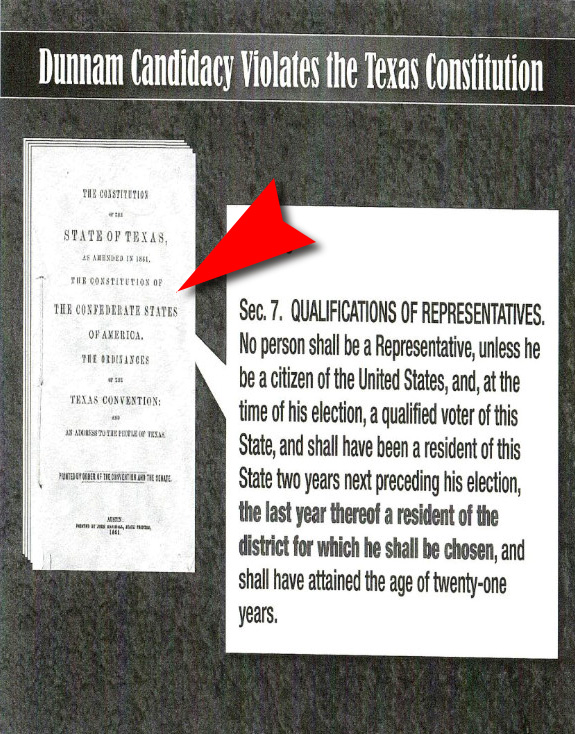
It’s the silly season, and up in Dallas, the Texas GOP recently called a press conference to accuse an incumbent Dem state representative of not actually living in the district he represents. Pretty run-of-the-mill politicking, right up to the point where they handed out press fliers citing the relevant portion of the Texas Constitution — with am image of the Texas Constitution from its time as one of the Confederate States.
“No, categorically no,” state GOP spokesman Bryan Preston said today, when asked if a heady atmosphere of secessionist feeling permeates a party headquarters dominated by Gov. Rick Perry. Last year, after appearing at an Austin tea party rally, Perry told reporters that he understood how frustrated Texans were with the federal government and how they might want to secede from the Union.
Heh.
“Sympathies and antipathies are disabilities in an historian.”
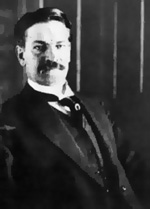 Archibald Gracie IV (1859-1912, left) is today remembered primarily as a survivor of the Titanic disaster, who wrote one of the better first-person accounts of the sinking. Gracie, who had attended (but not graduated from) West Point, was an energetic amateur historian, and was particularly obsessed with the Battle of Chickamauga, in which his father, Archibald Gracie III (1832-1864), had served as a Confederate brigade commander. The younger Gracie spent years researching the battle, work which culminated in his December 1911 publication, The Truth About Chickamauga. Gracie took an extended trip to Europe after completing the volume, booking return passage on the soon-to-be-infamous White Star liner. He apparently hadn’t quite gotten Chickamauga out of his system for, as the late Walter Lord wrote in The Night Lives On, “he cornered Isidor Straus, on whom he had foisted a copy of The Truth About Chickamauga. The book strikes one reader as 462 pages of labored minutiae, but Mr. Straus was famous for his tact; he assured the colonel that he had read it with ‘intense interest.'”
Also not a fan of The Truth About Chickamauga: Ambrose Bierce. The famous writer had served at Chickamauga on the staff of Brigadier General William Babcock Hazen (1830-1887), personally witnessed several key events in the battle, had published several pieces on the action, and apparently gave Gracie at least one face-to-face interview. But Bierce found Gracie’s efforts at telling the truth about Chickamauga to be badly and willfully biased. Here is the opening paragraph of a letter Bierce wrote to Gracie in March 1911, several months before the latter’s book went to press:
March 9, 1911
From the trouble that you took to consult me regarding certain phases of the battle of Chickamauga I infer that you are really desirous of the truth, and that your book is not to belong to that unhappily too large class of books written by “bad losers” for disparagement of antagonists. Sympathies and antipathies are disabilities in an historian that are hard to overcome. That you believe yourself devoid of this disability I do not doubt; yet your strange views of Thomas, Granger and Brannan, and some of the events in which they figured, are (to me) so obviously erroneous that I find myself unable to account for them on the hypothesis of an entirely open mind. All defeated peoples are “bad losers” – history supplies no examples to the contrary, though there are always individual exceptions. (General D. H. Hill is an example of the “good loser,” and, with reference to the battle of Chickamauga, the good winner. I assume your familiarity with his account of that action, and his fine tribute of admiration to some of the men whom he fought — Thomas and others.) The historians who have found, and will indubitably continue to find, general acceptance are those who have most generously affirmed the good faith and valor of their enemies. All this, however, you have of course considered. But consider it again.
Ouch.
______________________
Letter from Phantoms of a Blood-Stained Period: The Complete Civil War Writings of Ambrose Bierce (Russell Duncan and David J. Klooster, eds.)

The Gettysburg Casino
This is a great video, and hits exactly the right chord. For what it’s worth, Matthew Broderick’s g-g-grandfather fought on Culp’s Hill with the 20th Connecticut Infantry. Not sure why this wasn’t mentioned in the video; it’s one of those small details that mean a lot when it comes to making the case for the preservation of Gettysburg.
___________
h/t Kevin Levin.

David Blight’s “The Civil War and Reconstruction Era, 1845-1877”
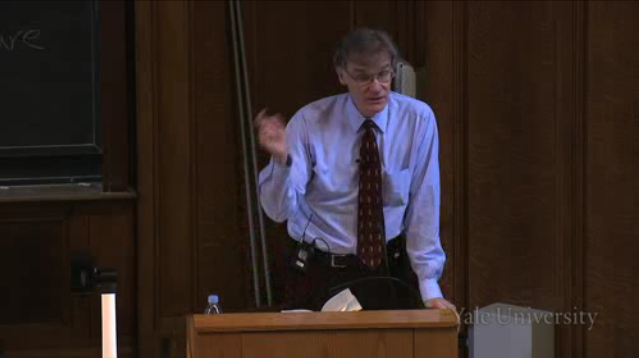
For anyone not familiar with the work of David Blight, you could do worse than to spend some time in the audience for his undergraduate course, recorded during the spring semester of 2008. I had some great instructors — Roger Bilstein, Maury Darst and Alex Pratt, I’m lookin’ at y’all — but none like this. If you watch the entire series, you won’t get academic credit, but you’ll sure get an education.
United States Colored Troops Support Amendment 62

Company E, 4th U.S. Colored Infantry. Library of Congress.
I don’t like to get too much into present-day politics on this blog, but when folks drag historical figures (real or imagined) into the fray, it becomes fair game for commentary. Personhood Colorado, an anti-abortion group looking to amend that state’s constitution to designate a fetus a “person” under law, has a new radio ad in which an actor portrays a runaway slave who joins the Union Army to fight in the Civil War:
I’m George Stevens and I’m a person. I was held as property as a child. Even before my birth I was called a slave in an America you wouldn’t recognize. But folks like you helped me escape North to freedom and in 1864, I joined the infantry to fight for my country. I fought so all slaves would be recognized as persons, not property. And we won. But today in Colorado, there are still people called property – children – just like I was. And that America you thought you wouldn’t recognize is all around you and these children are being killed. This November, vote “yes” on Amendment 62. Amendment 62 declares unborn children persons, not property. And that’s the America I fought for. . . .
I’m sure “George Stevens” was chosen as a sufficiently common name to allow the producers to avoid having to answer for pinning any specific individual, even a long-dead one, to this cause. According to the National Park Service’s Civil War Soldiers and Sailors System, there were at least ten “George Stevens” serving in black U.S. regiments during the war, and at least one more among state troops, in the 55th Massachusetts Infantry.
There seems to be a lot of this going on lately, latching on to specific historical figures for a sort of endorsement-from-beyond-the-grave. I’m not talking about your run-of-the-mill, homage to leaders of the past in a gauzy, feel-good sort of way, but taking actual (or in “George Stevens” case, fictional) historical figures and presenting them as explicitly endorsing a particular candidate or position. In many of these cases, it seems, the pairing of the candidate and known, established positions of the historical figure are dubious, or even amusing. Rand Paul, the GOP Senate candidate in Kentucky who has questioned the propriety of the Civil Rights Act and has defended the right of private businesses to discriminate based on race — though he’s also said “it’s bad for business” if they do — published an editorial in the Bowling Green Daily News in which he wrote that “when I read history I side with abolitionists such as William Lloyd Garrison and Frederick Douglas,” apparently forgetting the spelling of “Douglass.” Rick Barber, running in the GOP primary for a congressional seat in Alabama, famously ran an ad where he sits in a bar, surrounded by colonial revolutionaries like Sam Adams and Ben Franklin and asserts that the American Revolution began as a protest over taxes, seemingly unaware that it was about taxation without representation, a legitimate problem that Barber’s own candidacy would seem to disprove on its face. Not quite satisfied with that bit of whiplash-inducing logic, Barber followed up with an ad in which he asked Abraham Lincoln (“Hey, Abe!”) the Great Emancipator’s view on federal income taxes, to which the sixteenth president ominously intones, “slavery!” As with his previous ad, Barber’s history here is a little off, given that the Lincoln administration imposed the first income tax in U.S. history. Oops.
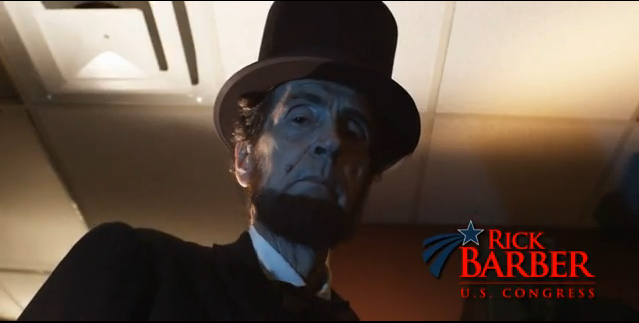
I don’t mind it so much when modern politicians make reference to historical figures, when the parallels actually, you know, make sense, when the current issue or policy position shows a clear and logical lineage. But these recent examples are just silly, made more so by the dissonance between the positions actually taken by the historical figures whose mantles they claim and the modern-day political positions they’ve been exhumed to endorse. Does anyone actually believe that, in their own day, Franklin and Adams would have been considered to stand on the “conservative” side of the political spectrum, or that Douglass favored the federal government keeping out of civil rights issues? Did George Washington really support the idea of violent overthrow of a republic’s elected government? (“Gather your armies!”) And remind me again — what does the historical record say about Private Stevens’ (Stevenses?) position on abortion? I hate to generalize, but I’ve never got the idea that the political forebears of the Tea Party movement — prime backers of both Rand Paul and Rick Barber — were big fans of either Lincoln or strident abolitionists like Douglass, neither of whom were shy about using the force of the U.S. government to pursue their objectives. Is it worth noting that at the same time Personhood Colorado is making a direct and explicit parallel between itself and the abolitionists of 150 years ago, its allies in Washington D.C. are lynching their opponents in effigy?
This is all pretty ridiculous, over-the-top political theater, and I suspect that the vast majority of people see it that way, including those who happen to agree with the candidate in question on the issues. But I’m skeptical that it wins elections. There’s some evidence of that; for all the cable-news airtime and YouTube play Barber’s ads got — over 380,000 views and counting for the “gather your armies!” spot — he got a thumpin‘ a couple of weeks ago in the primary runoff with Montgomery City Councilwoman Martha Roby. And Personhood Colorado may need an entire regiment of “George Stevenses” to pass their constitutional amendment — the last time it came up for a vote, in 2008, it got crushed almost three-to-one.




 Dead Confederates, A Civil War Era Blog
4 comments