Hunley on the Road
Blog reader Woodrowfan passes along this image, another way to remember Hunley:

___________

150 Years Ago this Evening. . .
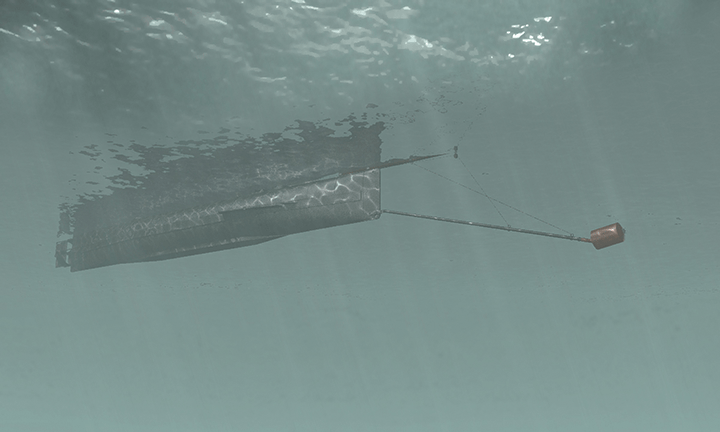
. . . the Confederate submersible H. L. Hunley sank the Federal warship Housatonic in the Atlantic Ocean off Charleston.

____________
Update, February 17, 3 p.m.: My colleagues Craig Swain and Robert Moore both have reflections on this day. Craig shares some thoughts on the the sinking of Housatonic, and its place in the Charleston campaign and the larger war effort. He closes with this:


And as it happens, Robert Moore was thinking exactly along those lines.
____________

New in the Civil War Monitor
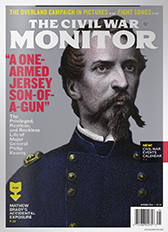 The new issue of the Civil War Monitor is now available online, and will be arriving in subscribers’ mailboxes and on newsstands soon. In this issue:
An unquenchable thirst for war transforms a restless son of privilege into a fearless but controversial commander. By Stephen W. Sears
Fight Songs
From inspiring anthems to humorous ditties, Civil War soldiers crafted a variety of musical lyrics to help pass the time, air laments, amuse comrades, and share their struggles. By Christian McWhirter
Rivers, Roads, & Regiments
The 1864 Overland Campaign in pictures. By Garry Adelman
The Ubiquitous Mr. Tanner
Grievously wounded during the conflict, Union soldier James Tanner went on to achieve both fame and infamy during his remarkable postwar life. By James Marten DEPARTMENTS Editorial: Personal Favorites Salvo: Facts, Figures & Items of Interest
Travels: A Visit to Frederick, Maryland
Voices: Hardtack
Preservation: Interpretation: Half the Battle
Figures: A Ticket Home
Disunion: The Freedmen of Wisconsin
In Focus: Brady’s Accidental Exposure Casualties of War: Albert Moses Luria Battlefield Echoes: The Wilderness, Body Counts, and Fading Hopes Books & Authors:
Voices From the Army of the Potomac, Part 2, by Gary W. Gallagher Civil War Personal Journals, by Robert K. Krick
Parting Shot: Take Me Out to the … Battlefield ________
h/t to Mark Jenkins for the heads-up on this.
Hunley Sesquicentennial Activities this Weekend

This weekend marks the 150th anniversary of the famous, fatal mission of the Confederate submersible H. L. Hunley at Charleston. Over at To the Sound of the Guns, Craig Swain has compiled an extensive list of commemoration activities going on there this weekend, including Monday, the sesquicentennial of the boat’s loss. Check it out.
__________
The Daily Show Meets the Old West
After I put up that post the other day about Newman Haynes “Old Man” Clanton, I pulled out Casey Tefertiller’s biography of Wyatt Earp, and skimmed the section that deals with the famous gunfight at the OK Corral. It seems the local coroner, one Henry M. Matthews, studiously avoided saying anything of substance about the incident, including (most importantly) whether a crime had been committed:


The Tombstone Nugget pounced:
Heh.
__________
Joshua Lawrence Chamberlain Society
February 24, 2014, will be the 100th Anniversary of the death of Civil War veteran Joshua Lawrence Chamberlain. General Chamberlain, who is well known from his charge down Little Round Top depicted in the movie Gettysburg, was severely wounded while charging the works at Petersburg in 1864. Chamberlain would suffer for almost 50 years from the effects of his wounds before finally succumbing to them. Speaking of General Chamberlain and his wounds, one of his doctors said, “In bearing this silently while performing all his exacting duties there was shown more heroism than in gaining the military promotions which he so valiantly earned.” General Chamberlain is sometimes said to be the last Civil War veteran to die from his wounds.
In memory of the 100th anniversary of his death, the Joshua Chamberlain Society and joshualawrencechamberlain.com will be starting a memorial fund to honor the warrior’s memory while helping modern day wounded warriors.
The 20th Maine monument at Gettysburg and Chamberlain’s gravesite in Maine are often festooned with flags and flowers. The flowers will fade, but a gift to the Chamberlain Society will be a lasting tribute to all wounded warriors.
The Joshua Chamberlain Society (“JCS”) is a grass roots 501(c)(3) federally tax exempt charity that was formed with the mission of providing long term support to veterans that sustained permanent combat injuries fighting the long war on terror for our nation. It also provides long term support to the children of veterans who made the ultimate sacrifice in our service. In what we believe is a unique mission, we adopt these severely wounded veterans as JCS Heroes, and they will stay part of our family for the remainder of their lives, just as their injuries will be with them for the remainder of their lives. As the battles in Afghanistan and elsewhere continue to rage, we have been introduced to more wounded warriors than our current funds allow us to adopt. As such, our continued challenge is to raise money in the hopes of serving more and more JCS Heroes.
To learn more about the society, please visit www.chamberlainsociety.org
The Joshua Chamberlain Memorial Fund will be an ongoing support network allowing donors to track its progress. (See funds raised at bottom of this page.) As the fund grows, it will directly benefit the adoption of a new Hero or meet the needs of a current Hero.
Please help us honor our heroes with a donation to the Joshua Chamberlain Memorial Fund.
- Click below to donate to JCS.
http://stl.chamberlainsociety.org/donate.php
- Donations are also accepted via postal mail:
Joshua Chamberlain Society
P.O. Box 8475
Olivette, MO 63132.
Please make checks payable to the Joshua Chamberlain Society with a memo directing the donation to the “JLC Memorial Fund.”
If you are interested in being a sponsor, please contact us at: suzgoldjcs-at-gmail-dot-com
____________
Dick Dowling and the Immigrant’s Call to Arms
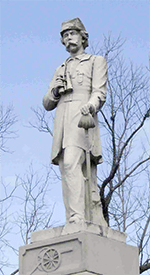 I’ve been honored to be asked to give a short talk at the annual Dick Dowling Statue Cleaning and Ceremony in Houston on Sunday, March 16 at 1 p.m. This event is now held in conjunction with the city’s St. Patrick’s Day celebration, but actually goes back more than a century, to 1905. The statue is believed to be Houston’s oldest public monument.
Last year, Houston writer and journalist John Nova Lomax spoke at the ceremony. He also wrote that “today, Dowling the man is only remembered by Houston’s rapidly vanishing (if not downright extinct) coterie of Confederate apologists, military historians, and the local Irish community, who honor him at his statue every St. Patrick’s Day.” I’m not really sure where that leaves me, but I’m going to give it a shot. My working title is “Dick Dowling and the Immigrant’s Call to Arms.”
It should be fun. In the meantime, here’s a great profile by my fellow blogger Damian Shiels of John Thomas Browne (1845-1941), a native of County Limerick, who served as a Confederate soldier in his teens and went on to become Mayor of Houston in the 1890s. Damian has a new book coming this spring, The Irish in the American Civil War, that should be fantastic.
____________
Image by Flickr user Denaldo Dillo, under Creative Commons license.
The Texas Confederate on Boot Hill
 There’s always a new angle on an old story, isn’t there?
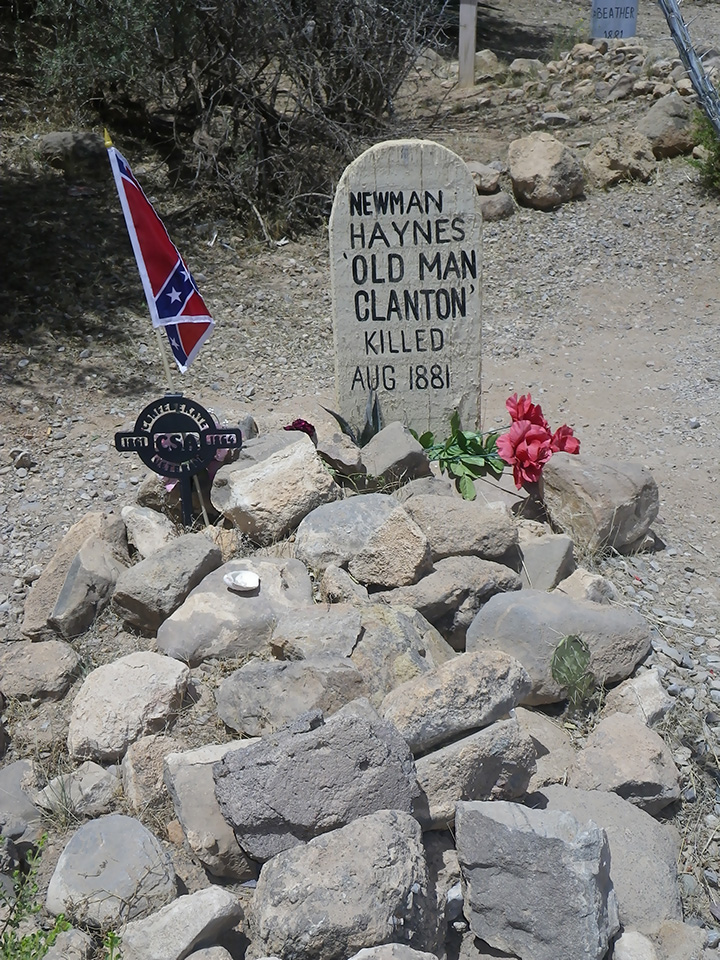
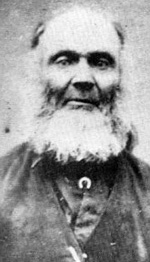
This past weekend there was a post by a member over at Civil War Talk who recently visited Tombstone, Arizona, and was surprised to see a small Confederate flag marking the grave of one of that location’s better-known, um, residents. Newman Haynes “Old Man” Clanton (right, c. 1880) was the father of Ike and Billy Clanton, part of the “Cowboy” faction that ran afoul of the Earp brothers in Tombstone in 1881. When the Earps, along with the tubercular dentist Doc Holliday confronted the Cowboys at the OK Corral in late October 1881, Ike happened to be unarmed and ran off; Billy stayed and died, shot through the right wrist and in the chest and abdomen.
Old Man Clanton didn’t live to see his son killed in that famous shoot-out; Newman had himself been shot down a few months before in an ambush while herding stolen cattle through the Guadalupe Canyon, at the extreme southern end of the Arizona/New Mexico border. In truth, all the Clantons had a long reputation as troublemakers and small-time criminals, mostly involving cattle rustling, often with animals stolen from across the border in Mexico. Ike Clanton himself would be killed in a shoot-out with a detective attempting to arrest him on rustling charges in 1887; his violent end probably surprised exactly no one.
The family was originally from Missouri, but resettled in Texas in the 1850s. At the time of the 1860 U.S. Census, Newman Haynes Clanton and his family were were farming or ranching in Dallas County. He and his wife, Maria (or Mariah), had six children living with them, including twelve-year-old Joseph Isaac Clanton, later known as Ike. Two more children, including Billy, would be born after 1860.
Clanton’s Civil War service record, as documented by his file at the National Archives (8.3MB PDF), is spotty. He appears to have enlisted as a Private in Co. K of the First Texas Heavy Artillery Regiment at Waco on March 1, 1862, for a period of one year. In May 1862 he was on detached duty at Hempstead, Texas, employed as a nurse. He was discharged on July 6 as being overage; he would have been in his mid-40s. He re-enlisted at Fort Hébert, near Galveston, on January 1, 1863, the day of the Battle of Galveston, ostensibly for the duration of the war. Clanton apparently had other plans, though, because his record shows him as absent without leave from that date, and marked as a deserter from March 2, 1863.
In ealry 1864, Clanton joined an unknown Texas State Militia unit which was probably occupied paroling the frontier. He went into the U.S. Provost’s headquarters at Franklin, Texas (north of present-day Bryan and College Station) on August 26, 1865 and swore out his allegiance to the United States. Just eight days later, on September 3, 1865, Clanton arrived at Fort Bowie, Arizona Territory, with (as his record notes) “persons now at Fort Bowie, Arizona Territory, enroute to California, who formerly belonged to the Confederate States Army.” The speed of Clanton’s travel — roughly 850 miles in eight days — strongly suggests he went by stagecoach, rather than on his own horse or by wagon. Even so, it would have been an unusually fast stagecoach ride; the pre-war Butterfield Overland Express traveled roughly that same route, and didn’t make as good a time as Clanton would have had to in the summer of 1865.
Or maybe, as CWT user Nathanb1 suggests, he wasn’t in both places at all. The NARA records, ostensibly made just over a week apart, almost describe different middle-aged men:


Same man at Franklin, Texas on August 26, and then at Fort Bowie, Arizona Territory on September 3? It’s hard to see how. But if anyone was the sort to have some unknown scheme, it would be Newman Haynes Clanton.
___________
Boot Hill grave site image via Find-a-Grave.
Friday Night Concert: John Hartford, “The Julia Belle Swain“
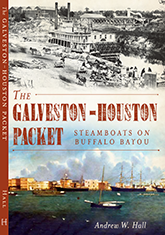
I went this evening to give a talk to the Houston-area chapter of the Steamship Historical Society of America on the packet trade on Buffalo Bayou. It was great fun, with some challenging questions from these folks. I don’t know any Buffalo Bayou steamboat songs, so here’s the late, great John Hartford with one of my favorites of his, “The Julia Belle Swain.” Enjoy.
_________
Canister!

Small stories that don’t warrant full posts on their own:
- A big chunk of Burnside’s Bridge at Antietam National Battlefield spalled off recently. The National Park Service will be making repairs this coming spring and summer, but money is tight. Folks who would like to donate to this effort can send checks to Antietam National Battlefield / P.O. Box 158 / Sharpsburg, MD 21782. Make the check payable to “Antietam National Battlefield” and (important!) be sure to mark in the notation line that it is for Burnside’s Bridge. The NPS will be updating the status of repair work on their Facebook page.
- The six-square-block cemetery complex on Broadway in Galveston may soon be added to the National Register. That’s great news, because with the possible (but not certain) exception of the State Cemetery in Austin, I don’t think there’s any patch of ground in this state that more historic persons-per-acre than that one. Just among CW folks there’s Louis T. Wigfall and John Bankhead Maguder, plus lots more of more specific, local interest.
- A new play at the City Center Stage II in Manhattan, “Row After Row,” looks at three Civil War reenactors in a “likable comedy-drama reveals that these hyperactive history buffs are just normal folk like the rest of us, with job troubles, love troubles, life troubles — but with a predictable quirk or two.” Runs through February 16.
- Every True Southron™ knows that the Museum of the Confederacy is a shameful disaster, infested with political correctness and run by traitorous scallawags. They think this, place, though, looks awesome!
- Congratulations to Temple, Texas resident Brian Floca, whose book Locomotive just won the Randolph Caldecott Medal for the year’s most distinguished American picture book for children (top). Locomotive tells the story of a family traveling from Omaha to Sacramento on the newly-finished Transcontinental Railroad in 1869. Go buy it now.
- And why, exactly, do Zouaves get all the action?
- Are you interested in having Justin Bieber’s green card revoked and having him deported? If so, sign here.
- An old issue of The Daybook, a publication of the Hampton Roads Naval Museum, has some neat CW-related stories that I recently discovered. Go have a look (PDF).
- A self-described Bigfoot tracker is coming to Houston to display the corpse of a Sasquatch he claims he shot in San Antonio (!) in 2012. He will not be answering questions about the last time he did that in 2008, when the corpse turned out the be a ratty-ass gorilla suit frozen in a block of ice and he publicly admitted the hoax. This one’s totally real, dood. Totally.
- Alexandria, Virginia has repealed a city ordinance requiring certain streets to be named after famous Confederates.
- Over at Talking Points Memo, Josh Marshall has a nice essay about Pete Seeger and his place in a musical arc that spans from Lead Belly to Woodie Guthrie to Bob Dylan to Bruce Springsteen.
- Speaking of Springsteen, the Governor of New Jersey needs to face the fact that his love for the Boss is an unrequited one:
Got any more? Put ’em in the comments.
__________




leave a comment