Canister!
Small items that don’t warrant full posts on their own:
- Orange County, Texas has formally declared April as “Confederate History and Heritage Month” at the request of the local SCV camp. You may recall that these are the same folks building a Confederate monument on Martin Luther King Boulevard there, which is totally a coincidence. Totally.
- The planned miniseries To Appomattox has launched a Kickstarter campaign to raise $2.5M. It’s a huge amount, but I hope they’re successful.
- Speaking of Kickstarter, this one was kind of a bust.
- There’s also this page set up to raise funds to make a movie about Nathan Bedford Forrest, based on what the video says is Lochlain Seabrook’s “novel” about the man. That will be a screenwriting challenge, given that the novel is 822 pages long, almost twice as long as Jack Hurst’s well-regarded bio of the man.
- A while back I mentioned that it looks like a multi-agency team has found the remains of the steamship Planter, that Robert Smalls famously stole at Charleston and delivered to the Union fleet offshore. The team seems more and more confident of the find.
-
Rob Ford, the crack-smoking mayor of Toronto, is running for re-election. Let’s dance!

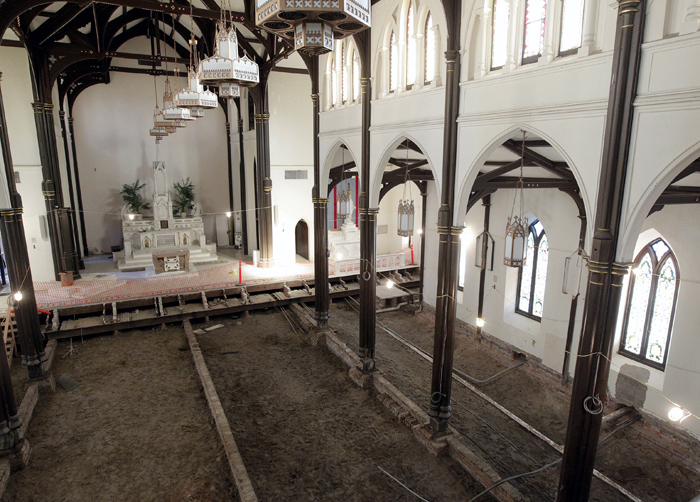
- St. Mary’s Cathedral in Galveston (above, during restoration) is set to reopen Sunday for Easter Mass after being severely damaged by Hurricane Ike in 2008. St. Mary’s, which was established in the 1840s, is sometimes called the “Mother Cathedral of Texas.”
- Back in January I missed Lt. Col. Robert Bateman’s observations on Charlie Goodson’s “New Confederate Army.” Better late than never. The video link doesn’t work, but there’s lots more here.
- And in Lexington, Brandon Dorsey is responding to the dispute over Confederate iconography at Washington & Lee by organizing a debate to establish Robert E. Lee’s reputation, or something. Naturally, he wants you to send him money to do it. I expect this will be as successful as his much-hyped boycott of Lexington and his plan to defeat that city’s mayor for reelection.
Got any more? Put ’em n the comments.
_____________
St. Mary’s restoration photo by Kevin M. Cox, Galveston County Daily News.
Understanding Fort Pillow: “Full and Ample Retaliation”

On another forum folks have been discussing the Battle of Fort Pillow in April 1864, and some of the factors that led to the “slaughter” — Nathan Bedford Forrest’s own term, from his report immediately after the action (“The river was dyed with the blood of the slaughtered for 200 yards.” AOR 57, 610) — of Pillow’s defenders. While there will always be room for historians to debate Forrests’ direct role in what happened there, one must also recall how black Federal troops and their white officers were viewed by Confederates, both as a matter of personal views and as a matter of official, governmental policy. Almost a year before Fort Pillow, the Confederate Congress had explicitly defined the Emancipation Proclamation and recruitment of African American troops as a form of inciting “servile insurrection” — think Nat Turner — and formally declared such practice as being “inconsistent” with the rules of warfare “among civilized nations.” Such cases, the Confederate Congress declared, should therefore be met with “full and ample retaliation,” without recourse to traditional military due process or the niceties usually afforded prisoners of war:

“Full and ample” retaliation against black Union troops and their white officers was an official policy, written into Confederate law.
This policy found its force in numerous ways across the South, through the remainder of the war. Just weeks after its passage, Lee’s army crossed again into Maryland, in what would come to be known as the Gettysburg Campaign. During their brief sojourn in Maryland and Pennsylvania, Confederate troops seized and brought with them hundreds of African Americans, some of whom were born free and had never set foot in slave territory, under the guise of capturing runaway slaves. Hundreds of people, perhaps as many as a thousand, were kidnapped this way, with the knowledge (if not explicit endorsement) of officers at the highest levels of Lee’s command. It’s a policy that reflects, codifies, the widely-held view of African American Union troops and their white officers as being not opposing soldiers, but something much worse — insurrectionists — who were an existential threat to the Confederacy and to southerners’ own homes and families.
Just to be clear — I’m not arguing that what happened at Fort Pillow is a result of the resolution passed in Richmond almost a year before, but rather that they both reflect the same attitudes when it comes to African American soldiers — that they and their white officers are beneath contempt, and undeserving of recognition as soldiers. Confederates like Howell Cobb understood this intuitively. In retrospect, right question to ask isn’t “why Fort Pillow?”, but why there weren’t more Fort Pillows?
What They Saw at Fort Pillow


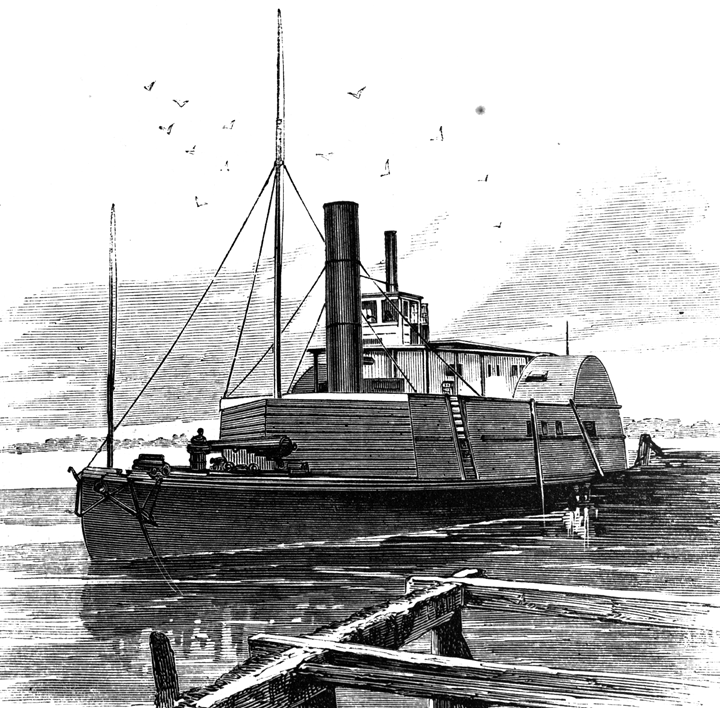
While doing research on something else, I came across a couple of accounts of the aftermath of the Confederate assault on Fort Pillow, written by naval officers of U.S.S Silver Cloud (above), the Union “tinclad” gunboat that was the first on the scene. I don’t recall encountering these descriptions before, and they really do strike a nerve with their raw descriptions of what these men witnessed, at first hand.
These accounts are particularly important because historians are always looking for “proximity” in historical accounts of major events. The description of an event by someone who was physically present is to be more valued than one by someone who simply heard about it from another person. The narrative committed to paper immediately is, generally, more to be valued than one written months or years after the events described, when memories have started to fade or become shaded by others’ differing recollections. Hopefully, too, the historian can find those things in a description of the event by someone who doesn’t have any particular axe to grind, who’s writing for his own purposes without the intention that his account will be widely and publicly known. These are all factors — somewhat subjective, to be sure — that the historian considers when deciding what historical accounts to rely on when trying to reconstruct historical events, and to understand how one or another document fits within the context of all the rest.
Which brings us back to the eyewitness accounts of Acting Master William Ferguson, commanding officer of U.S.S. Silver Cloud, and Acting Master’s Mate Robert S. Critchell of that same vessel.
Ferguson’s report was written April 14, 1864, the day after he was at the site. It was addressed to Major General Stephen A. Hurlbut, commanding officer of the Union’s XVI Corps of the Army of the Tennessee, then headquartered at Memphis. It appears in the Army OR, vol. 57, and the Navy OR, vol. 26.
U.S. STEAMER SILVER CLOUD,
Off Memphis, Tenn., April 14, 1864. SIR: In compliance with your request that I would forward to you a written statement of what I witnessed and learned concerning the treatment of our troops by the rebels at the capture of Fort Pillow by their forces under General Forrest, I have the honor to submit the following report: Our garrison at Fort Pillow, consisting of some 350 colored troops and 200 of the Thirteenth Tennessee Cavalry, refusing to surrender, the place was carried by assault about 3 p.m. of 12th instant. I arrived off the fort at 6 a.m. on the morning of the 13th instant. Parties of rebel cavalry were picketing on the hills around the fort, and shelling those away I made a landing and took on-board some 20 of our troops (some of them badly wounded), who had concealed themselves along the bank and came out when they saw my vessel. While doing so I was fired upon by rebel sharpshooters posted on the hills, and 1 wounded man limping down to the vessel was shot. About 8 a.m. the enemy sent in a flag of truce with a proposal from General Forrest that he would put me in possession of the fort and the country around until 5 p.m. for the purpose of burying our dead and removing our wounded, whom he had no means of attending to. I agreed to the terms proposed, and hailing the steamer Platte Valley, which vessel I had convoyed up from Memphis, I brought her alongside and had the wounded brought down from the fort and battle-field and placed on board of her. Details of rebel soldiers assisted us in this duty, and some soldiers and citizens on board the Platte Valley volunteered for the same purpose. We found about 70 wounded men in the fort and around it, and buried, I should think, 150 bodies. All the buildings around the fort and the tents and huts in the fort had been burned by the rebels, and among the embers the charred remains of numbers of our soldiers who had suffered a terrible death in the flames could be seen. All the wounded who had strength enough to speak agreed that after the fort was taken an indiscriminate slaughter of our troops was carried on by the enemy with a furious and vindictive savageness which was never equaled by the most merciless of the Indian tribes. Around on every side horrible testimony to the truth of this statement could be seen. Bodies with gaping wounds, some bayoneted through the eyes, some with skulls beaten through, others with hideous wounds as if their bowels had been ripped open with bowie-knives, plainly told that but little quarter was shown to our troops. Strewn from the fort to the river bank, in the ravines and hollows, behind logs and under the brush where they had crept for protection from the assassins who pursued them, we found bodies bayoneted, beaten, and shot to death, showing how cold-blooded and persistent was the slaughter of our unfortunate troops. Of course, when a work is carried by assault there will always be more or less bloodshed, even when all resistance has ceased; but here there were unmistakable evidences of a massacre carried on long after any resistance could have been offered, with a cold-blooded barbarity and perseverance which nothing can palliate. As near as I can learn, there were about 500 men in the fort when it was stormed. I received about 100 men, including the wounded and those I took on board before the flag of truce was sent in. The rebels, I learned, had few prisoners; so that at least 300 of our troops must have been killed in this affair. I have the honor to forward a list(*) of the wounded officers and men received from the enemy under flag of truce. I am, general, your obedient servant, W. FERGUSON,
Acting Master, U.S. Navy, Comdg. U.S. Steamer Silver Cloud.
Ferguson’s report is valuable because it is detailed, proximate in time to the event, and was written specifically for reference within the military chain of command. It seems likely that Ferguson’s description is the first written description of the aftermath of the engagement within the Federal’s command structure. Certainly it was written before news of Fort Pillow became widely known across the country, and the event became a rallying cry for retribution and revenge. Ferguson’s account was, I believe, ultimately included in the evidence published by the subsequent congressional investigation of the incident, but he had no way of anticipating that when he sat down to write out his report just 24 hours after witnessing such horrors.
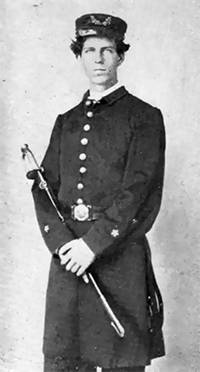 The second account is that of Acting Master’s Mate Robert S. Critchell (right), a 20-year-old junior officer aboard the gunboat. Critchell’s letter, addressed to U.S. Rep. Henry T. Blow of Missouri, was written a week after Ferguson’s report, after the enormity of events at the fort had begun to take hold. If Ferguson’s report reflected the shock of what he’d seen, Critchell’s gives voice to a growing anger about it. Critchell’s revulsion comes through in this letter, along with his disdain for the explanations of the brutality offered by the Confederate officers he’d met, that they’d simply lost control of their men, which the Union naval officer calls “a flimsy excuse.” Crittchell admits to being “personally interested in the retaliation which our government may deal out to the rebels,” but also stands by the accuracy of his description, offering to swear out an affidavit attesting to it.
UNITED STATES STEAMER “SILVER CLOUD.” Mississippi River, April 22nd, 1864. SIR :-Since you did me the favor of recommending my appointment last year, I have been on duty aboard this boat. I now write you with reference to the Fort Pillow massacre, because some of our crew are colored and I feel personally interested in the retaliation which our government may deal out to the rebels, when the fact of the merciless butchery is fully established. Our boat arrived at the fort about 7½ A. M. on Wednesday, the 13th, the day after the rebels captured the fort. After shelling them, whenever we could see them, for two hours, a flag of truce from the rebel General Chalmers, was received by us, and Captain Ferguson of this boat, made an arrangement with General Chalmers for the paroling of our wounded and the burial of our dead; the arrangement to last until 5 P. M. We then landed at the fort, and I was sent out with a burial party to bury our dead. I found many of the dead lying close along by the water’s edge, where they had evidently sought safety; they could not offer any resistance from the places where they were, in holes and cavities along the banks; most of them had two wounds. I saw several colored soldiers of the Sixth United States Artillery, with their eyes punched out with bayonets; many of them were shot twice and bayonetted also. All those along the bank of the river were colored. The number of the colored near the river was about seventy. Going up into the fort, I saw there bodies partially consumed by fire. Whether burned before or after death I cannot say, anyway, there were several companies of rebels in the fort while these bodies were burning, and they could have pulled them out of the fire had they chosen to do so. One of the wounded negroes told me that “he hadn’t done a thing,” and when the rebels drove our men out of the fort, they (our men) threw away their guns and cried out that they surrendered, but they kept on shooting them down until they had shot all but a few. This is what they all say. I had some conversation with rebel officers and they claim that our men would not surrender and in some few cases they “could not control their men,” who seemed determined to shoot down every negro soldier, whether he surrendered or not. This is a flimsy excuse, for after our colored troops had been driven from the fort, and they were surrounded by the rebels on all sides, it is apparent that they would do what all say they did,throw down their arms and beg for mercy. I buried very few white men, the whole number buried by my party and the party from the gunboat “New Era” was about one hundred. I can make affidavit to the above if necessary. Hoping that the above may be of some service and that a desire to be of service will be considered sufficient excuse for writing to you, I remain very respectfully your obedient servant, ROBERT S. CRITCHELL, Acting Master’s Mate, U. S. N.
Critchell’s note about the explanation offered by Confederate officers, who argued that the black soldiers “would not surrender and in some few cases [the Confederate officers] ‘could not control their men,’ who seemed determined to shoot down every negro soldier, whether he surrendered or not,” is worth noting. That was the excuse offered at the time, and it remains so almost 150 years later, for those Fort Pillow apologists who acknowledge that unnecessary bloodshed took place at all. Critchell observed at the time that “this is a flimsy excuse,” and so it remains today.
Critchell’s letter also seems to endorse retaliation-in-kind, “because some of our crew are colored and I feel personally interested in the retaliation which our government may deal out to the rebels, when the fact of the merciless butchery is fully established.” This urge is, unfortunately, entirely understandable, and we’ve seen that within weeks the atrocity at Fort Pillow was being used as a rallying cry to spur Union soldiers on to commit their own acts of wanton violence. Vengrance begets retaliation begets vengeance begets retaliation. It never ends, and it’s always rationalized by pointing to the other side having done it before.
It never ends, but it often does have identifiable beginnings. Bill Ferguson and Bob Critchell saw one of those beginnings first-hand.
_____________
Critchell letter and images from Robert S. Critchell, Recollections of a Fire Insurance Man (Chicago: McClurg & Co., 1909).

Ryan Budget Would Axe National Endowment for the Humanities
Over at Past in the Present, Michael Lynch flags the new budget proposal of Representative Paul Ryan, that would eliminate the National Endowment for the Humanities. “Not cutting it, mind you,” Michael says, “but doing away with it entirely.”

It is a terrible idea, particularly since it gains virtually nothing in terms of reducing spending. The NEH budget of $146M represents about 0.004% of federal spending. Need a visual representation? Here you go:

See that blue slice of the pie chart, right up at the top? That’s NEH funding as a share of the whole. Don’t see it? Well, good, you get the idea. NEH funding isn’t a drop in the bucket; it’s a drop in the damn lake.
Most Washington-watchers will argue that Ryan’s budget has little chance of becoming law. That’s true, but having now been part of his original bill, NEH funding inevitably becomes a bargaining chip in the sausage-grinding budget-writing process. It’s on the table, as they say. We saw this happen in Texas a few years ago when Governor Perry’s proposed state budget completely eliminated the Texas Historical Commission — not an agency that was exactly swimming in cash to begin with. The THC survived, largely because a good bit of what they do is mandated by both state and federal law, but it devastated the agency, resulting in a roughly 40% cut in its budget and multiple layoffs. It was a bad business, and damaging to the agency’s ability to continue its mission. The THC’s County Historical Commission services, Texas Historical Marker Program, Museum Services, Historic Texas Cemeteries, Military History services, and field archeological services all were cut back to reduced levels of both funding and staff support.
Please contact your U.S. Representative, and urge him or her to support continued funding of the National Endowment for the Humanities at current — or better yet, pre-sequester — levels. One hundred forty-six million dollars doesn’t buy very much out of government normally — it’s about one-third the cost of an F-22 Raptor, an aircraft that was such a dog that even the Pentagon wanted to cut its losses and abandon it — but it goes a long way when it comes to supporting museums, cultural heritage and education programs.
_____________
Canister!
Small stories that don’t warrant full posts of their own:
- The 2015 Lincoln Funeral Train Project (above) is facing a big fundraising challenge, but it will be a remarkable commemoration if they can pull it off.
- In Ohio, volunteers are working to document evidence of the Civil War prison camp at Johnson’s Island.
- A U.S. Senate candidate in Kentucky attends a rally and gives a fiery speech in support of states’ rights; afterward swears he had no idea it was a rally for the legalization of cockfighting. Even Joe Scarborough can’t get his head around how that happens.
- A monument to Robert E. Lee was vandalized in Charlottesville. This doesn’t help whatever cause you think you’re pushing, dumbasses.
- The bronze Union soldier atop a GAR monument in Sioux Falls, South Dakota disappeared back in the 1960s, but his head has returned.
- Comic Jim Gaffigan has a theory about why we southerners move slowly.
- I’m only halfway through Matthew Goodman’s Eighty Days, but it’s a wild romp, made better by being true.
- The Thomas Jackson Letters is a collection of correspondence from a British-born ropemaker in Reading, Pennsylvania, who wrote extensively during the war to encourage his former countrymen to abandon their support of the Confederacy.
- Still no resolution on getting the conservation lab for artifacts from U.S.S. Monitor going again.
Got any more? Put ’em in the comments below.
___________
Has NOAA Found the Steamboat Planter?
Via Craig Swain at To the Sound of the Guns, there may be a big CW naval find announced soon.:
From the Post & Courier:
The wreckage of one of the most famous Civil War vessels to sail South Carolina waters may have been found off northern Charleston County. Those behind the possible find aren’t saying much, but they plan to announce more details during an event here next month. Early on May 13, 1862, enslaved pilot Robert Smalls seized the Planter, a 149-foot Confederate transport ship, from a Charleston wharf, maneuvered it past Fort Sumter and surrendered it to federal vessels outside the city’s harbor. Newspapers called the move “bold” and “daring” and Smalls won freedom for his crew and several other slaves, including his wife and three children. The Planter, a wooden vessel built in Charleston, continued to play a role in the war and later was sold to private owners, who returned it to its pre-war role of transporting people and goods up and down the coast. By the account in the Dictionary of American Naval Fighting Ships, she sank in a storm off Cape Romain while assisting a stranded ship on July 1, 1876, said Stephen Wise, a military historian and director of the Parris Island Museum in Beaufort. Wise said Gordon Watts, an underwater archaeologist with Tidewater Atlantic Research of North Carolina has been searching for the remains and believes he has found something. “The only thing left are going to be the boilers,” Wise said. “They hit some things they thought were boilers. Of course, Cape Romain is an area where a lot of ships went down.”
And this:
NOAA’s Office of National Marine Sanctuaries is holding a reception and presentation, “The Search for USS Planter: The Ship That Escaped Charleston and Carried Robert Smalls to Destiny,” at 6 p.m. May 12 at the Francis Marion Hotel in downtown Charleston. Special guests are expected to include descendants of Robert Smalls and the team that led the search for the Planter as part of NOAA’s African-American Voyage to Discovery Initiative. Those interested should contact Pam Plakas at 301-713-7287 or Pam.Plakas@noaa.gov by April 28.
Craig cautions that we should keep our “optimism guarded.” True enough, but for those familiar with CW history and underwater archaeology of that area, there may not be any more respected names than Stephen Wise and Gordon Watts. I’d bet my lunch money they’re onto something.
Previous coverage of Planter‘s story:
https://deadconfederates.com/2012/05/24/the-steamboat-planter-in-depth/ https://deadconfederates.com/2012/05/18/to-be-divided-between-robert-smalls-and-his-associates/ https://deadconfederates.com/2012/05/16/the-black-confederate-who-stole-the-steamboatplanter/ https://deadconfederates.com/2012/05/13/one-of-the-most-daring-and-heroic-adventures-since-the-war-commenced/____________
CW Monitor Interviews Chris Wheeler
That was timely — the “Behind the Lines” blog at the Civil War Monitor has an interview by David Thompson with Chris Wheeler, the author, director and producer of Civil War: The Untold Story:
Have you subscribed to the Monitor yet? It’s not your dad’s Civil War magazine.
_________
Civil War: The Untold Story on PBS
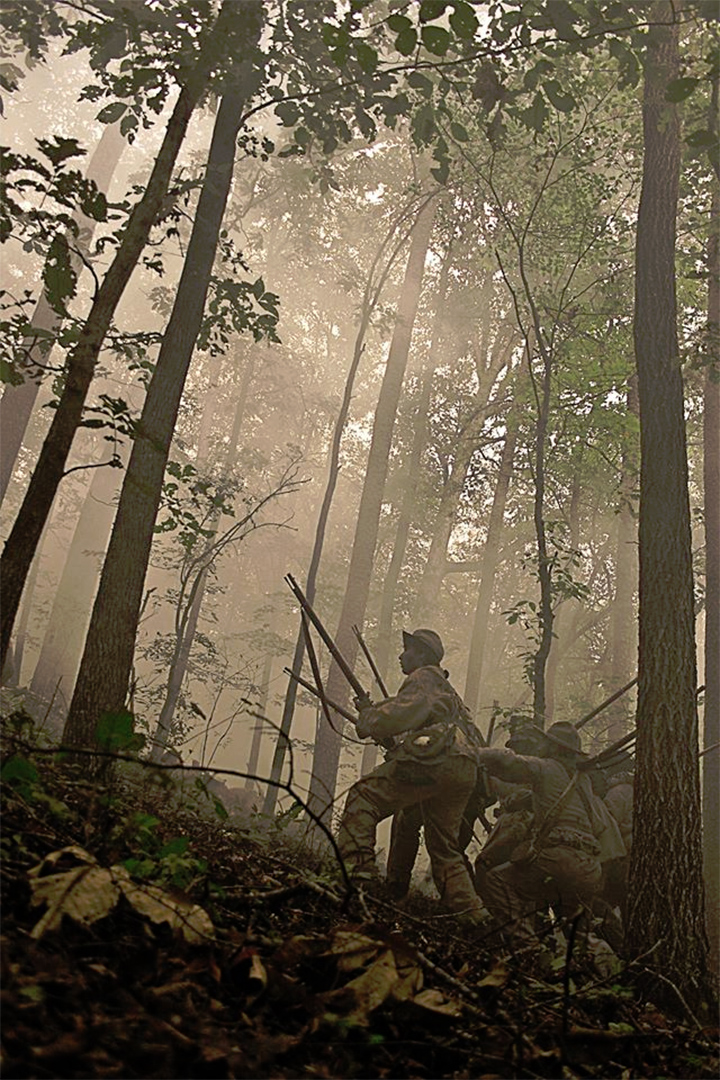

Via Pat Young at Civil War Talk, PBS stations around the country will begin airing Civil War: The Untold Story, a five-part series on the war in the western theater. A partial list of stations where it’s scheduled is after the jump. Last year, HistoryNet had an interview about the series with the director, Chris Wheeler:
Here’s an introductory clip:
Can you direct me to Madame Hays’ bawdy house?
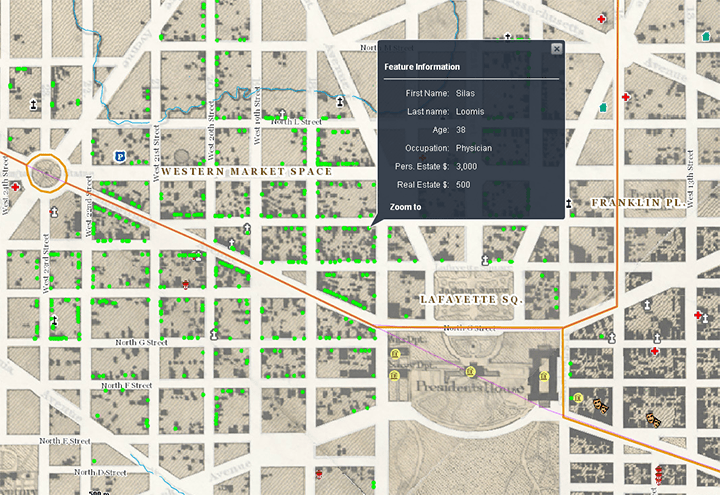
The folks at Civil War Washington have put together a wonderful GIS tool for exploring CW-era Washington, D.C. You can see the data overlaid on a contemorary map of the District of Columbia, a modern map or satellite image. All sorts of data is included, such as identification of residences, wartime hospitals, theaters, churches, bawdy houses, forts, police stations, and so on. You can also use a “time slider” to change the date from 1859 to 1866 to see the profusion of small hospitals around the city as the war went on. From the description:
The instructions are here, but you might as well just dive in yourself.
Thanks to CWT user kholland for bringing this site to my attention.
Oh, I almost forgot — Madame Hays’ is in the middle of the block on Twelfth, between E and F, Northwest.
___________

Stupid is as Stupid Does, Y’all.

It doesn’t bother me that Texas Tech in Lubbock has decided to let students display Confederate flags from their dorm room windows, so much as the fact that one proud Confederate Heritage™ advocate (1) chose to use it as a defacement of a Texas state flag, and (2) then hung it upside-down.
Bless his or her heart, that poor child doesn’t have the sense God gave lettuce.
_________






6 comments