“Sale of Government Property”
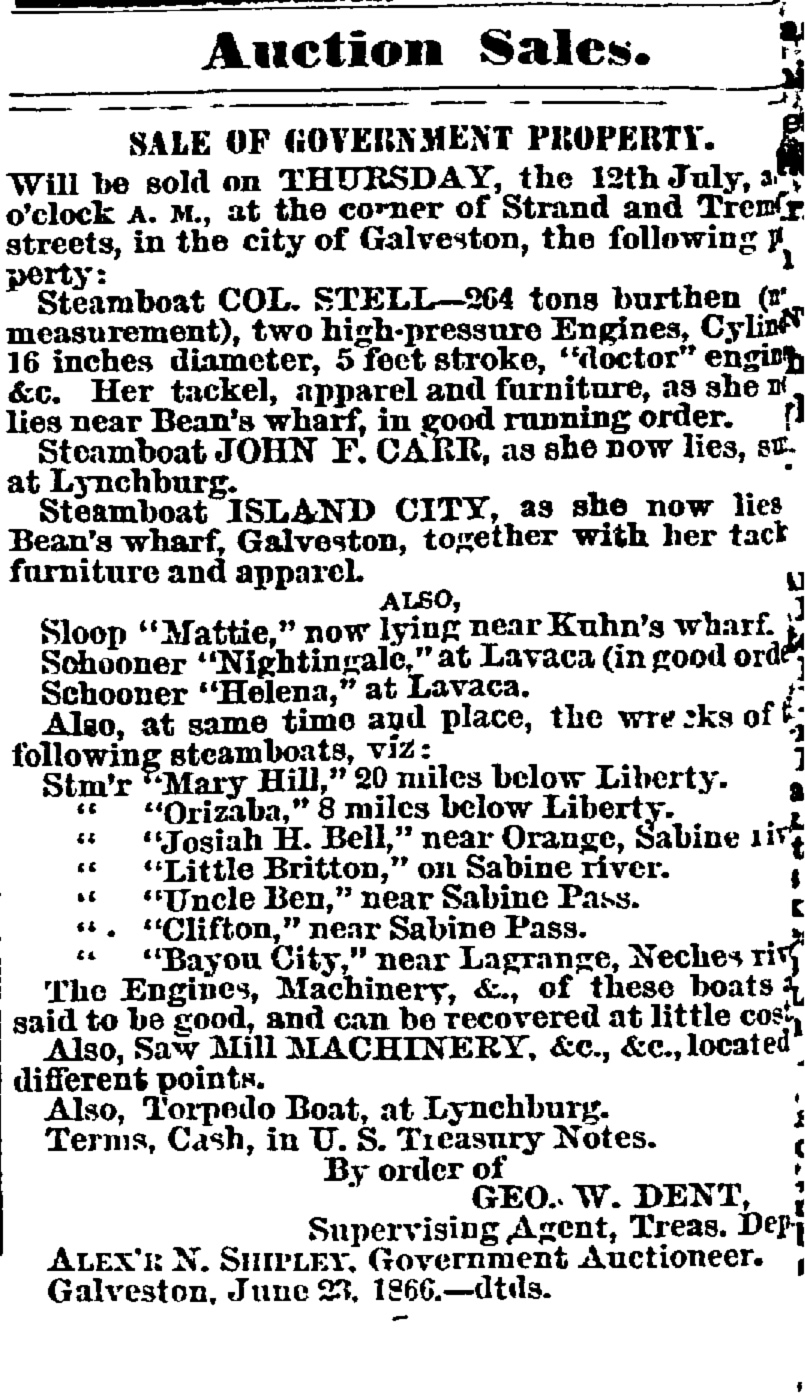

My colleague, Matt Reeves, shared this news clipping with me today from the July 4, 1866 copy of Flake’s Bulletin in Galveston. It advertises the sale, at public auction, of numerous vessels seized by the U.S. government after the end of the Civil War. The vessels are in all different conditions, and located anywhere from Sabine Pass in the east, to Lavaca (“LaVaca”) on Matagorda Bay to the west, and at Liberty, some distance up the Trinity River from Galveston Bay. Most of the vessels are either sunk, or their specific condition is unlisted, but Col. Stell (sometimes spelled Stelle) was shown as being “in good running order.” That boat, that had been almost new at the beginning of the war, did indeed go back into service as a civilian steamer, and is listed as having been “lost at sea” on the last day of 1867. Whatever happened to Col. Stell, though, she must have been close inshore, though, because the wreck was the subject of a salvage claim heard at the U.S. District Court in Austin in the summer of 1868.

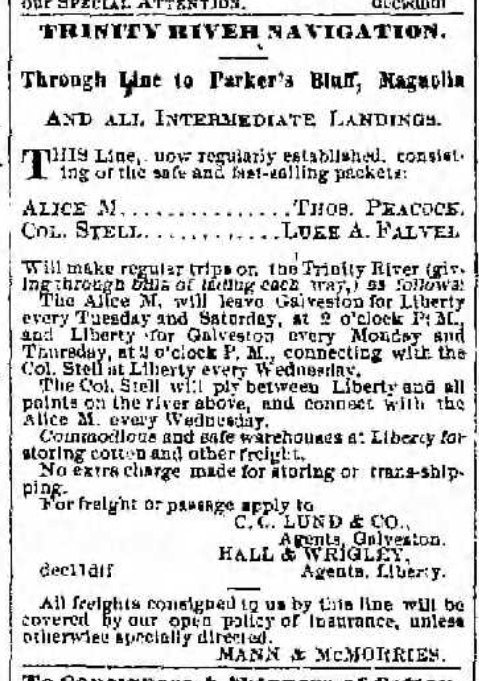
The 1866 auction notice is notable (and perhaps worth saving a copy) for two related reasons. First, obviously, it gives the status and likely fate of these vessels after the end of the war. But it also amounts a sort of inventory of Confederate vessels in Texas at the close of the conflict.
When the war ended, U.S. troops sent to occupy the South were followed closely by U.S. Treasury agents, whose job it was to locate, identify, and seize Confederate government property, either for transfer to the U.S. government, or to sell on its behalf. Apart from obvious things like military stores and equipment, this property was largely in the form of cotton. In the cash-poor Confederacy, the government had been accepting payment-in-kind for taxes and other debts owed by private individuals. Eventually government warehouses became full, and by late in the war Confederate treasury agents were simply going around to farms and plantations, tagging the bales as government property, to be collected and removed at some later date. The writer Ambrose Bierce had served during the war as a U.S. staff officer to General William Babcock Hazen, and for a time after the surrender he worked as a Treasury agent in Selma, Alabama, trying to locate and claim those Confederate bales for the United States.
So the second notable thing about this auction notice from July 1866 is that it lays out that these vessels, several of which I’d never heard of, were (by whatever evidence) deemed by the U.S. Treasury as former Confederate government property, and so forfeit to the United States. That’s what George W. Dent’s role here was — like Bierce’s in Alabama, to identify, seize, and sell former C.S property, and return its value to the Treasury.
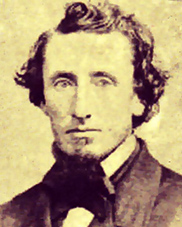
And who was George Wrenshall Dent (1819-99, right)? He was the older brother of Julia Boggs Dent, and brother-in-law of General (and soon to be President) Ulysses S. Grant.
Some things never change, y’all.
________

“Fall of Charleston” by Shovels and Rope
Early on the morning of February 18, 1865 — 154 years ago yesterday — U.S. troops onshore and in the blockading fleet off Charleston noticed that the Confederates at Fort Sumter had not hoisted a flag above the battered remnants of the post. The monitor U.S.S. Canonicus moved slowly closer, and fired two rounds into the fort from her 15-inch Dahlgren smoothbores. The Union bluejackets waited for the inevitable response. Instead, there was only the sound of the wind and water.
The Confederates were gone. Charleston had fallen.

Here’s a track from the album Divided and United by Shovels & Rope, the Charleston husband and wife duo of Michael Trent and Cary Ann Hearst. You can read more about them and their recording of “The Fall of Charleston” here, or hop over to NPR for a mini-concert. A contemporary broadside of the lyrics is available here.
Oh have you heard the glorious news, is the cry from every mouth,
Charleston is taken, and the rebels put to rout;
And Beauregard the chivalrous, he ran to save his bacon—
When he saw General Sherman’s “Yanks,” and “Charleston is taken!”
With a whack, rowdy-dow,
A hunkey boy is General Sherman,
Whack, rowdy-dow,
Invincible is he!
This South Carolina chivalry, they once did loudly boast,
That the footsteps of a Union man, should ne’er pollute their coast.
They’d fight the Yankees two to one, who only fought for booty,
But when the “udsills” came along it was “Legs, do your duty!”
With a whack, rowdy-dow,
Babylon is fallen,
Whack, rowdy-dow,
The end is drawing near!
And from the “Sacred City,” this valiant warlike throng;
Skedaddled in confusion, although thirty thousand strong—
Without a shot, without a blow, or least sign of resistance,
And leaving their poor friends behind, with the “Yankees” for assistance!
With a whack, rowdy-dow,
How are you, Southern chivalry?
Whack, rowdy-dow,
Your race is nearly run!
And again o’er Sumter’s battered walls, the Stars and Stripes do fly,
While the chivalry of Sixty-one in the “Last ditch” lie;—
With Sherman, Grant and Porter too, to lead our men to glory,
We’ll squash poor Jeff’s confederacy, and then get “Hunkydory!”
With a whack, rowdy-dow,
How are you, neutral Johnny Bull?
Whack, rowdy-dow,
We’ll settle next with you!
__________

Well, He DID Make the Trains Run on Time. . . .
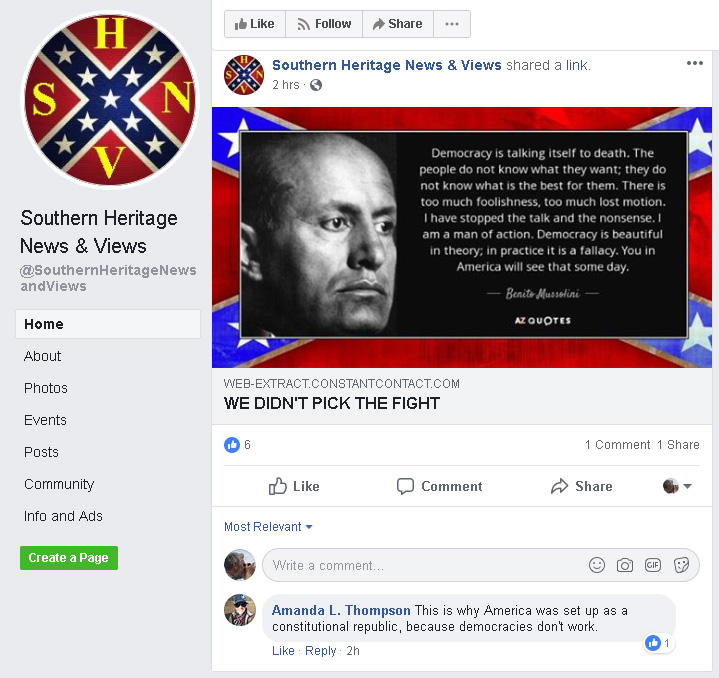
In case y’all were wondering when the self-appointed Defenders of Confederate Heritage™ were going to quit pussyfooting around and start openly embracing actual, honest-to-goodness fascists, that date is February 15, 2019.
_____




 Dead Confederates, A Civil War Era Blog

2 comments