Civil War: The Untold Story on PBS
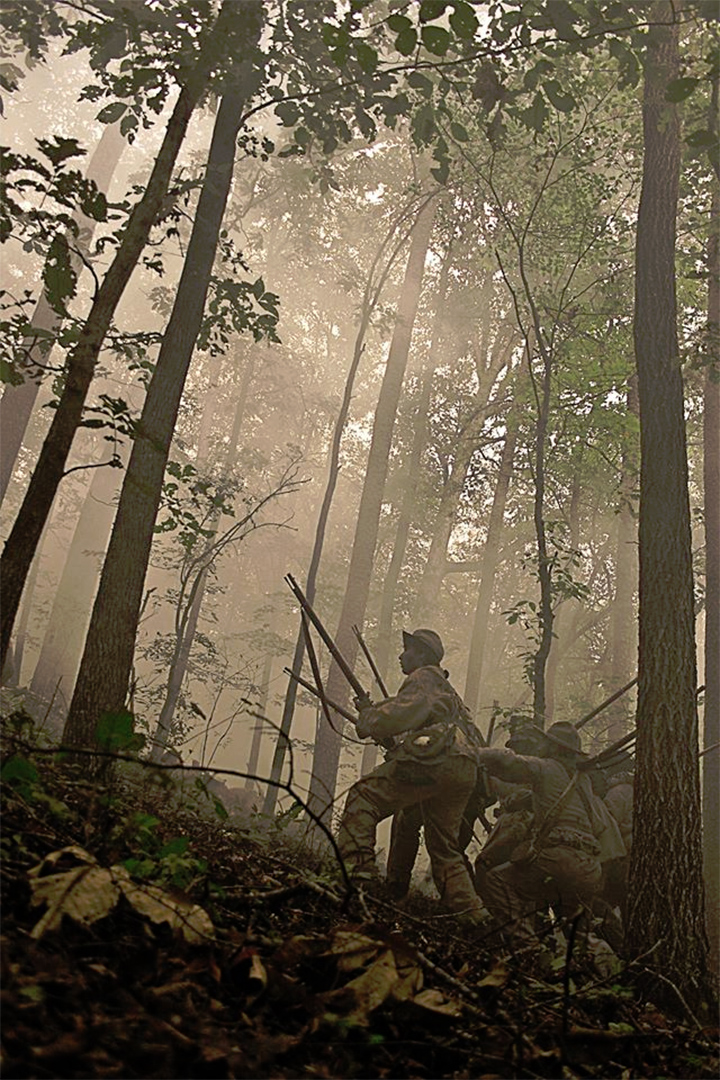

Via Pat Young at Civil War Talk, PBS stations around the country will begin airing Civil War: The Untold Story, a five-part series on the war in the western theater. A partial list of stations where it’s scheduled is after the jump. Last year, HistoryNet had an interview about the series with the director, Chris Wheeler:
Here’s an introductory clip:
Can you direct me to Madame Hays’ bawdy house?
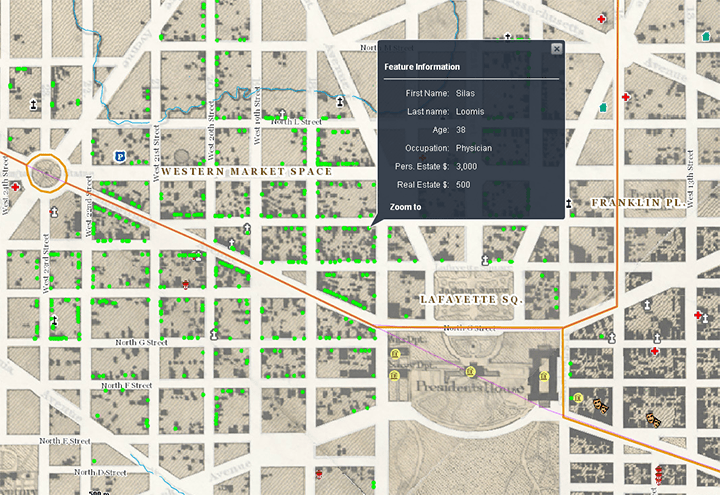
The folks at Civil War Washington have put together a wonderful GIS tool for exploring CW-era Washington, D.C. You can see the data overlaid on a contemorary map of the District of Columbia, a modern map or satellite image. All sorts of data is included, such as identification of residences, wartime hospitals, theaters, churches, bawdy houses, forts, police stations, and so on. You can also use a “time slider” to change the date from 1859 to 1866 to see the profusion of small hospitals around the city as the war went on. From the description:
The instructions are here, but you might as well just dive in yourself.
Thanks to CWT user kholland for bringing this site to my attention.
Oh, I almost forgot — Madame Hays’ is in the middle of the block on Twelfth, between E and F, Northwest.
___________

Stupid is as Stupid Does, Y’all.


It doesn’t bother me that Texas Tech in Lubbock has decided to let students display Confederate flags from their dorm room windows, so much as the fact that one proud Confederate Heritage™ advocate (1) chose to use it as a defacement of a Texas state flag, and (2) then hung it upside-down.
Bless his or her heart, that poor child doesn’t have the sense God gave lettuce.
_________

Friday Night Concert: “Listen to the Mockingbird”

Sorry about the dearth of substantive posts ’round these parts lately; not-bloggy activities have been taking up a lot of time lately.
For now, here’s Stuart Duncan and Dolly Parton with “Listen to the Mockingbird,” from Divided & United, The Songs of the Civil War.
___________
Dick Dowling and the Immigrant’s Call to Arms


On Sunday I was honored to give the address at the 45th Annual Dick Dowling Statue Ceremony in Houston. It was a fine time, full of good cheer and warmth despite the rain (which I understand to be traditional to the ceremony, as well).
I had the opportunity to meet several descendants of both Dick Dowling and John Thomas Browne, the former Houston mayor and veteran who inaugurated the tradition of cleaning the statue every St. Patrick’s Day back in 1905. I would like to thank my hosts, the Miggins family, for the warm welcome I received and for the many years of work they’ve put into this project. Houston and Texas owe them a great deal.

Descendants of Dick Dowling gather for the placement of a memorial wreath.
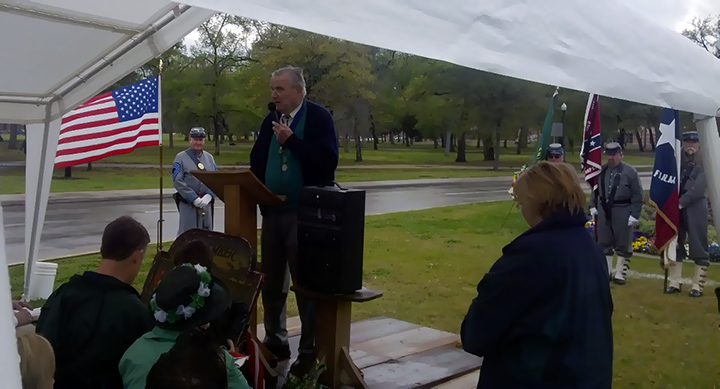
Larry Miggins, founder of the annual statue ceremony, reflects on his tenure. Color guard from the John Bell Hood SCV Camp of Galveston.
Sunday’s ceremony, like the city’s St. Patrick’s Day parade on Saturday, was dedicated to four Houston firefighters — Matthew Renaud, Robert Bebee, Robert Garner and Anne Sullivan — who lost their lives last year in a tragic event. The ceremony was also dedicated to Houston Fire Captain William Dowling, who was severely injured at the same time but survived. Captain Dowling, I understand, is a distant relation to Dick Dowling, which would not be a surprise, given the long family ties to HFD. Dick Dowling was one of the original members of Houston Fire Company No. 1, organized in April 1858. And it was Mayor “Honest John” Browne who, in 1895, oversaw the transition for the fire department from a volunteer force to a professional, paid city fire department.
Although I had not attended this event previously, I did know that lots of folks attend every year, and probably know Dick Dowling as well as one of their own family. As a result, I decided to pull back the focus of this address a little, and look more broadly to the reaction of Irish immigrant communities to secession and the coming of the war.

Dick Dowling and the Immigrant’s Call to Arms
The story of Irishmen in the American Civil War is one that gets a lot of attention. The fighting withdrawal of the 69th New York at First Manassas, the courage of the Irish Brigade at Sharpsburg and Fredericksburg, and the absolution given by Father Corby on the second day at Gettysburg are all well-known and rightly-revered stories.
The Irish immigrant Union soldier is a fixture, a stereotype, in popular culture, as well. In the film, Gangs of New York, one of Martin Scorsese’s long camera sequences follows a group of young Irish men tramping down the gangplank of their immigrant ship, being forced to make their mark on enlistment papers, being outfitted with a blue uniform and musket, and herded back onto a military transport headed for the South, with little idea of what they’re getting into. (One of the newly-enlisted Union soldiers inquires where they’re going, and when told Tennessee, asks, “where’s that?”) That was not the reality for most men, but it is a popular notion, deeply embedded in the remembrance of the war, and one played up at the time by Southerners, where newspaper editors and fire-eating orators heaped scorn on what they described as Lincoln’s “Hessians.” And then there’s Buster Kilrain, the one fictional character of Michael Shaara’s novel Gettysburg, whose iron determination and quiet advice to Colonel Chamberlain helped save the Union left flank on Little Round Top, in the face of repeated assaults by equally-determined Alabamians. Buster Kilrain is now such a fixture in the mythos of Gettysburg that visitors to the national cemetery there routinely ask staff members for directions to his grave.
All told, immigrants from Ireland, Germany and other nations made up about a quarter of the Federal army during the conflict, and nearly half of wartime enlistees in the Union navy.[1] The story of the Union war effort in the Civil War is one best told with an Irish brogue, or perhaps a Prussian akzent.
But the role of immigrants in the Confederacy’s war effort is less well known, less understood. In Robert E. Lee’s Army of Northern Virginia, about three-and-a-half percent of the soldiers were foreign-born, but half of those were native Irishmen. A majority of the foreign-born troops in Lee’s army were from Deep South states, and they were, on the whole, older than their native-born counterparts. They were quick to volunteer, as well; eighty percent of immigrants who served under Lee through the war enlisted in 1861, compared to just over half of those who were native southerners.[2]
Across the South as a whole, foreign-born free persons made up only a tiny fraction of the overall population, but here in Texas foreign-born persons constituted about one person in ten. The proportion was even larger in the cities, where the opportunities offered by fast-booming trade and commerce attracted men and women from foreign shores. If you were to walk the muddy streets of Houston in 1860, on the eve of the war, three free persons out of every ten had emigrated from some foreign land, and in Galveston the proportion was even higher – about forty percent of Galveston County residents were making their home in a country other than the one of their birth. One Irish-born Texas soldier, Walter Paye Lane, who had been born in County Cork, achieved the rank of brigadier general in the Confederate army near the end of the war.[3]
Immigrants, or the sons of immigrants, have always made up a sizable proportion of this nation’s fighting men in all our wars since 1861; military service has long been the way newcomers have proved their patriotism and themselves to their new countrymen. In the South as in the North, Irish communities formed their own militia companies. These included the Emerald Light Infantry of Charleston, the Jasper Greens of Savannah, the Emerald Guards of Mobile, the Shamrock Guards of Vicksburg, the Montgomery Guards of New Orleans, and of course, Dick Dowling’s own Jefferson Davis Guard of Houston.[4]
Confederate soldiers had many individual reasons for enlisting, but Dowling and other Irishmen may well have seen the South’s secession through the prism of the ongoing struggle against the British Crown. The Montgomery Guards of New Orleans, for example, carried their Confederate flag on a pike alleged to have been used in the Irish uprising of 1798. Dick Dowling himself was an enthusiastic secessionist, having petitioned Texas Governor Sam Houston to convene a special session of the legislature to respond to the election of Abraham Lincoln as president in November 1860. Houston refused, and was ultimately deposed as governor, but by then Dowling and the Davis Guard were off on an expedition to the mouth of the Rio Grande, to seize Federal property and arms along the border with Mexico.[5]
The majority of Irishmen who entered Confederate ranks, though, probably didn’t serve in companies or regiments composed of their Hibernian brethren. Much more typical is the case of John Thomas Browne, a native of Ballylanders, County Limerick, recently profiled by an Irish colleague of mine, Damian Shiels. Browne’s family emigrated to New Orleans in 1851, when John was only six. His father died soon after, and John’s mother Winnifred eventually moved the family to Houston. They were there in 1860, when fifteen-year-old John was clerking with the Houston & Texas Central Railroad. When the war came he enlisted in the Second Texas Infantry but, perhaps because he was sole adult male in his household – keep in mind he was only sixteen when the war began – he was detached from the unit and assigned to work as a fireman on the railroad. It was hard, dirty, exhausting work, but nonetheless essential to the war effort.
After the war, Browne worked at a variety of jobs before going into a partnership with Charles Bollfrass to form a wholesale and retail grocery in 1872. At the same time he was building the business of Browne & Bollfrass, John Browne was also embarking on a political career, serving on Houston City Council before serving as mayor from 1892 to 1896, during which tenure he established the Houston Fire Department as a paid, professional force. “Honest John” Browne went on to serve twice in the Texas House of Representatives. When he died in 1941 at the age of 96, John Thomas Browne was said to be the last living Confederate veteran in Texas.[6]
John Browne left another important legacy, one that we celebrate here today. Because it was John Browne, the “Fighting Irishman,” who established the tradition of the annual cleaning of this monument in 1905, in a 109-year-old chain that remains unbroken to this day.
So while we gather today to commemorate Dick Dowling and the Davis Guards, let us also remember the other men, Sons of Erin like John Thomas Browne, whose military service earned neither medals, nor fame nor glory. They were men – some very young – who enlisted for reasons as varied as they themselves were, but yet with a common purpose, to serve their adopted nation and their fellow citizens, native-born and immigrant alike.
This is their monument, too.
_________
Did the Union Blockade of the South Really Work?

Craig Symonds recently gave an interview with the Walter Edgar’s Journal show on South Carolina ETV, discussing the naval war in 1864. Symonds has a recent book out, The Civil War at Sea, that I’ve not read, but his 2008 work, Lincoln and His Admirals, is very good.
This entire interview is worthwhile, but I liked Symonds’ response to the (seemingly) simple question, “did the blockade really work?” Turns out, ain’t so simple:
 That’s a great question, “did it work?” And it depends on what you mean by work. Did it affect the Confederacy’s ability to conduct this war, did it affect the attitude of the people who had to sustain that war, and the Davis administration and his war policy, and I think the answer to that is yes.
Most historians who try to grapple with this issue do so by appealing to statistics, to numbers. And, I know you had Steve Wise on this program not too long ago, and Steve has done probably the best accounting of the number of ships that engaged in blockade-running. There were some sailing ships early in the war, but by 1862 it was evident that sailing ships just weren’t going to be able to do it, so steamships had to be the way this got done, if it got done at all.
And Steve counted up and there were three hundred and one steam-powered ships that actively participate in blockade-running in the section of the war we’re interested in, in 1863 to 1864. And of those, they made an average number of runs of four, in other words, two in, two out, and then they either retired on the wealth that they’d accumulated or decided to go into some other business. So, if you add all that up you can calculate that there are about fifteen hundred different attempts to run the blockade, and over a thousand of those were successful. So statistics would suggest that between two-thirds and three-quarters of all attempts be steam-powered ships to violate the blockade successfully did that. So how effective was [the blockade]?
On the other hand, there’s another way to turn that statistical coin over, and look at it from another point of view. Of those three hundred and one ships, two- hundred and eighty-two of them were [eventually] captured or destroyed by running aground and being wrecked on the coast. So it’s also true that roughly three-quarters of all the ships that tried to violate the blockade were [ultimately] captured or destroyed. So both of these statements are true. Three-quarters of all ships that tried to run through it made [on any given attempt], and three-quarters of all the ships that tried to run through were destroyed. Statistics are not always as helpful as you think they might be.
But here’s the statistic that I appeal to most often. And that is, if you take the twelve-month period prior to Fort Sumter, and calculate the total number of ships that came out of southern ports, the ports belonging to the states of the Confederacy, and the tonnage of goods, and compare that with the twelve months after Fort Sumter, and this was when the blockade was in its weakest state, it declined by more than 90%. So a number of ships that tried made it, but lots and lots and lots of ships never tried, because the blockade was there.
So what kind of impact does that have, cumulatively, on the attitude of those running this war? We see it, particularly in 1864, the year we’re really interested in tonight, because by 1864, now the blockade is really becoming pretty restrictive. And affecting not so much the Confederacy’s ability to have shoulder weapons and saltpetre and cannon shells and the fundamental tools of the army, but on all of the other parts of a nineteenth century economy, and this has kind of a wasting effect. It affects inflation, it affects of course, by then inflation was affected by Confederate paper money as well, so this is a double whammy in terms of the domestic economy of the Confederacy.
And the wives and children and families left behind, of all those soldiers fighting at the front, were feeling this rather desperately, and I know the tradition is, “oh, we just toughed it out,” but soldiers who would get letters, and I’ve seen thousands of these saying, “Jake, we can’t eat. We shall die if you don’t come home. Jake, you must dessert and come home, or we shall surely perish.” That’s a rough paraphrase of thousands of letters. So what cumulative effect does that have on the Confederacy’s ability to sustain the war?So it’s not measurable, I think, just by how many ships violate the blockade, or whether indeed the Confederate armies had enough wherewithal to sustain battle – they did. But [the blockade] had a sort of cumulative, wearing effect on the society as a whole, and how you calculate that statistically, I think is impossible. But I believe that it had a significant impact.
_________
“Shelling of the batteries at Galveston by the United States war steamer South Carolina, on Monday afternoon, August 5th, 1861.”Frank Leslie Famous Leaders and Battle Scenes of the Civil War (New York, NY: Mrs. Frank Leslie, 1896)
That’s a great question, “did it work?” And it depends on what you mean by work. Did it affect the Confederacy’s ability to conduct this war, did it affect the attitude of the people who had to sustain that war, and the Davis administration and his war policy, and I think the answer to that is yes.
Most historians who try to grapple with this issue do so by appealing to statistics, to numbers. And, I know you had Steve Wise on this program not too long ago, and Steve has done probably the best accounting of the number of ships that engaged in blockade-running. There were some sailing ships early in the war, but by 1862 it was evident that sailing ships just weren’t going to be able to do it, so steamships had to be the way this got done, if it got done at all.
And Steve counted up and there were three hundred and one steam-powered ships that actively participate in blockade-running in the section of the war we’re interested in, in 1863 to 1864. And of those, they made an average number of runs of four, in other words, two in, two out, and then they either retired on the wealth that they’d accumulated or decided to go into some other business. So, if you add all that up you can calculate that there are about fifteen hundred different attempts to run the blockade, and over a thousand of those were successful. So statistics would suggest that between two-thirds and three-quarters of all attempts be steam-powered ships to violate the blockade successfully did that. So how effective was [the blockade]?
On the other hand, there’s another way to turn that statistical coin over, and look at it from another point of view. Of those three hundred and one ships, two- hundred and eighty-two of them were [eventually] captured or destroyed by running aground and being wrecked on the coast. So it’s also true that roughly three-quarters of all the ships that tried to violate the blockade were [ultimately] captured or destroyed. So both of these statements are true. Three-quarters of all ships that tried to run through it made [on any given attempt], and three-quarters of all the ships that tried to run through were destroyed. Statistics are not always as helpful as you think they might be.
But here’s the statistic that I appeal to most often. And that is, if you take the twelve-month period prior to Fort Sumter, and calculate the total number of ships that came out of southern ports, the ports belonging to the states of the Confederacy, and the tonnage of goods, and compare that with the twelve months after Fort Sumter, and this was when the blockade was in its weakest state, it declined by more than 90%. So a number of ships that tried made it, but lots and lots and lots of ships never tried, because the blockade was there.
So what kind of impact does that have, cumulatively, on the attitude of those running this war? We see it, particularly in 1864, the year we’re really interested in tonight, because by 1864, now the blockade is really becoming pretty restrictive. And affecting not so much the Confederacy’s ability to have shoulder weapons and saltpetre and cannon shells and the fundamental tools of the army, but on all of the other parts of a nineteenth century economy, and this has kind of a wasting effect. It affects inflation, it affects of course, by then inflation was affected by Confederate paper money as well, so this is a double whammy in terms of the domestic economy of the Confederacy.
And the wives and children and families left behind, of all those soldiers fighting at the front, were feeling this rather desperately, and I know the tradition is, “oh, we just toughed it out,” but soldiers who would get letters, and I’ve seen thousands of these saying, “Jake, we can’t eat. We shall die if you don’t come home. Jake, you must dessert and come home, or we shall surely perish.” That’s a rough paraphrase of thousands of letters. So what cumulative effect does that have on the Confederacy’s ability to sustain the war?So it’s not measurable, I think, just by how many ships violate the blockade, or whether indeed the Confederate armies had enough wherewithal to sustain battle – they did. But [the blockade] had a sort of cumulative, wearing effect on the society as a whole, and how you calculate that statistically, I think is impossible. But I believe that it had a significant impact.
_________
“Shelling of the batteries at Galveston by the United States war steamer South Carolina, on Monday afternoon, August 5th, 1861.”Frank Leslie Famous Leaders and Battle Scenes of the Civil War (New York, NY: Mrs. Frank Leslie, 1896)
Friday Night Concert: Cash and Kristofferson, “Sunday Morning”
“Sunday Morning Coming Down” is one of Johnny Cash’s best-known songs, and (for my money) one of the most evocative ever recorded — both sad and optimistic at the same time, if that makes any sense. It was written by Kris Kristofferson, who said not long ago that “I’m just real grateful for that song because that opened up a whole lot doors for me. So many people that I admire, admired it. Actually, it was the song that allowed me to quit working for a living.” It’s a great interview.
Y’all have a great weekend.
______
Cousin Katie’s Platform
As many of you know, the race to be the next Governor of Texas is one of the most closely-watched in the country right now. Rick Perry, the longest-serving governor in the state’s history, has declined to run for another term. Although we’re still the midst of the party primaries right now, it’s looking like Attorney General Greg Abbott (R) will be squaring off against State Senator Wendy Davis (D) come November.
There haven’t been many competitive female candidates for governor in Texas over the decades. There was Ann Richards, of course (served 1991-95), and Miriam “Ma” Ferguson served two non-consecutive two-year terms in the 1920s and 1930s. Although Ma Ferguson was Texas’ first female governor, she’s not generally thought of as a trailblazer for women, having entered politics after her husband, Governor Jim Ferguson, was impeached and made ineligible to hold public office in the state. Ma campaigned explicitly on the platform of “two governors for the price of one.”
Then in the early 1970s there was Frances “Sissy” Farenthold, who twice sought the Democratic nomination for governor, but was defeated both times by Dolph Briscoe, who went on to win the general election. This was at a time when both the Democratic and Republican parties were in transition, and statewide office in Texas has increasingly been a Republican prerogative ever since.
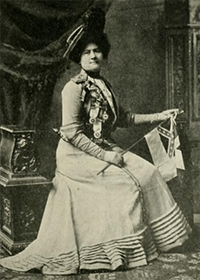 So with that as a little bit of background, I was surprised to learn not long ago that Katie Daffan (right, c. 1906) ran briefly for governor in 1930. Oddly, an important fact like that doesn’t appear in her Handbook of Texas biography. Cousin Katie, who I’ve mentioned frequently here, was my grandmother’s first cousin, although Katie was some years older. My mother knew Katie when she was a child and Katie was in her mid-fifties, about in the same period she ran for governor. My mother thought the world of Cousin Katie, who seems to have been a sort of Auntie Mame character to her, who took her on shopping trips to Houston, where Katie was literary editor for the Houston Chronicle at the time, and generally indulged her in all sorts of ways my grandmother wouldn’t. Katie apparently cut quite a figure; my mother recalled that Katie had apparently decided that the styles of her young adulthood in the 1890s were just about right, and wore them for the rest of her life. The dresses were not a particular challenge, because those could always be made up from old patterns, but she never could figure out where Katie got new, high-button shoes decades after they went out of style.
It is not an exaggeration to say that Katie Litty Daffan was the living embodiment of the the Lost Cause and Confederate memory in Texas in the first part of the Twentieth Century. She served five terms as president of the Texas Division of the United Daughters of the Confederacy, was Secretary (and only female member) of the Hood’s Texas Brigade Association, served for seven years as Superintendent of the Confederate Women’s Home in Austin. She enjoyed considerable success as an author and newspaper columnist, writing a textbook that was used for many years as a standard text in public schools across the state.
Katie was married, very briefly, in 1897 to Mann Trice, the Texas State Assistant Attorney General. That marriage folded within a few months, though, and Katie resumed using her maiden name, and never remarried. Katie died in 1951, at age 76, when she was hit by a car while walking home from an all-night diner at 4:30 in the morning. She walked in the middle of the street because there weren’t any streetlights and the sidewalks were broken and uneven.
At any rate, I came across this newspaper item outlining Katie’s platform for her campaign. It’s full of happy bromides that few would challenge — who doesn’t endorse Texas having “a good highway system”? — but it’s quite a collection of positions that certainly don’t line up easily with either of today’s two major parties. Dallas Morning News, March 25, 1930:

In the end, Katie didn’t file the paperwork for the Democratic primary, so her name never appeared on the ballot. There ended up being twelve candidates in the primary anyway, and Ross Sterling went on to win the general election that fall. He was succeeded two years later by — wait for it — Ma Ferguson again.
As far as I know, Katie never offered any specific reason for not following through on her announced run for Texas governor, choosing instead to publicly thank her friends and supporters once the filing deadline for the primary had passed and she was officially off the ballot, in early June. A bigger question, that I can’t answer, is why she announced for governor in the first place. It’s yet another curious story about Cousin Katie that leaves as many questions as it answers. Wherever she is, though, I’m pretty sure Katie’s still enjoying the attention.
________




 Dead Confederates, A Civil War Era Blog
8 comments