
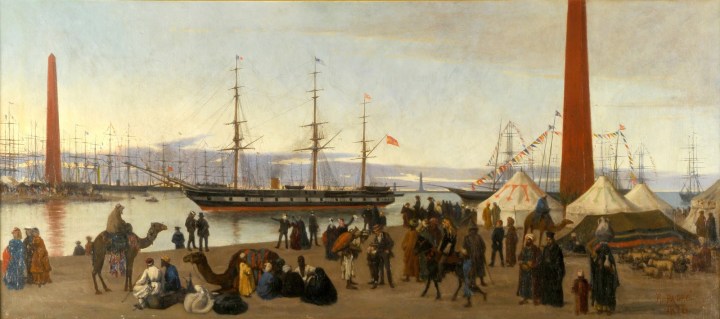
A few years later, Berenguela was said to be the first large vessel to transit the newly-completed Suez Canal.
_________
h/t Chubacus.

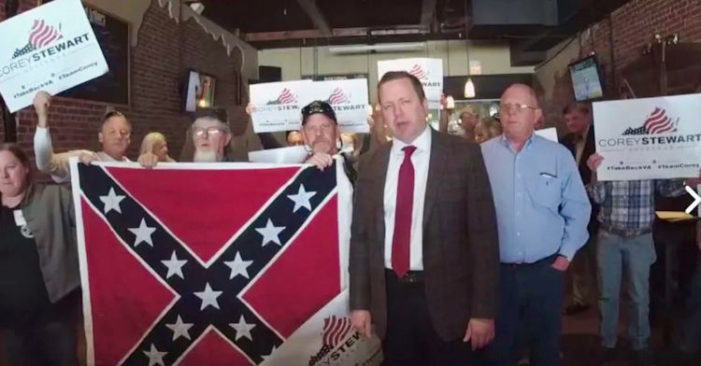
 Virginia GOP candidate and Corey Stewart unveils his own “repeal and replace” for the Commonwealth:
HARRISONBURG, Va. — During a rally in downtown Harrisonburg yesterday, Republican gubernatorial candidate Corey Stewart unveiled his new, state-sponsored plan for health care, calling for the reintroduction of and reliance on medicinal leeches and kitchen cutlery.
Stewart, who recently proclaimed his admiration for the Confederacy at a rally in Roanoke, said the new plan, which has been dubbed “Antebellum Healthcare,” will be an answer to “the disastrous, tax-hungry plan of Obamacare,” and will save citizens money by utilizing medicinal ideas that were regularly used before the Civil War.
“Our proposed Medicaid plan will offer Virginia citizens health care that was successfully used by our stalwart forefathers,” Stewart explained, citing the use of such practices during the mid-19th century as a measure of its benefits. “It will also come at a lower cost with minimal premiums.”
Yes, it’s satire. Probably.
Y’all have a great weekend.
______
h/t Brooks Simpson
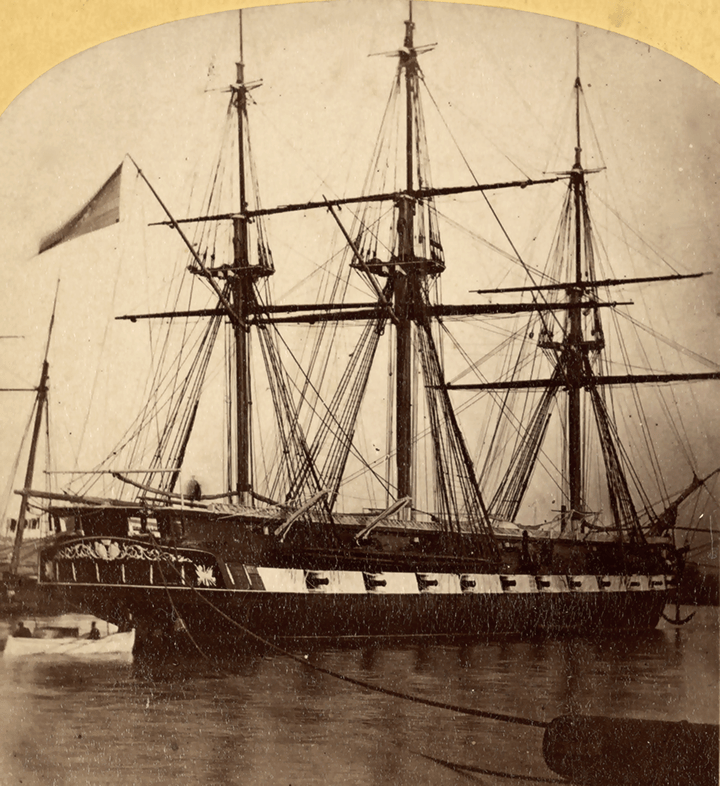
This past week, the Texas Seaport Museum here hosted a visit by El Galéon, a replica of a Spanish sailing ship from the 16th century. A hundred-and-fifty-odd years ago, New York was the port of call for a contemporary Spanish warship, the frigate Berenguela, part of that country’s naval forces assigned to its colonies in the Caribbean. New York Times, November 16, 1860:
The Spanish Navy; ARRIVAL OF THE FRIGATE BERENGUELA SPANISH VESSELS IN THE GULF OF MEXICO.
The Spanish frigate Berenguela, whose arrival at this port was briefly noticed in our issue of yesterday, is now lying off the Battery, and attracts considerable numbers of the curious, who go around her in row boats. She comes here to have her machinery overhauled at the Brooklyn Navy-yard, to enable her to do which the steam-frigate Wabash, now in the drydock, will be floated into the stream.
Our Naval Reporter visited the frigate yesterday, and was courteously furnished with the information he sought by the officers. The Berenguela is about 1,200 tons burden, and carries a fine armament of 37 guns, medium size, thirty-two and sixty-eights, manufactured at the naval depot of Turvia, in Spain. Fifteen of these guns are on the spar, and twenty-fire on the gun deck. Forward, on the former, is a neat brass 12-pounder howitzer, of Boston origin, a personal present to the commander of the fleet. A novel idea has been carried out in arranging the small arms beside the cannon of the ship, thus obviating the necessity of keeping them in a separate room. A spare propeller is stowed, to be used in case of need. The decks are kept exceedingly neat. The sailors are smart, intelligent-looking men generally; and the marines, of whom 64 are on board, present a soldier-like appearance. The day guard is regularly in uniform from “flag-up” to sundown. The lower decks contain the officers’ sleeping apartments and the middies’ mess-rooms. The Commander’s chamber is tastefully decorated with portraits of the Royal family of Spain, and a crucifix hangs over his bed. There are no men undergoing punishment at present on board. Her officers say that very little is ever necessary with them.
The squadron, of which the Berenguela is one, consists of no less than twenty men-of-war, of which, eleven are steamers. As it is well to know how the Spanish navy is represented in the Gulf, we append a list of the entire fleet:
STEAM FRIGATES — Berenguela, Blancha, Petrioula.
STEAM CORVETTES — Francis de Ais, Isabel de Cattolica, Velasco, Blaico de Garay, Rezana, Baran, Hernan Cortes, Neptune, Venandila, General Lero, Guadalquiver.
SAILING VESSELS — Alcido, Isabel II., Pelago, Herbannero, Christina, Janitor.
The officers of the Berenguela are as follows:
Capt. Jose Ignacio Rodriques, Commander Francis de Pa Margon, Lieuts. Dernetris de Coster Montenega, Thomas de Sartoa, Soloa der Caweza Francis Vila, Assistant-Surgeon Juan Acosta, Chaplain Valentine Acosta and Seraph Galendo; other officers, J.M. Twazello, Louis Garcea Corlenell, G. Lobi, M. Paria, R. Freye, D.E. Lurate, D.J. Beriter, and others.
Subjoined is a statement of the present strength of the Spanish Navy. There are in serviceable condition 82 vessels, carrying in all 887 guns. Of these 2 are ships-of-the-line, rating 86 guns each; 4 are frigates, rating from 32 to 42; 4 are corvettes of from 16 to 20; 9 are brigs of from 10 to 20; and 16 are smaller vessels and 10 transports. There are three steam frigates, of which the Berenguela is 1; and 5 schooners, all fitted with the screw, besides 3 paddle-wheel frigates of 500 horse-power, and 16 guns each; 8 brigs of 380 horse-power, and 6 guns; and 18 schooners of from 100 to 300 tons, and 2 to 5 in active service, independent of 6 battallions of marines numbering 100 men each. There are, however, nearly 100,000 registered fishermen and others, who could be drafted into the service. Their officers number 1,150 of all grades. The Coast-Guard of Spain is maintained by 24 feluccas, and 87 estamperia.
The Berenguela will be put in regular “ship-shape” before a week, and persons having proper passes may visit her. She would well pay a tour of inspection.
A few years later, Berenguela was said to be the first large vessel to transit the newly-completed Suez Canal.
_________
h/t Chubacus.
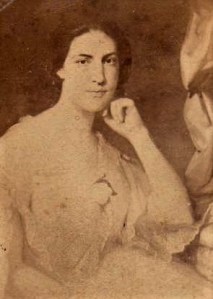 Over at Civil War Talk, John Hartwell tells us of Marguerite Caroline Deslonde Beauregard (right), wife of the Confederate general, Pierre Gustave Toutant-Beauregard. Marguerite and G. T. (as he styled himself as an adult) married in 1860. Beauregard had been a widower for ten years at that point, and by all accounts the newlyweds were completely devoted to each other.
When the war came, Beauregard almost immediately found himself at the center of military operations, serving as one of the principal Confederate commanders at First Manassas, the first major battle of the conflict. Marguerite went to live at the estate of her brother-in-law, John Slidell, the Confederate minister to France. In 1862 Marguerite became seriously ill, and her friends petitioned the Federal commander in occupied New Orleans, Benjamin Butler, for permission to travel outside Union lines to South Carolina, to take the news to Beauregard, now commanding the defenses at Charleston. Butler sent them on to Beauregard not only with a pass through the lines, but granting permission for Beauregard himself to return to be at his wife’s side:
Headquarters, Dept. of the Gulf, New Orleans, December 5th 1862General G. Beauregard
General: this note will be handed you by your relatives, Mr. and Mrs. Proctor, who go to meet you under a pass from me. They will inform you of the dangerous and, it is feared, soon to be fatal illness of your wife. You have every sympathy with your affliction.
If you wish to visit Mrs. Beauregard, this will be a safeguard, pass, and protection to come to New Orleans and return. All officers and soldiers of the United States will respect this pass. I have the honor to be
Your obt. Servant
Benj. F. Butler, Maj Gen Commdg
The Proctors traveled to South Carolina with the news, but also brought with them a note from Marguerite, in which she told him not to come if his duty required him to stay: “the country comes before.” The general did not come, remaining to handle the defenses of Charleston, which was by that time perhaps behind only Richmond and Vicksburg in its strategic importance to the Confederacy. Marguerite lingered for more than a year, and died in New Orleans in March 1864. It was said that 6,000 people attended her funeral. She and G. T. were never reunited.
It’s a sad story, one that was probably repeated thousands of times, North and South, during the conflict. After her death, Union Major General Nathaniel P. Banks, who had succeeded Butler, arranged for a steamer and a military escort to return her remains to her native St. John the Baptist Parish, where she was interred in the St. John Catholic Cemetery in Edgard. Later a marble slab (now lost) was reportedly placed over her grave with the epitaph, “the country comes before.”
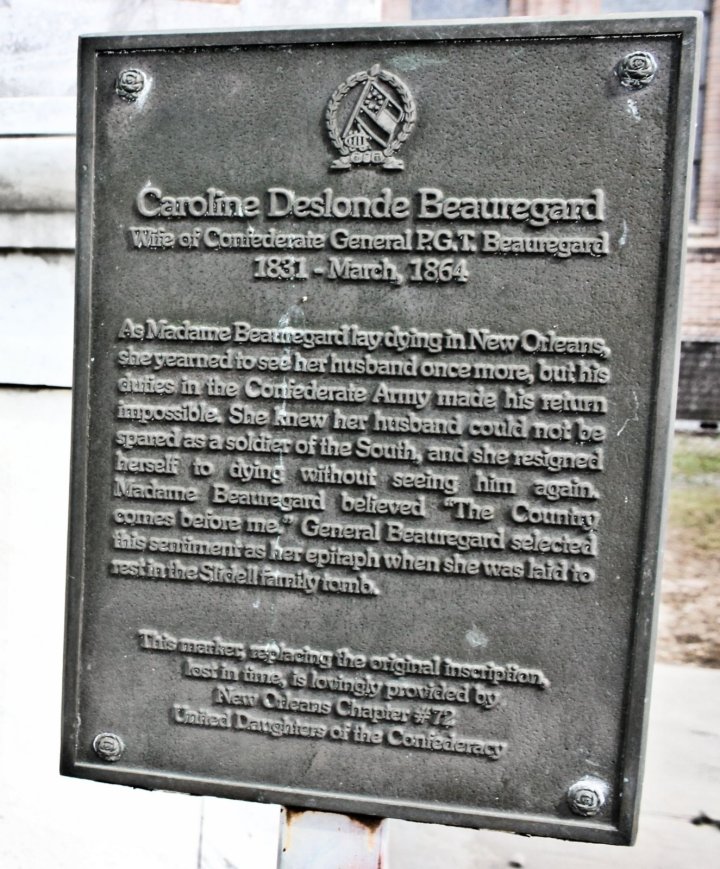
There is a marker there at the cemetery, sponsored by the United Daughters of the Confederacy, that tells Marguerite’s story. It omits both Butler’s invitation for Beauregard to pass through Federal lines to be at Marguerite’s side, and Bank’s provision of military transport and escort to her interment.
Why these particular anecdotes are left out of her story, I cannot say — perhaps the UDC researchers didn’t know about them, or left them off for the sake of space. Neither “Beast” Butler nor General Banks were terribly popular figures in Louisiana, and it’s by no means certain that they were left off the marker by simple happenstance. But whether the omission was deliberate or not, this is a great example of how markers and monuments aren’t, themselves, “history” — they represent a particular point of view, and reflect decisions made by those who created them, about what to include and what not to, to present the story they want to tell about the subject. In short, they don’t reflect historical events so much as they reflect historical events as the monument’s sponsor wants them to be remembered.
That’s worth keeping in mind, next time you hear some nonsense about removing Confederate iconography as “erasing” history, or some such foolishness. The history remains, and quite possibly wasn’t being told fully to start with.
___________
Images via Find-a-Grave.

Hey, young-uns! Glenn Beck is offering two-week history internships with his in-house historian, David Barton.
This unique, once in a lifetime experience is two weeks of nonstop
projects, research, lectures, and outings for people who want to know
more about America’s incredible history, learn about the people directly
involved with the founding of our nation, and identify the philosophies
and ideologies that shaped our laws and original documents.
We spend our mornings in a classroom-like setting and each afternoon
we dig through online resources as well as our unique, original library.
We will delve into topics such as:
A Biblical Worldview
The Truth in History
America’s Godly Heritage
Early Education in America
How the Bible Influenced America
American Exceptionalism
God and the Constitution
Reclaiming the Land
Years ago, as a joke, my kid bought me Glenn Beck’s book on the genesis of the Constitution. Recently she saw it tucked away on a bookshelf and asked, “you still have that?” I explained that a couple inches of shelf space was a small sacrifice to make to keep it out of wider circulation.
h/t Michael Lynch.
___________
Someone mentioned on another forum that today is the 100th anniversary of the United States’ entry into what would become known as World War I. I’m a little embarrassed that I forgot about this date until being reminded of it (although I’m terrible at remembering anniversaries generally, as my wife will attest), and disappointed that it’s not getting more attention in the popular media. The Great War seems almost forgotten in the public’s mind now. The last American World War I veteran, Frank Buckles, passed on in 2011 at the age of 110.
This clip is from the 1942 film, Yankee Doodle Dandy, and purports to show how George M. Cohan created the song, “Over There,” that quickly became a pop hit and rallying cry for Americans at the time. I’m sure it’s heavily fictionalized — and it conflates the United States’ declaration of war with the Lusitania sinking, although those events occurred almost two years apart — but it still gives me chills.
“And we won’t come back ’til it’s over, over there.” That was another world, wasn’t it?
_______
“The battle at the Alamo is sacred, but victory at San Jacinto gave us Texas,” says James E. Crisp, PhD. Hear scholars Gregg J. Dimmick, Stephen L. Hardin, Laura McLemore, and J.P. Bryan discuss the ordinary Texan and Mexican soldiers and their arms and battle tactics at the 17th Annual San Jacinto Symposium this Saturday, April 8th at 9 a.m. in La Porte, Texas.
You can still register today for the Symposium, but if you can’t make it to La Porte, you can watch the Symposium streamed live by Houston Media Source.
To watch live, go to the Houston Media Source web page and choose how you want to watch from the choices on the right side of the page.
If you’re considering attending the event in person, please see the details below.
When:
Saturday, April 8, 2017
9 a.m. to 2 p.m. – Symposium and lunch
2 – 5:45 p.m. – Scholar-led battleground tour
Where:
The Monument Inn, 4406 Independence Parkway South (formerly Battleground Road), La Porte, Texas 77571
Click here to register online.
This event is brought to you by The San Jacinto Conservancy and sponsored by the Center for the Study of the Southwest, Texas State University, The Texas State Historical Association, and Humanities Texas.
________
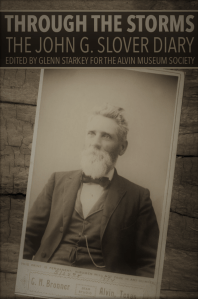 A few weeks back I received an advance copy of Through the Storms: The John G. Slover Diary, edited by Glenn Starkey and published by the Alvin Museum Society. I was honored to be asked to review it before publication, and now that it’s available publicly, I’m glad to be able to say a few words about it.
John Slover, a native of Athens, New York, was 29 years old when he enlisted in the Third Wisconsin Cavalry shortly after New Year’s Day 1864. In civilian life he appears to have worked a variety of trades, including logging and as a carpenter. At the time of his enlistment, John and his wife, Mary, had two daughters and one son. They lived for a time in Missouri, before returning to Wisconsin in the latter part of 1861, possibly to get away from the violence that racked that border state during the war. He served in the cavalry for 22 months before being mustered out at Fort Leavenworth, Kansas on October 27, 1865. John remained in Kansas after the war, before moving to West Columbia, Texas, in 1884. He moved to Alvin, a rural community southwest of Houston, in 1900. He died there in 1923, at the age of 89.
Through the Storms is an unusual book for a couple of reasons. There are many memoirs written by Civil War soldiers, North and South, but the vast majority of those were written years or decades after the last echoes of gunfire faded. Those memoirs are useful because they record the memories of those men in their later years, after they had had time to think about their experiences and reflect on them. Those later memoirs often carry with them a maturity and even sense of humor (e.g., Val Giles’ Rags and Hope) that probably would have been lost on those same men in their youth. John Slover’s diary, by contrast, is exactly that — a diary, with notations recorded in real time as the events happened. As with many participants in historical events, Slover did not have much sense of the “big picture” of the actions in which he was an active player, but instead he has left us with his impressions of the moment, writing about the things that he found most interesting or unusual or noteworthy. His diary is unpolished and a bit sporadic, with quirky spelling and punctuation, but it retains a clarity and immediacy that is often lacking in soldiers’ memoirs written long after the event.
The other thing that makes Slover’s diary unusual is that the bulk of his service in the Third Wisconsin Cavalry was spent out west, where his Regiment spent their time fighting both Indians and Confederate guerrillas. (If Slover did move his family out of Missouri to get away from the violence there, there’s a certain irony that the Army sent him right back to that same part of the country to fight some of the same people who might have prompted him to leave in the first place.) It’s easy to forget, when looking at the larger conflagration of the American Civil War, that the low intensity, long-running conflict on the western frontier never ended. In fact, in some places like Minnesota and Texas, conflicts between Native Americans and white settlers actually became more violent during the war years, as military outposts were shut down and their garrisons sent east.
The entries in Slover’s diary reflect many of the common prejudices of his day, but interestingly he does not engage in the same sort of mockery when it comes to Confederates he encountered during his military service. In March 1865 he noted in his diary that a group of 800 former Confederate soldiers, prisoners who had taken the oath of allegiance to the United States (i.e., “galvanized”) had camped nearby on their way to reinforce military outposts on the frontier. Slover called them “Union Rebels” and noted in his diary that they “were a fine looking lot of men as any one would wish to see.”
Most of Slover’s entries in the diary are plain and a little detached, simply describing events of the day as a sort of chronicle. But as Editor Starkey notes, there were occasions when Slover really opened up, particularly when he described his first buffalo hunt in September 1864 (spelling and punctuation original):
They were on a hill inclineing to the North and we wre in the valley. The only arms we had were Revolvers, so we had to approach them closely before we could do much with them. Drawing my Pistol, and shouting to the men to come on, I dashed spurs in my Horse and away down the valley I flew, knowing if they kept there course over the hill when I last saw them, that we would meet at the lower point of the hill. My horse had not yet seen them, and was with his long lope, brining me rapidly to the foot of the hill. Presently, on turning to the left I found myself within forty feet of them
It was the first time I had ever seen a Buffalo and my feelings cannot be described, as I gazed on those huge animals, rumbling along with their awkward gait. My blood passed through my veins with a pleasing sensation & I became insensible to every thing but what was transpireing before me. Falling a little to the rear so I might have them on my sight hand, I urged my Horse to within ten feet of them. I now directed my whole attention to the hindmost one, a large Bull. Urgeing my Horse a little closer I fired at his broadside and missed him
They now increased their speed, On we went, down in a deep ditch, my Horse conducting himself handsomely. As we rose from it I prepared again to fire. Approaching a little closer I pulled the trigger.

A sample page from Slover’s diary.
In editing Slover’s diary, Starkey chose to transcribe the work exactly as written. This would impose a real chore on the reader in some cases, trying to decipher the original author’s meaning, but Slover wrote clearly and concisely enough that this does not present a challenge in his case. (Nothing is known of Slover’s educational background, but he clearly had more than basic literacy.) Starkey also chose to organize the book with the complete, uninterrupted text of Slover’s diary – about 60% of the total work — up front, without any annotations or contextual explanations describing the larger events happening around Slover and the Third Wisconsn Cavalry. Instead, Starkey includes an extended essay following the text of Slover’s diary, that provides both a biography of Slover and limited discussion of the conflict in Kansas and the West in 1864-65. This is probably not the way I would have approached telling Slover’s story, but there’s probably no ideal way seamlessly to integrate Slover’s account and traditional historical narrative as background without one interrupting the other.
So who should read this book? I think it will be of interest to anyone interested in the operations of cavalry in the West during the war, as well as events in Kansas and Missouri during that period. It’s an unusual book, a diary written contemporaneously with the events described, and would make a good addition to many a Civil War or Western library. Through the Storms is available on Amazon, Barnes & Noble, or directly from the Alvin Museum Society, 300 West Sealy, Alvin, TX, (281) 331-4469.
_______
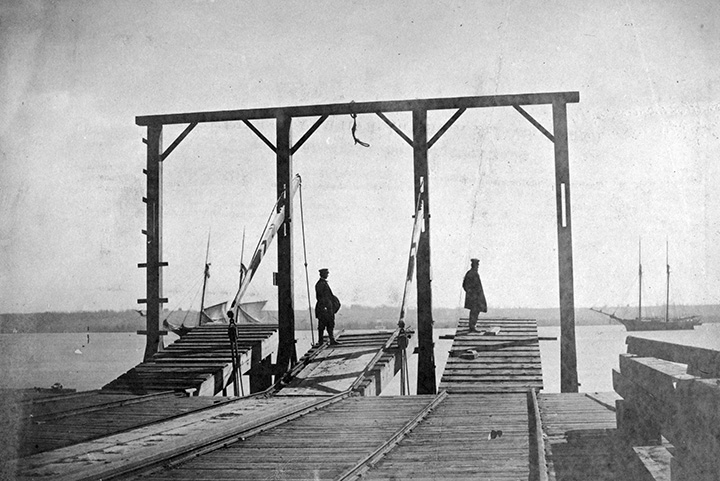
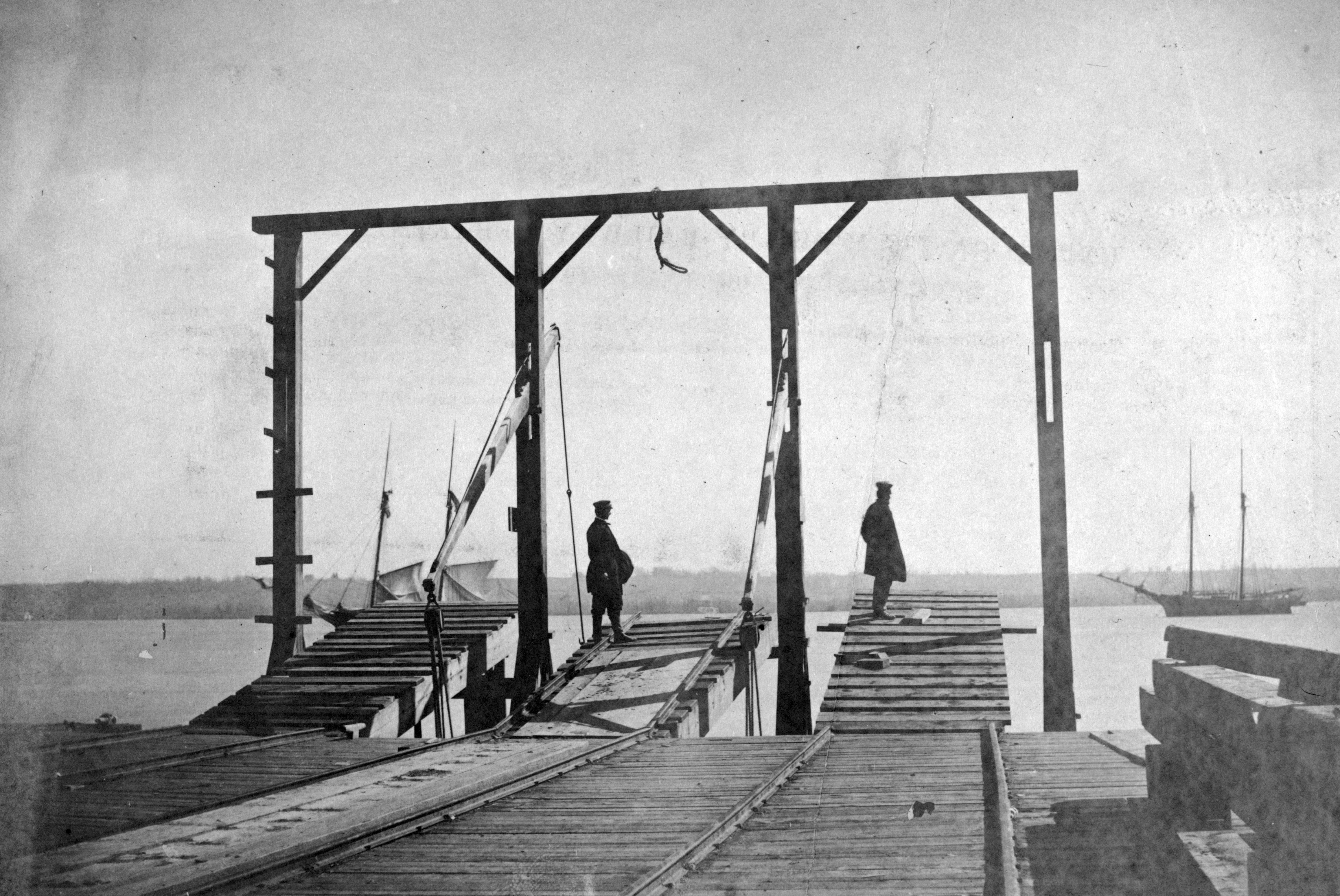
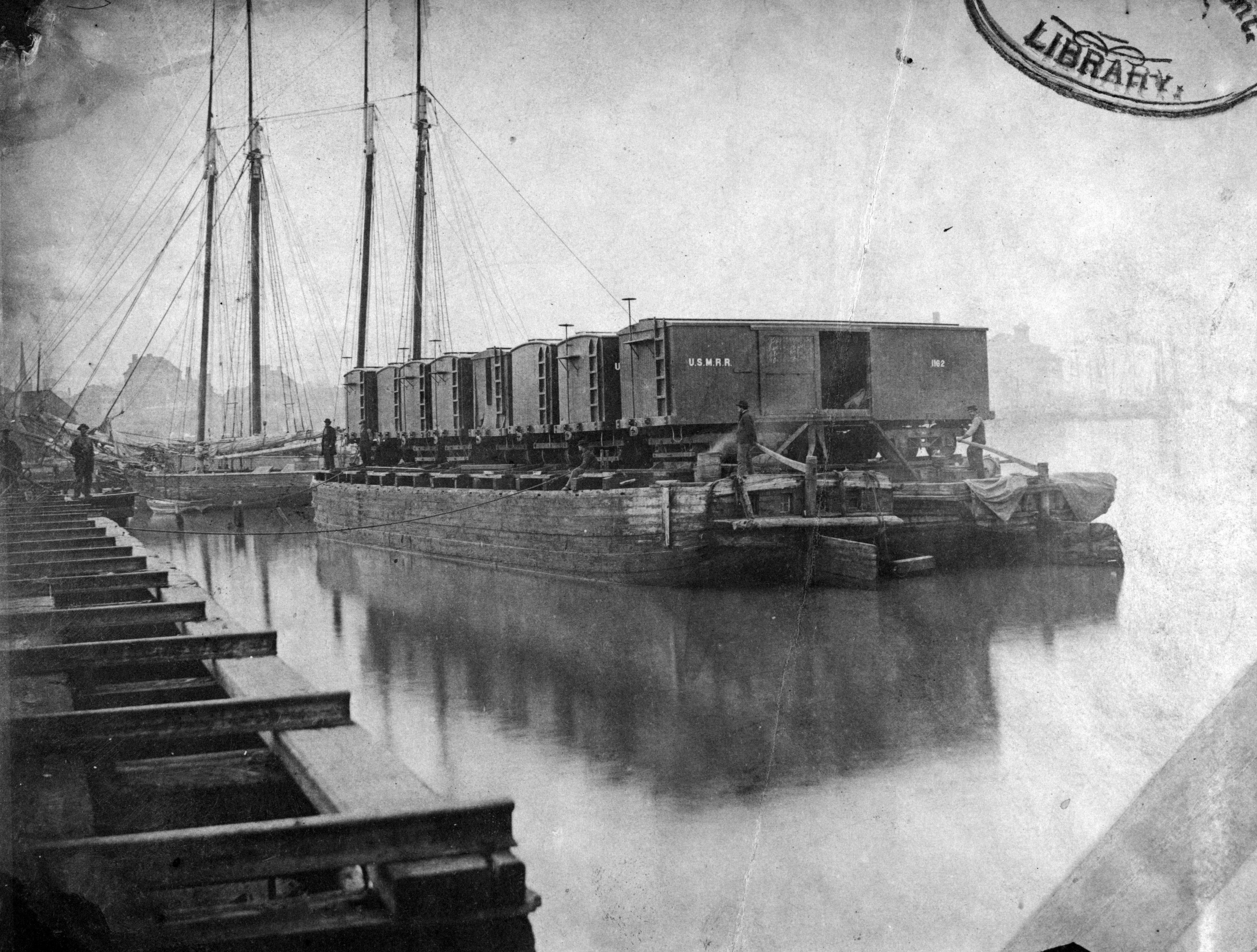
Further digging at the LoC shows the image I posted earlier Saturday to be one of a series taken at Alexandria by Andrew Russell, documenting the U.S. Military Railroad. You can see more of them here. One in particular includes a caption explaining that “cars loaded at Alexandria can be carried on barges or arks to Aquia Creek, and sent to stations where the Army of the Potomac is supplied, without break of bulk.”

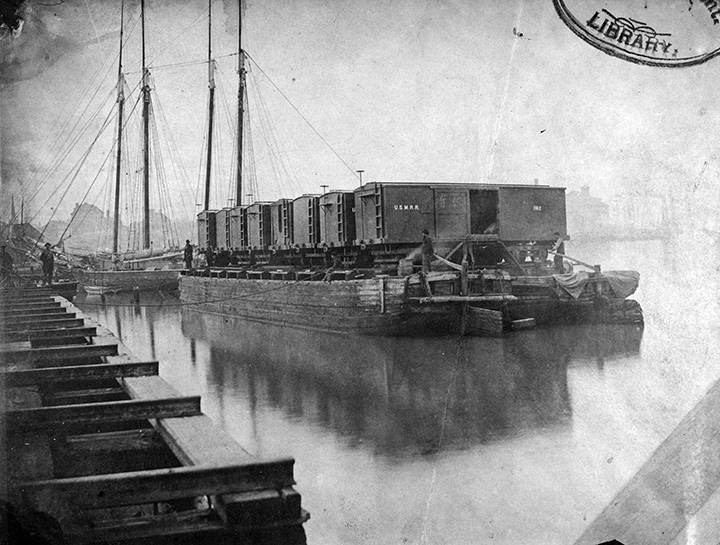
In other words, Herman Haupt invented the container ship.
Full-resolution images here, here, and here.
__________

Access to Fold3’s Civil War records, that include Compiled Service Records for all Confederate units and some Federals, is available free through April 15 with registration. Details here.
Fold3 has a ton of records (several tons, really) from other conflicts, as well. If you haven’t used it before, it’s worth looking into.
_________


Exhibits the surface of a pair of barges, showing the tracks for loading and unloading cars, also the movable bridges by which the tracks on the floats are connected with those on the wharf


 | Craig L. on Three Veterans |
 | Andy Hall on Lee, Pickett, and Mosby |
 | ExileDawg on Lee, Pickett, and Mosby |
| Andy Hall on Lee, Pickett, and Mosby |
 Dead Confederates, A Civil War Era Blog


1 comment