Blockade Running “Headquarters” Discovered in Scotland

An Appledore Sub Aqua Club diver over the forward boilers of the blockade runner Iona 2. Photo by James Wright, via The Independent.

Via Civil War Talk user Daywalker, researchers in Scotland have identified what they view as the central “headquarters” of Civil War blockade running:
My own view is that Graham — whose book Clyde Built is outstanding — is overstating a bit both the role of the site in Bridge of Allan and the effect of blockade running on the prolongation of the war itself. The researchers do seem to have zeroed in on the center of blockade-running interests’ ship acquisition activities, but once selected vessels left the Clyde the site’s role must have been largely done. Blockade running was necessarily a decentralized business with lots of different players competing against each other, with the capital concentrated in and around Liverpool and (to a lesser degree) London. It was not a military operation with a central command; merchants operated through their agents and representatives in Halifax, Bermuda, Nassau and Havana. The story also focuses solely on the importation of munitions (“gun-running,” ugh), when a probably half or more of the cargoes carried by runners into the Confederacy were civilian goods, destined for private sale to the highest bidder.
Still, Graham and his colleagues are helping to fill in the blanks of the blockade-running story, and that’s all to the good. Be sure to click through and check out the images of the wreck of Iona 2 — quite spectacular, and very representative of runners like those that operated in the Gulf of Mexico, including Will o’ the Wisp, Banshee (II) and Owl.
_____________

Talkin’ Blockade Runners
The blockade running book got a strong review by Mark Lardas in the Galveston County Daily News this past weekend. The full text is paywalled, but it begins and ends,

I have three book events coming up this week. On Thursday evening at 6:30, I’ll be doing a talk and book-signing at the Brazoria County Historical Museum 100 E. Cedar Street in Angleton.
On Saturday I’ll be signing books at the Galveston Bookshop, 317 23rd Street in Galveston, from 2 to 4 p.m.
On Sunday I’ll be signing books at Eighteen Seventy-One, 2217 Strand in Galveston, from 1 to 3 p.m.
Hope to see y’all there!
___________
A Juneteenth Follow-Up

Saturday’s Juneteenth marker unveiling was impressive. I’ve been to a lot of marker dedications, but never one as big or as well-organized as this one. Kudos to everyone involved in putting this together. Both the chairman and executive directors of the Texas Historical Commission came down from Austin (rare for them to travel to the same function), as well as our U.S. Representative and State Senator. They all said the right things and the elected officials, who are all up for re-election this year, didn’t veer off topic. The most important address, one not on the program, was by 83-year-old Rev. Virgil A. Wood, who described his own experience as a seventeen-year-old kid in the 1940s, interviewing an old man who recalled the Federal soldiers coming to the plantation to deliver the news of emancipation, when the man had been ten years old. It wasn’t that long ago, in purely human terms.
This being Texas, though, the attendee who got the most attention was former local high school football player Mike Evans, recently selected by Tampa Bay as the No. 7 in the NFL draft:

Juneteenth arose out of the unique situation of Texas and the Trans-Mississippi at the end of the war, so it’s a little difficult to explain to anyone unfamiliar with that — which is to say, almost everyone among the general public.
The Confederate Trans-Mississippi Department did not formally surrender until June 2, 1865 — TWO MONTHS after the fall of Richmond. During that whole time, except for a few isolated areas, Texas was not occupied by Union troops and the whole area was in a sort of limbo, still officially in rebellion but without a clear course and without a national leadership. The U.S. Navy officially took possession of Texas on June 5, but did not have soldiers to establish a formal presence. General Granger arrived with troops at Galveston on June 17, and two days later issued a series of administrative notices formally notifying all of Texas that the state was now under formal military occupation, who the key officers and departments were, and so on. The third of these notices was General Order No. 3, that formally announced emancipation under the terms of the Emancipation Proclamation of January 1, 1863. These notices were published in papers around the state, first in Galveston (below) and then elsewhere as the news was carried inland by telegraph and railroad.

The wording of Granger’s order was not happenstance; it was carefully crafted based on other officers’ orders and experiences elsewhere. Granger’s order, though, is most famous because it was the last and covered the largest territory. A colleague who’s been researching this subject has found also that this notice was not just pro forma — it really did have a profound and immediate effect as it spread across Texas, and enslaved persons received word of it in various ways, and within a short time June 19, the original date of Granger’s order, had become an important commemoration day among Freedmen. The African American community in Houston pooled its funds to buy and establish Emancipation Park in 1872. Juneteenth is mentioned in several LoC slave narratives, and the word “Juneteenth” itself was established by the 1890s, even as the celebration was being brought by Texans to other states. Parsons, Kansas Weekly Blade, June 22, 1895:

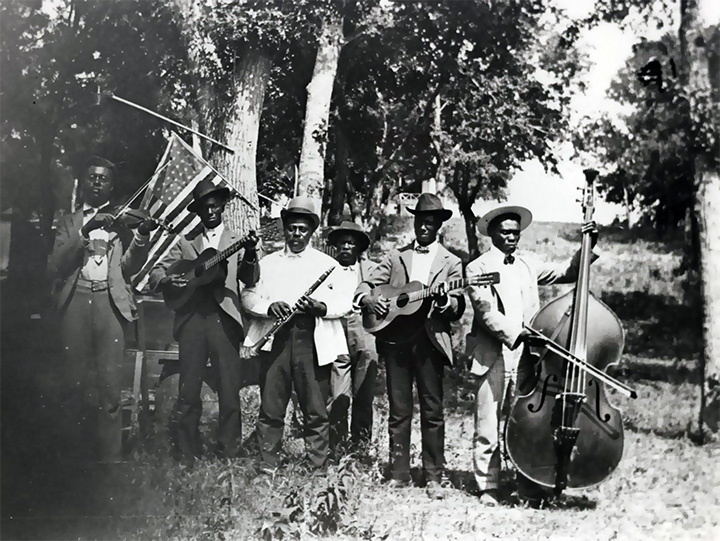
Emancipation celebration band, Austin, Texas, June 19, 1900. Austin History Center, Austin Public Library, via University of North Texas Portal to Texas History.
Planning gets underway now for a proper sesquicentennial celebration of the end of the war and Juneteenth next year. The Civil War didn’t end at Appomattox in April 1865; it ended here in Texas in June, with the paired events of the surrender of of the Trans-Mississippi Department and Granger’s General Order No. 3. It’s a part of the story that needs a better telling and wider recognition. Here’s looking forward to a grand 2015!

__________

Juneteenth, History and Tradition
[This post originally appeared here on June 19, 2010.]
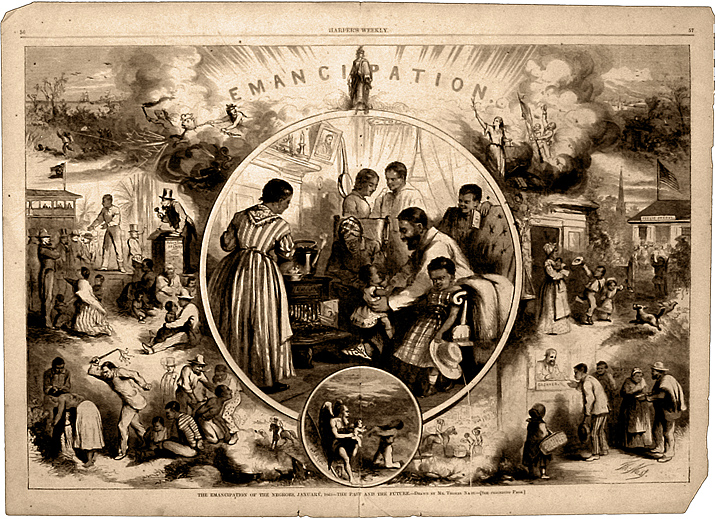
“Emancipation” by Thomas Nast. Ohio State University.

Juneteenth has come again, and (quite rightly) the Galveston County Daily News, the paper that first published General Granger’s order that forms the basis for the holiday, has again called for the day to be recognized as a national holiday:
Those who are lobbying for a national holiday are not asking for a paid day off. They are asking for a commemorative day, like Flag Day on June 14 or Patriot Day on Sept. 11. All that would take is a presidential proclamation. Both the U.S. House and Senate have endorsed the idea. Why is a national celebration for an event that occurred in Galveston and originally affected only those in a single state such a good idea? Because Juneteenth has become a symbol of the end of slavery. No matter how much we may regret the tragedy of slavery and wish it weren’t a part of this nation’s story, it is. Denying the truth about the past is always unwise. For those who don’t know, Juneteenth started in Galveston. On Jan. 1, 1863, the Emancipation Proclamation was issued. But the order was meaningless until it could be enforced. It wasn’t until June 19, 1865 — after the Confederacy had been defeated and Union troops landed in Galveston — that the slaves in Texas were told they were free. People all across the country get this story. That’s why Juneteenth celebrations have been growing all across the country. The celebration started in Galveston. But its significance has come to be understood far, far beyond the island, and far beyond Texas.
This is exactly right. Juneteenth is not just of relevance to African Americans or Texans, but for all who ascribe to the values of liberty and civic participation in this country. A victory for civil rights for any group is a victory for us all, and there is none bigger in this nation’s history than that transformation represented by Juneteenth.
But as widespread as Juneteenth celebrations have become — I was pleased and surprised, some years ago, to see Juneteenth celebration flyers pasted up in Minnesota — there’s an awful lot of confusion and misinformation about the specific events here, in Galveston, in June 1865 that gave birth to the holiday. The best published account of the period appears in Edward T. Cotham’s Battle on the Bay: The Civil War Struggle for Galveston, from which much of what follows is abstracted.
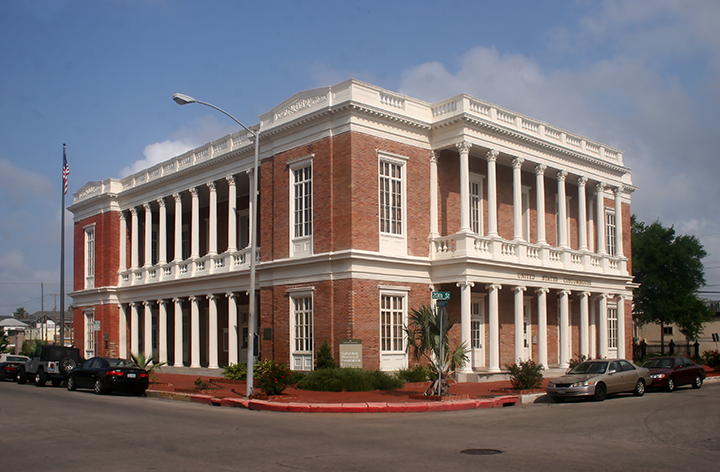
The United States Customs House, Galveston.
On June 5, Captain B. F. Sands entered Galveston harbor with the Union naval vessels Cornubia and Preston. Sands went ashore with a detachment and raised the United States flag over the federal customs house for about half an hour. Sands made a few comments to the largely silent crowd, saying that he saw this event as the closing chapter of the rebellion, and assuring the local citizens that he had only worn a sidearm that day as a gesture of respect for the mayor of the city.
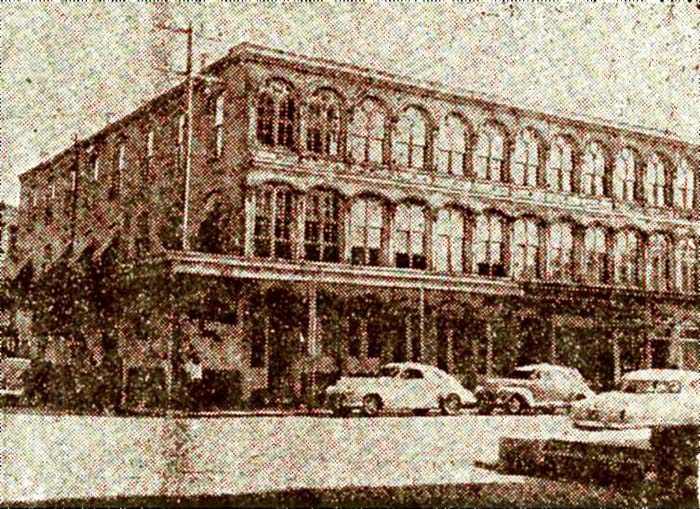
The 1857 Ostermann Building, site of General Granger’s headquarters, at the southwest corner of 22nd Street and Strand. Image via Galveston Historical Foundation.
A large number of Federal troops came ashore over the next two weeks, including detachments of the 76th Illinois Infantry. Union General Gordon Granger, newly-appointed as military governor for Texas, arrived on June 18, and established his headquarters in Ostermann Building (now gone) on the southwest corner of 22nd and Strand. The provost marshal, which acted largely as a military police force, set up in the Customs House. The next day, June 19, a Monday, Granger issued five general orders, establishing his authority over the rest of Texas and laying out the initial priorities of his administration. General Orders Nos. 1 and 2 asserted Granger’s authority over all Federal forces in Texas, and named the key department heads in his administration of the state for various responsibilities. General Order No. 4 voided all actions of the Texas government during the rebellion, and asserted Federal control over all public assets within the state. General Order No. 5 established the Army’s Quartermaster Department as sole authorized buyer for cotton, until such time as Treasury agents could arrive and take over those responsibilities.
It is General Order No. 3, however, that is remembered today. It was short and direct:
Headquarters, District of Texas
Galveston, Texas, June 19, 1865 General Orders, No. 3 The people are informed that, in accordance with a proclamation from the Executive of the United States, all slaves are free. This involves an absolute equality of personal rights and rights of property, between former masters and slaves, and the connection heretofore existing between them, becomes that between employer and hired labor. The Freedmen are advised to remain at their present homes, and work for wages. They are informed that they will not be allowed to collect at military posts; and that they will not be supported in idleness either there or elsewhere. By order of
Major-General Granger
F. W. Emery, Maj. & A.A.G.
What’s less clear is how this order was disseminated. It’s likely that printed copies were put up in public places. It was published on June 21 in the Galveston Daily News, but otherwise it is not known if it was ever given a formal, public and ceremonial reading. Although the symbolic significance of General Order No. 3 cannot be overstated, its main legal purpose was to reaffirm what was well-established and widely known throughout the South, that with the occupation of Federal forces came the emancipation of all slaves within the region now coming under Union control.
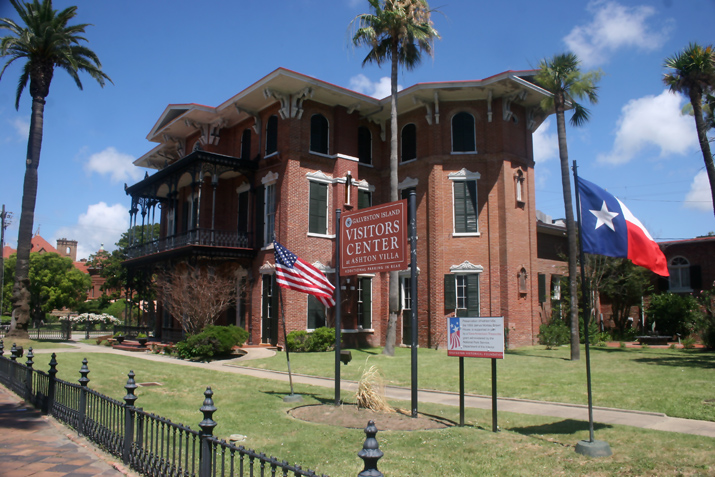
The James Moreau Brown residence, now known as Ashton Villa, at 24th & Broadway in Galveston. This site is well-established in recent local tradition as the site of the original Juneteenth proclamation, although direct evidence is lacking.
Local tradition has long held that General Granger took over James Moreau Brown’s home on Broadway, Ashton Villa, as a residence for himself and his staff. To my knowledge, there is no direct evidence for this. Along with this comes the tradition that the Ashton Villa was also the site where the Emancipation Proclamation was formally read out to the citizenry of Galveston. This belief has prevailed for many years, and is annually reinforced with events commemorating Juneteenth both at the site, and also citing the site. In years past, community groups have even staged “reenactments” of the reading of the Emancipation Proclamation from the second-floor balcony, something which must surely strain the limits of reasonable historical conjecture. As far as I know, the property’s operators, the Galveston Historical Foundation, have never taken an official stand on the interpretation that Juneteenth had its actual origins on the site. Although I myself have serious doubts about Ashton Villa having having any direct role in the original Juneteenth, I also appreciate that, as with the band playing “Nearer, My God, to Thee” as Titanic sank beneath the waves, arguing against this particular cherished belief is undoubtedly a losing battle.
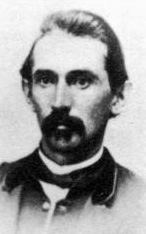 Assuming that either the Emancipation Proclamation (or alternately, Granger’s brief General Order No. 3) was formally, ceremonially read out to the populace, where did it happen? Charles Waldo Hayes, writing several years after the war, says General Order No. 3 was “issued from [Granger’s] headquarters,” but that sounds like a figurative description rather than a literal one. My bet would not be Ashton Villa, but one of two other sites downtown already mentioned: the Ostermann Building, where Granger’s headquarters was located and where the official business of the Federal occupation was done initially, or at the United States Customs House, which was the symbol of Federal property both in Galveston and the state as a whole, and (more important still) was the headquarters of Granger’s provost marshal, Lieutenant Colonel Rankin G. Laughlin (right, 1827-78) of the 94th Illinois Infantry. It’s easy to imagine Lt. Col. Laughlin dragging a crate out onto the sidewalk in front of the Customs House and barking out a brief, and somewhat perfunctory, read-through of all five of the general’s orders in quick succession. No flags, no bands, and probably not much of a crowd to witness the event. My personal suspicion is that, were we to travel back to June 1865 and witness the origin of this most remarkable and uniquely-American holiday, we’d find ourselves very disappointed in how the actual events played out at the time.
Maybe the Ashton Villa tradition is preferable, after all.

Update, June 19: Over at Our Special Artist, Michele Walfred takes a closer look at Nast’s illustration of emancipation.
Update 2, June 19: Via Keith Harris, it looks like retiring U.S. Senator Kay Bailey Hutchison supports a national Juneteenth holiday, too. Good for her.
Update 3, June 19, 2013: Freedmen’s Patrol nails the general public’s ambivalence about Juneteenth:
Exactly right.
______________

We Haven’t Learned a Damn Thing, Have We?
Over at That Devil History, Jarret Ruminski suggests that the United States’ ongoing involvement in the Middle East, and especially Iraq, ignores the big lesson of Reconstruction in the post-Civil-War South — that nation-building is damn nearly impossible if the locals refuse to buy into it; they just have to wait us out:

Ruminski’s analysis is as persuasive as it is depressing.
______________
The U.S.S. Westfield Dahlgren Comes Home to Texas City
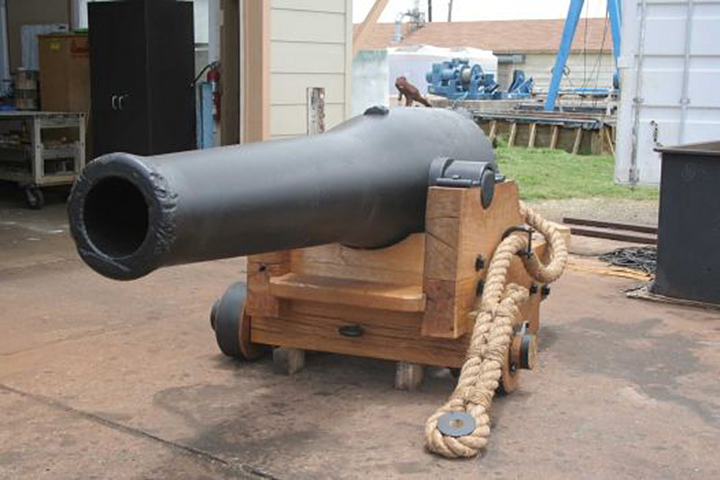
Today’s a big day in Texas City, with the arrival of the IX-Inch Dahlgen gun (above, on a reconstructed carriage) from U.S.S. Westfield. From the Houston Chronicle:
Congrats to Justin, who at this point probably knows as much about Union gunboats adapted from ferries as anyone around today.
___________
A Quick Note About that Ukranian Separatist Flag
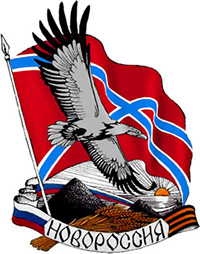 Southron hearts have been all a-flutter in recent days because Russian separatists in the Ukraine have adopted a banner (right) that looks a lot like the Confederate Battle Flag. Like so many other “heritage” arguments, though, this one requires a certain ignorance of actual history and a willingness to believe pretty much anything that sounds good.
There’s a general similarity, certainly. But the design the separatists are using has a much older, and much more relevant, history that most in the West may not be aware of. The diagonal cross, the Cross of St. Andrew, has been used as a symbol of Russia for centuries. (St. Andrew is that country’s patron saint.) It first appeared in proposals for a Russian naval ensign more than 300 years ago, during the reign of Peter the Great, and was formally adopted as early as 1710. On a red background, it was adopted as a jack and as a flag for coastal forts in 1700, remaining in use until the Revolution of 1917. Both the ensign and the jack were brought back in 1992 after the collapse of the Soviet Union, and remain in use today.
 Russian ensign, 1712-1917 and 1992-present (left), and the Russian naval jack, 1700-1917, 1992-present (right).
By adopting the banner that they have, the Новороссия (New Russia) separatists in the Ukraine are making a very public show of their allegiance to Russia — not to some abstract principle of secession, or states’ rights, or anything else. The Hit & Run blog over at the Libertarian magazine Reason cuts through the Confederate nonsense:
I know that a lot of southern nationalists in this country have a chubby for Vladimir Putin, seeing him as an ally in the culture wars. Fine, whatever. But what’s going on in the Ukraine, and the symbols chosen to define it, has nothing to do with the American South or the Confederacy. It’s about ethnic Russians making an appeal to fellow Russians, using a symbol that other Russians know.
That’s all it is. Move along, folks.
____________
C.S. Signal Corps Items Donated — Galveston
Forgot to post this — it’s a pretty big deal here locally. Galveston County Daily News, June 1, 2014:
_________
Canister!

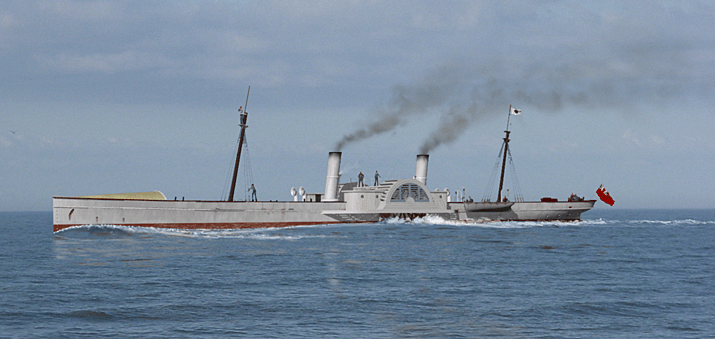
Posts have been spare ’round these parts lately, in large part because I’ve been distracted by other things over the last few months. In addition to wrapping up the blockade running book, I’ve got some other projects going on that I’ve been focused on. One of the minor ones is reconstructing the sidewheel from the British paddle steamer Cornubia (above), that was a notable blockade runner on the Atlantic coast before being taken into the U.S. Navy and used as a gunboat on the blockade off Galveston. Cornubia was part of what Commodore Sands called “the closing act of the great rebellion.” More images of the wheel here. Hopefully this will end up with a digital model of the entire ship sometime down the road. Past projects include the runners Denbigh and Will o’ the Wisp, and the blockader Hatteras. More items that don’t warrant a full post:
- Cops in Cary, North Carolina are hot on the trail of a tagger who’s been writing “booger” all over town. Unnamed police sources, speaking on condition of anonymity, say Dr. Johnny Fever “is not a suspect at this time.”
- The white nationalist League of the South’s new “SECEDE!” billboard in Montgomery, Alabama was taken down by the billboard company after receiving complaints. League President Michael Hill, who recently called on “Mr. & Mrs. White Southerner” to take a stand against “blacks, Hispanics, Jews, etc.“, demands to know if Montgomery has become “Stalin’s Russia.” It fact, it’s quite the opposite — it’s the invisible hand of the free market, dumbass.
- Speaking of Southern nationalism, I see that Michael Cushman of the Southern Nationalist Network recently took the surname O’Neil. Congrats on the nuptials, Michael!
- NPR had a story the other day on why it’s so hard to cut the Pentagon budget. As it turns out, it’s not always the generals that are the problem.
- A candidate for governor in Illinois is taking heat because he shook hands with a man wearing a jacket with a Confederate flag patch on the sleeve. That’s about as dumb as the time someone from Buzzfeed tweeted that Mitt Romney’s motorcade drove past a Confederate flag. Get some perspective, folks.
- Over at Defending the Heritage, Robert Mestas calls on Lexington to “bring back the flags” with an historic “then and now” image of the town that includes no Confederate flags. Do’oh!
Got anything else? Put it in the comments below.
_____________
D-Day, Sixth of June
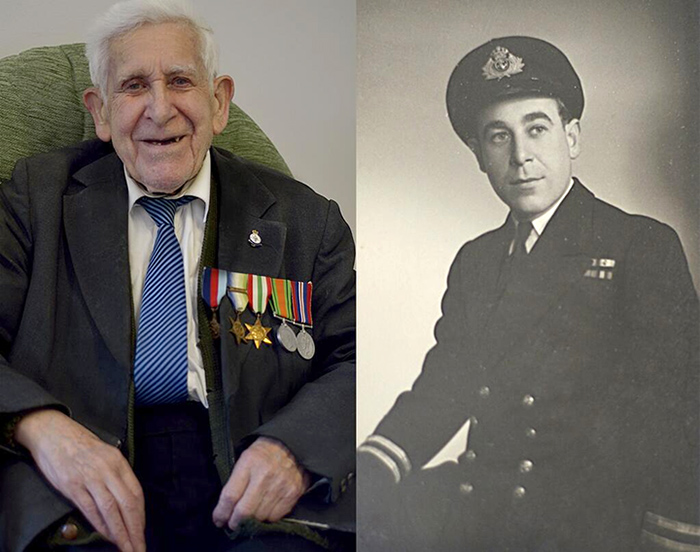 An 89-year-old World War II veteran reported missing Thursday evening actually fled his nursing home in England to attend the 70th anniversary of D-Day in Normandy on Friday.
The Pines care home in Hove, England, where Bernard Jordan has been living with his wife since January, telephoned police Thursday after realizing Jordan hadn’t returned from his morning walk, according to local media. Police said the veteran, who was also a former mayor of Hove, left wearing his war medals concealed beneath a gray jacket.
A younger veteran eventually telephoned Jordan’s nursing home to report Bernard was safe and they were staying together in a hotel in Ouistreham, Normandy. The two had met on a bus en route to the ceremonies in northern France.
A police spokesman told reporters: “We have spoken to the veteran who called the home today and are satisfied that the pensioner is fine and that his friends are going to ensure he gets back to Hove safely over the next couple of days after the D-Day celebrations finish.”
“Once the pensioner is home we will go and have a chat with him to check he is OK,” the spokesman said, according to the BBC.
Earlier reports said the veteran was banned from traveling to Normandy to attend the ceremonies, but a representative for the nursing home said that was “definitely not the case,” according the Press Association.
An 89-year-old World War II veteran reported missing Thursday evening actually fled his nursing home in England to attend the 70th anniversary of D-Day in Normandy on Friday.
The Pines care home in Hove, England, where Bernard Jordan has been living with his wife since January, telephoned police Thursday after realizing Jordan hadn’t returned from his morning walk, according to local media. Police said the veteran, who was also a former mayor of Hove, left wearing his war medals concealed beneath a gray jacket.
A younger veteran eventually telephoned Jordan’s nursing home to report Bernard was safe and they were staying together in a hotel in Ouistreham, Normandy. The two had met on a bus en route to the ceremonies in northern France.
A police spokesman told reporters: “We have spoken to the veteran who called the home today and are satisfied that the pensioner is fine and that his friends are going to ensure he gets back to Hove safely over the next couple of days after the D-Day celebrations finish.”
“Once the pensioner is home we will go and have a chat with him to check he is OK,” the spokesman said, according to the BBC.
Earlier reports said the veteran was banned from traveling to Normandy to attend the ceremonies, but a representative for the nursing home said that was “definitely not the case,” according the Press Association.
________





 Dead Confederates, A Civil War Era Blog

11 comments